
## The face shows what is underneath
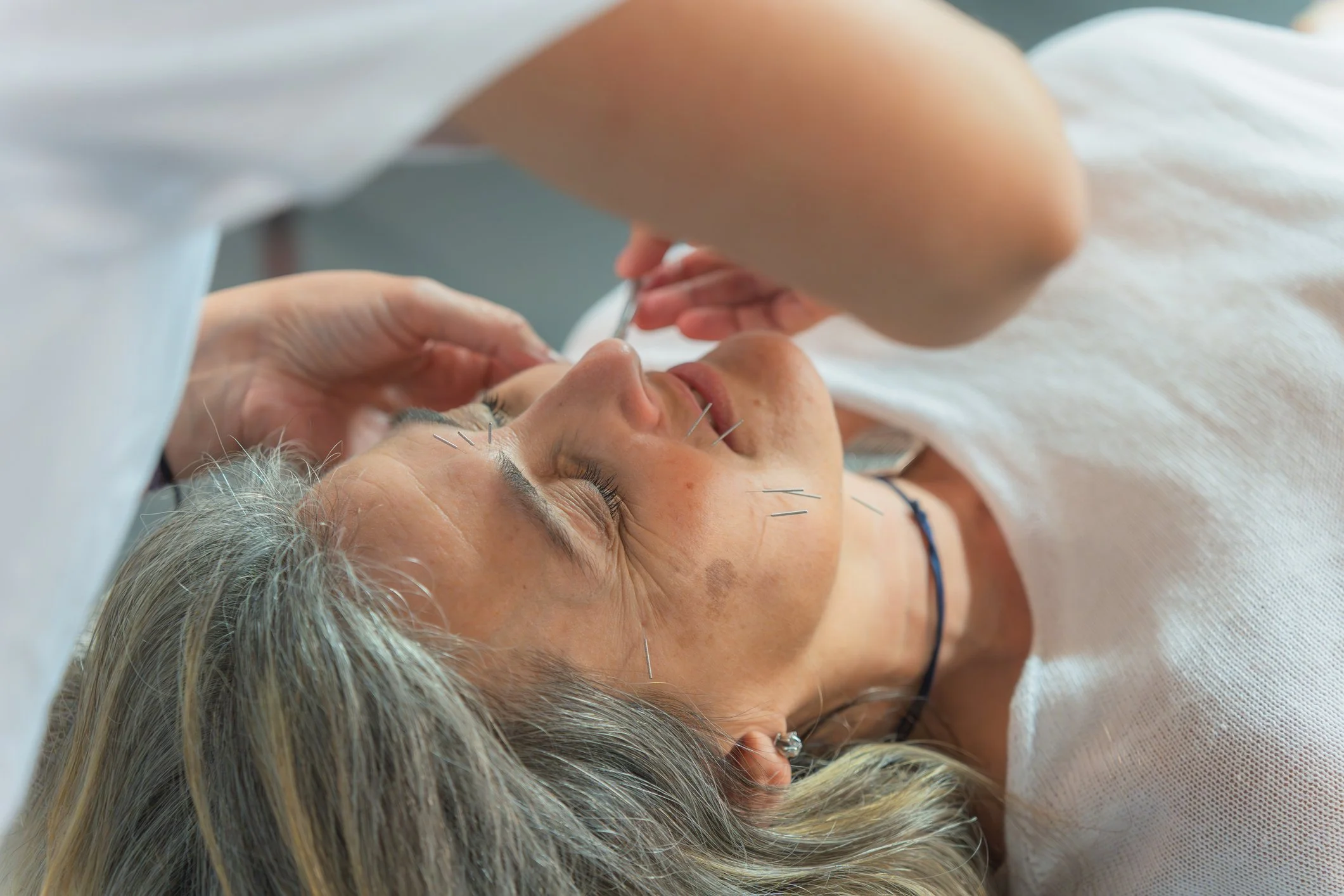
Acne that keeps coming back along the jaw. Redness across the cheeks and nose that flares with wine, heat, or stress. Skin that looks tired and dull no matter what goes on it. These usually get treated at the surface — creams, washes, prescriptions — and sometimes that is exactly right. What surface treatment doesn't explain is why the breakouts return when the treatment stops, or why the flushing follows a bad week rather than a new product.
The Donguibogam, the 1613 master text, gives the face its own chapter, and its starting point is that the face is where the inside of the body shows. We translated it in full, along with the Nose chapter, which is where it places rosacea.
[→ The Face — full translated chapter]
## Where all the yang meets
The chapter asks a question that sounds simple: why can the face go uncovered in the bitterest cold, when the hands and feet cannot? Its answer, from the Divine Pivot, is that the Blood and Qi of every channel in the body rise to the face. Six yang channels meet there. The skin is thicker, the flesh firmer, and the warmth of the whole body is gathered in it.
That is also why the face is such an honest record. What happens in the channels below — heat, depletion, stagnation — arrives at the face sooner or later.
## The face belongs to the Stomach
Of all the channels that reach the face, the chapter gives one priority: the Stomach channel begins beside the nose, enters the gums, circles the mouth, runs along the cheek and jaw, and climbs in front of the ear. For that reason, it says, disease of the face belongs above all to the Stomach.
Its descriptions follow from that. A face red as though drunk is stomach heat steaming upward. Irregular eating harms the Stomach, and then "fire rises and burns the face alone." It records a patient with a hot, flushed face and a strong pulse, whose problem it traced to years of rich food; clearing the Stomach cleared the face.
This is why, when you come in for your skin, we ask about your digestion, your bowels, your sleep, what you drink, and when your skin is at its worst.
## Reading the face
The chapter also maps the face to the organs: the forehead to the Heart, the nose to the Spleen, the chin to the Kidney, the left cheek to the Liver, the right cheek to the Lung. Modern "face mapping" is a loose descendant of this. We use it as a starting point rather than a diagnosis — where breakouts cluster is one more piece of information, alongside everything else.
## Acne
The chapter lists the common blemishes of the face by their old names, and one of them is 粉刺, the word still used for acne in Korean, Chinese, and Japanese. Its main formula for it is called, tellingly, a Lung-clearing powder: the Lung governs the skin, and heat in the Lung and Stomach together is the classic reading of breakouts on the face. For sores and boils on the head and face from wind and heat, it uses a formula aimed at clearing fire from the upper body.
In practice, acne is sorted much as the chapter sorts the face: heat from rich food, alcohol, and sugar; heat from stress and poor sleep; breakouts tied to the menstrual cycle; and the slow, stubborn kind in someone whose digestion is weak rather than hot. Each is treated differently.
## Red, but not hot
The chapter's most important warning about the face is easy to miss. Not every red face is a hot one. It describes a face that is red but not lively red — a flush that sits on the surface of someone who is actually depleted underneath — and warns that a physician who fails to notice and gives cooling medicine will turn a small problem into a serious illness.
It gives the opposite case too: an elderly woman whose face could not bear the wind, who had lived for years on tea and fruit. The Stomach's warmth could no longer rise to her face. Warming the centre restored it.
This matters for rosacea and flushing. A red face in someone tired, with cold hands and feet and loose stools, is not treated the way a red face in someone hot, thirsty, and constipated is.
## Rosacea
The Donguibogam places rosacea in its chapter on the nose, under the name "wine-nose": the tip of the nose turned red, and at worst purple-black. It notes that drinkers commonly have it — and then, carefully, that people who do not drink get it too. It reads both as heat in the Blood entering the Lung.
Its description of how the redness behaves is precise: meeting heat, it turns red; meeting cold, it turns dark. Rosacea does flush with heat, wine, spice, and hot drinks, and the fixed redness does look duskier in winter. Another passage explains the darkening: blood heated by wine and then chilled by the air stops moving in the fine vessels of the face.
[→ The Nose — full translated chapter]
## Facial acupuncture
Cosmetic facial acupuncture works with the same idea the chapter starts from: the face is where the body's circulation gathers. Fine needles on the face, together with points on the body, are used to improve circulation and tone and to support the skin from beneath. We are straightforward about what to expect — it is gradual, it works best as a series, and it is not a substitute for anything a dermatologist would need to treat.
The chapter also records a case worth knowing: a woman whose face had darkened, worst around the lips, after a long period of worry and irregular meals. It read this as the Stomach's warmth failing to rise and treated it by supporting the Stomach. Dullness and darkening of the face after a hard stretch of life are often a sign to look underneath as well as at the surface.
And it gives one practice anyone can do. Rub the palms together until warm and sweep them over the forehead up to the hairline, fourteen times or more. It calls this "cultivating the heavenly court," and says that done regularly, the face will be naturally bright.
## What treatment looks like here
Acupuncture is used for acne, rosacea, and cosmetic work, with points on the face and along the Stomach and Large Intestine channels on the hands and legs. Herbal medicine is often central for skin, chosen by pattern. From the chapters:
[Yeongyo-san 連翹散] — the chapter's formula for acne, also called Clear the Lung Powder
[Cheongsangbangpung-tang 淸上防風湯] — for sores and boils on the head and face from heat
[Seungmahwangryeon-tang 升麻黃連湯] — for a hot, flushed face from stomach heat
[Cheonghyeolsamul-tang 淸血四物湯] — for rosacea and redness of the nose, from heat in the Blood
[Chijain-hwan 梔子仁丸] — taken alongside it for redness of the nose
[Cheongpye-eumja 淸肺飮子] — for a red nose and sores from heat in the Lung
[Seungmabuja-tang 升麻附子湯] — for the face that is cold and cannot bear the wind
What you eat and drink matters as much as anything here, and the chapter says so: rich food, alcohol, and irregular meals are the first causes it names. Skin changes slowly. Most people need two to three months to judge how acne is responding. Rosacea is usually managed over the longer term, with flares becoming less frequent and less intense.
## Please read this part
Some skin problems need a physician or dermatologist first.
**Get prompt medical care if you have:** facial swelling with fever, or redness that is spreading quickly; a painful rash on one side of the face or near the eye; or eyes that are red, gritty, or sensitive to light along with facial redness — rosacea can affect the eyes and should be checked.
**Get evaluated before starting here, or alongside it, if you have:** deep, painful, scarring cysts; acne that started suddenly in adulthood with irregular periods or unwanted hair growth, which can point to a hormonal condition (more here — [Menstrual health]); a rash across the cheeks and nose with joint pain or fatigue; breakouts that began with a new medication; or a spot or mole that is changing.
The 1613 chapter keeps a section on signs in the face that mean something serious is happening elsewhere in the body. The face is a record, and sometimes what it records needs a different kind of attention first.
**This approach may help if you're dealing with:** acne on the face, jaw, or chin · breakouts that flare with your cycle · acne that returns after treatment stops · rosacea and facial redness · flushing with wine, heat, or stress · a red nose · dull, tired-looking skin · interest in cosmetic facial acupuncture.
The Donguibogam translation project at formulas.raahacupuncture.com is researched and translated by Eui Young (Justin) Chung, L.Ac., Dipl. O.M. — the same clinician you'll see in the treatment room.