
Anxiety, Insomnia & Mental Health
Where Korean medicine keeps its psychiatry
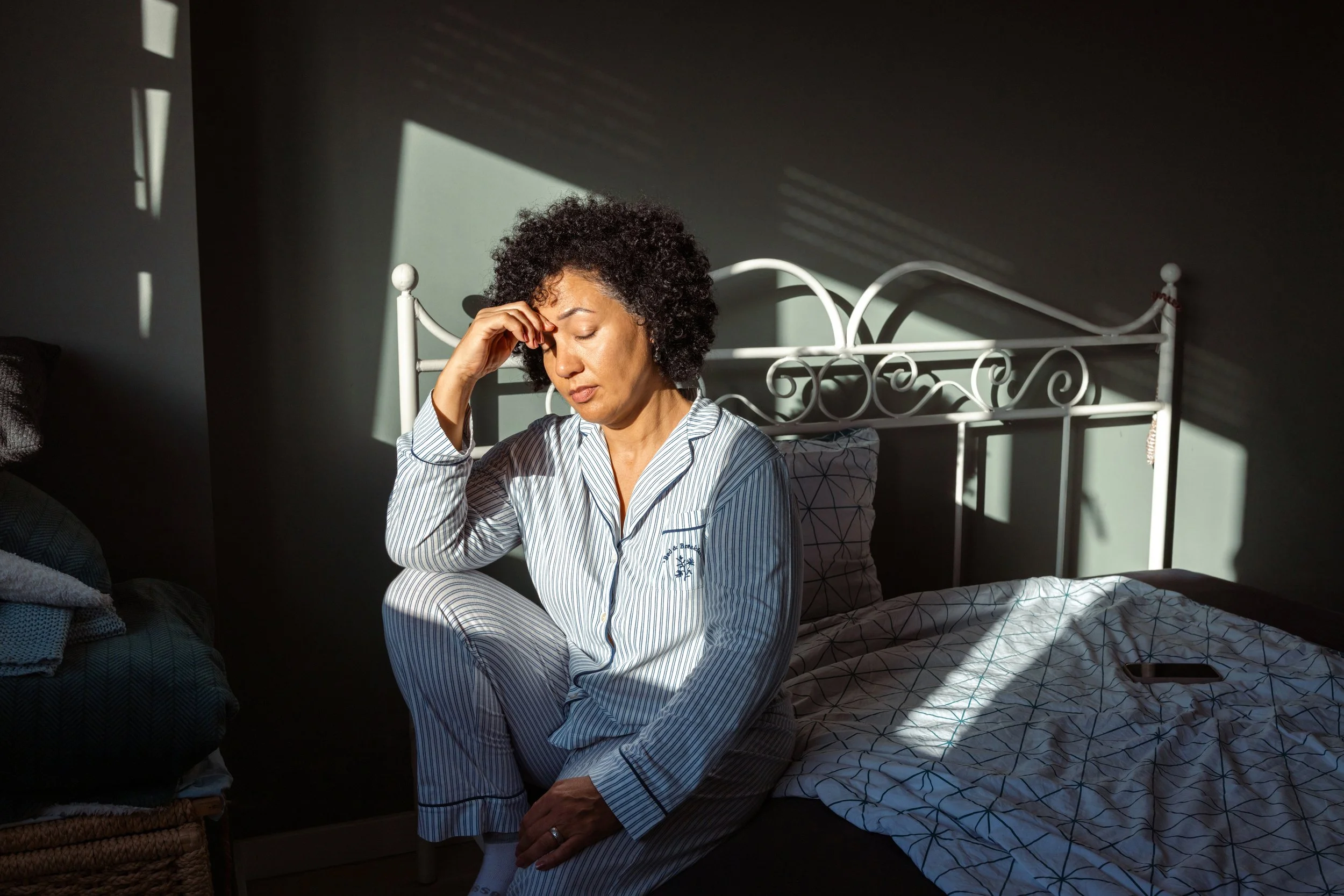
Two things people say in this clinic more than almost anything else:
*I can't turn my brain off at night.*
*It used to happen sometimes. Now it's just how I am.*
Korean medicine has names for both, and it has had them for four hundred years. The *Donguibogam*, the 1613 master text, devotes two full chapters to this territory — one to the waking mind and one to sleep. We translated both.
→ **[The Spirit — full translated chapter](https://formulas.raahacupuncture.com/text/sin)**
→ **[Dreams — full translated chapter](https://formulas.raahacupuncture.com/text/mong)**
The progression nobody told you about
The *Spirit* chapter distinguishes two states and names the crossing between them.
**경계 (驚悸)** — the acute kind. The text describes it exactly: *the heart leaps and one feels about to faint.* Triggered by a shock, a sudden sound — or, in its own phrase, "being touched by an affair and losing one's purpose."
**정충 (怔忡)** — the chronic kind: *a restless stirring within the heart that will not settle — apprehensive, as though someone were about to seize you.* And the timing marker that patients recognize immediately: **arising at no fixed time.**
Then the line that connects them: **fearful throbbing comes of fright palpitations grown long-standing.**
That is the arc, written in 1613. Panic left untreated long enough stops being episodes and becomes a background state. If that has happened to you, it is not a failure of coping. It is a recognized trajectory — and the chapter goes one step further, noting that chronic anxiety long enough becomes **forgetfulness**, the thing patients apologize for mentioning as though it were off-topic.
In this framework it is not off-topic. It is the third act.
## The chapter that names causes most texts avoid
Korean medicine is unusual among classical medical traditions in naming social and emotional circumstances as direct causes of physical illness — and prescribing for them specifically.
The causes it gives for chronic anxiety are **anxiously chasing status, or grieving its loss, and not attaining what one wished for.** For a particular pattern of heavy bleeding, one of three named causes is a reversal of fortune — and the text warns that such a patient *will look well and the examination will show little.* Its first instruction to the physician is not a herb: talk with her first, until the heart is no longer stirring, and only then prescribe.
Underneath all of it sits an eight-character doctrine: **五志過極, 皆爲火也** — the five minds carried past their extreme all become fire. Sustained emotion of any kind, pleasant or unpleasant, converts into heat.
This is the classical root of **hwa-byeong** (화병), the Korean cultural syndrome recognized in psychiatric literature — illness arising from anger and grief that had nowhere to go.
## Sleep: three kinds of not sleeping
The *Dreams* chapter is not about dream interpretation. It is a physiology of sleep, and it opens with a definition worth having:
> By day the defensive Qi travels the Yang, and the eyes open and one wakes; by night it travels the Yin, and the eyes close and one sleeps.
Sleep is the body's energy coming *inward* at dusk. Which makes insomnia a circulation problem: something is keeping it from coming in, or from staying. The chapter sorts the reasons into three, and they call for different treatment:
**허번불수 — depletion insomnia.** The description is exact, and patients recognize it instantly: no fever you can feel, a heavy aching head, a dry mouth that doesn't actually want water, and lying there wide awake and clear-headed. Typically after illness, childbirth, or a long stretch of overwork.
**혼리불수 — the sleep that won't start.** The classical case describes a man who felt his body on the bed while awareness seemed to leave it — startled, nightmare-ridden, awake all night. Modern sleep medicine would recognize sleep paralysis and hypnagogic experiences. The physician's confirming detail was behavioral: it worsened when the patient was even slightly angry.
**사결불수 — rumination insomnia.** Thought that has bound itself into a knot. The chapter's case is a woman who went two years without sleep from overthinking.
## How we treat it
Acupuncture settles the physical layer — heart rate, the braced feeling in the chest, the difficulty getting to sleep. Herbal formulas do the slower work of changing the ground it grows in. Which formula depends entirely on a single question the chapter asks in every section: **is this person empty, or is something stuck?**
- [Gochimmuu-san 高枕無憂散] — "high pillow, no cares." For not sleeping day or night when other measures have failed.
- [Gamiondam-tang 加味溫膽湯] — for the easily startled, where complaints keep changing.
- [Ansinbosim-tang 安神補心湯] — for anxious palpitations in someone already worn out.
- [Igyeong-tang 益榮湯] — for the diagnosis the chapter states plainly: *thought and worry past measure wearing away the Heart Blood.*
- [Chongmyeong-tang 聰明湯] — three herbs for memory and mental clarity, still used across Korea.
## Sleep instructions from 1613 that still hold
Most of the chapter's sleep hygiene survives contact with a modern sleep clinic:
- Lie on your **side with knees drawn up**, not flat on your back
- **Turn over** through the night rather than lying rigid
- **Too hot?** Take a layer off and wipe the sweat. **Too cold?** Add one. The text treats this as a rule, not an afterthought
- **Hungry and can't sleep** — eat a little. **Too full and can't sleep** — sip tea and walk or sit a while before lying down again
- Bad dream? *It need not be spoken of* — meaning don't rehearse it on waking
The only item we'd revise is the ban on daytime naps.
## A note on scope — please read
This care works **alongside** mental health treatment, never instead of it.
Do not stop or change psychiatric medication without your prescriber. Many of our patients use both long-term, and that is a reasonable thing to do.
New or severe palpitations should be evaluated by a physician before being treated as anxiety. Persistent insomnia with loud snoring or daytime sleepiness warrants a sleep study. And if you are having thoughts of harming yourself, please contact your doctor or call or text **988** (Suicide & Crisis Lifeline) — that is the right first call, and we will help you find ongoing support.
**This approach may help if you're dealing with:** difficulty falling or staying asleep · anxiety with palpitations · panic that has become constant · racing thoughts at night · exhaustion that sleep doesn't fix · low mood with poor appetite and fatigue · brain fog and memory complaints · stress-related physical symptoms · irritability and feeling permanently braced.
*The Donguibogam translation project at formulas.raahacupuncture.com is researched and translated by Eui Young (Justin) Chung, L.Ac., Dipl. O.M. — the same clinician you'll see in the treatment room.*