
## Why one side pulls
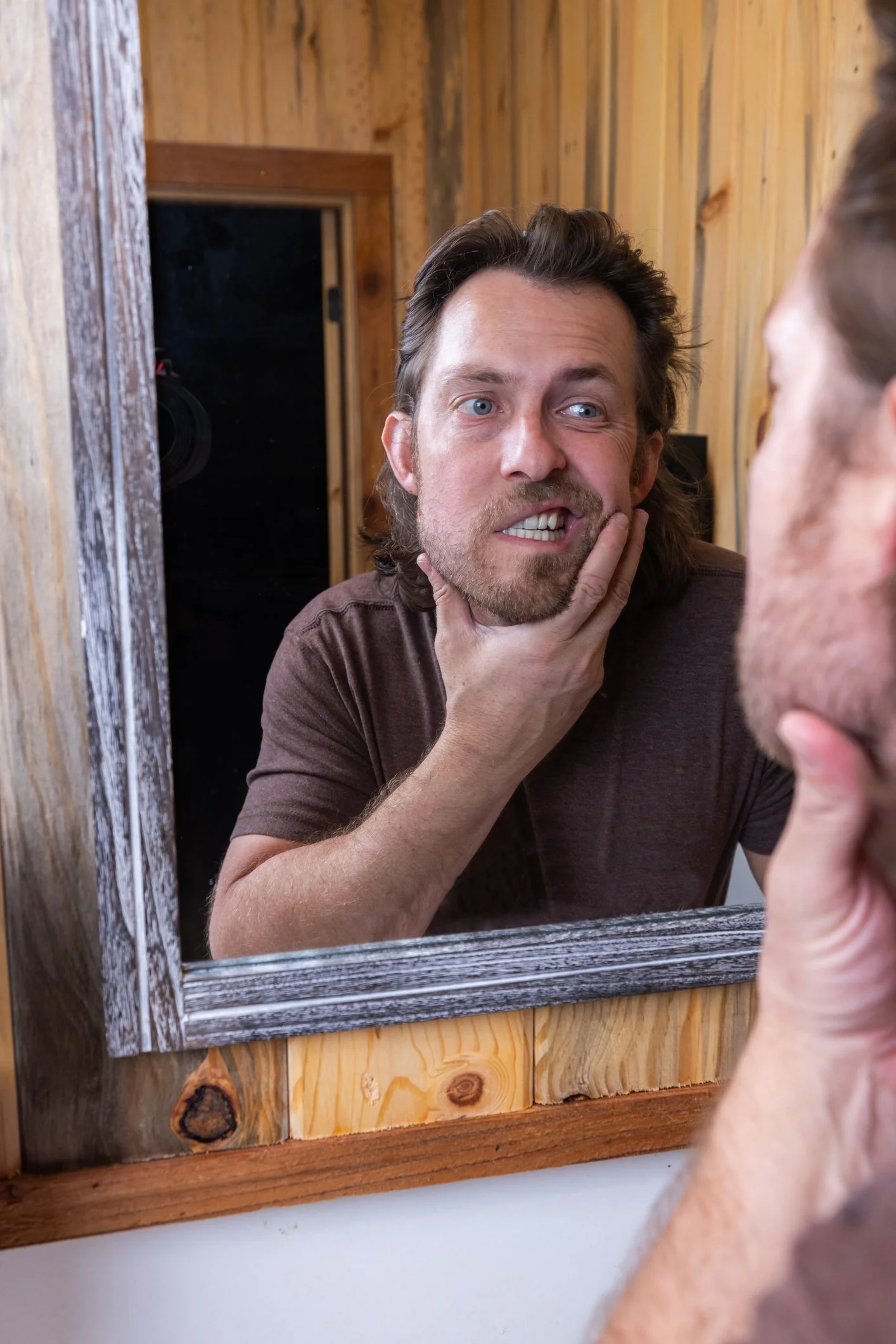
Bell's palsy usually arrives overnight. You wake up and one side of your face won't move: the eye won't close fully, the corner of the mouth droops, water dribbles out when you drink, and the smile goes only halfway. Many people first notice it in the mirror, or when a family member says something looks wrong. It is frightening, and the first question — is this a stroke? — is exactly the right one to ask.
Once a stroke has been ruled out, most people are told it is Bell's palsy, given steroids, and told to wait. Most people recover. Some recover only partly, and some are left with tightness, twitching, or a face that moves in ways it didn't before. That is where we come in, and timing matters.
The Donguibogam, the 1613 master text, describes facial paralysis in its chapter on Wind, under the name "deviation of the mouth and eye." We translated it in full.
[→ Wind — full translated chapter]
## The sound side pulls
The chapter's description of what is happening is one of the most precise observations in the whole text. When the illness enters, it says, the affected side goes slack, while the healthy side stays tight — and the tight side pulls the slack one across.
That is exactly what facial palsy looks like. People often think the face has been dragged toward the bad side. In fact the paralysed side hangs, and the working side pulls the mouth toward itself. It is also why treatment pays attention to both sides of the face, not only the one that has stopped moving.
## The face belongs to the Stomach channel
The chapter says that facial deviation belongs, for the most part, to the Stomach channel — the line that begins beside the nose, circles the mouth and lips, runs along the jaw, and rises in front of the ear. That is the territory of the facial nerve's branches, and it is where our main points sit.
It then makes a finer distinction. When the sinews along that channel tighten, the mouth and eye are pulled and the eye can't close properly. When the channel itself is affected, the mouth droops and the lips slant. In practice, those are two different stages of the same illness — the slack, early face and the tight, later face — and they are treated differently.
## Timing: early and later
**The first days.** The chapter's first instruction is urgency: treat it quickly. Early on, we work gently and add points on the hands and body, with care not to overstimulate a face that is still swelling. Acupuncture can begin alongside the steroids and antivirals your physician prescribes.
**The weeks after.** As movement returns, treatment shifts toward retraining the muscles, reducing stiffness on the stronger side, and keeping the eye protected.
**When recovery stalls.** If you are months out with incomplete recovery, tightness, or twitching — or if the eye waters when you eat, or the eye closes when you smile — it is still worth treating. Progress is slower, but changes are often possible.
## What treatment looks like here
Acupuncture is the main tool. The chapter's points for a deviated mouth and eye are still the ones we use: ST4 Dicang at the corner of the mouth, ST6 Jiache at the angle of the jaw, and GB2 Tinghui in front of the ear. It also gives an instruction that surprises people: treat the side the mouth is pulled toward, not only the side that hangs — which follows directly from its observation that the healthy side does the pulling. For early care it adds distal points such as LI4 Hegu on the hand. We also use gentle electroacupuncture and heat where appropriate.
Herbal medicine supports the face and the person behind it. From the Wind chapter:
[Gyeonjeong-san 牽正散] — the classic formula for facial deviation; its name means "pull it straight"
[Cheongyang-tang 淸陽湯] — for a slack, deviated face in the Stomach channel
[Igi-geopung-san 理氣祛風散] — for deviation with stagnant Qi
[Cheongdam-sungi-tang 淸痰順氣湯] — where phlegm is part of the picture
Between visits:
- Protect the eye. If it won't close, use lubricating drops by day, ointment at night, and tape or a shield while you sleep
- Keep the face warm and out of cold wind and air conditioning, especially in the first weeks
- Rest. Bell's palsy often follows a period of stress, poor sleep, or illness
- Do gentle facial exercises in front of a mirror once movement starts returning — not forceful ones
Most people with Bell's palsy improve over weeks to a few months. Starting early tends to help, and we'll be honest about what to expect if you come to us later in the course.
## Please read this part
**Call 911 if facial drooping comes with any of these:** weakness or numbness in an arm or leg, trouble speaking or understanding speech, confusion, loss of vision, severe headache, or trouble walking. That is a stroke until proved otherwise, and minutes matter.
One clue doctors use: in Bell's palsy the forehead on the affected side usually can't wrinkle either; in a stroke the forehead is often spared. This is a clue for a physician, not a reason to wait at home.
**See a physician promptly — ideally within 72 hours — if you have:** new one-sided facial weakness, even if you feel otherwise well. Steroids work best when started early.
**Get evaluated if you have:** facial weakness on both sides; weakness that came on slowly over weeks; a rash or blisters in or around the ear, which can mean shingles of the facial nerve; facial weakness after a tick bite or in an area with Lyme disease; hearing loss or severe ear pain; or no improvement at all after three weeks.
The 1613 chapter draws the same line, and starts with it. Its very first section is about warning signs — numbness in the fingers, weakness in the hands, slurred speech, a deviated mouth and eye — that come before a stroke. It treats a deviated face as something that can be the edge of a far more serious illness. That instinct is exactly right.
**This approach may help if you're dealing with:** Bell's palsy, once a stroke has been ruled out · one-sided facial weakness alongside steroid treatment · an eye that won't close fully · drooling or difficulty eating on one side · slow or incomplete recovery months later · tightness, twitching, or synkinesis after Bell's palsy · facial weakness after Ramsay Hunt syndrome, alongside medical care.
The Donguibogam translation project at formulas.raahacupuncture.com is researched and translated by Eui Young (Justin) Chung, L.Ac., Dipl. O.M. — the same clinician you'll see in the treatment room.