
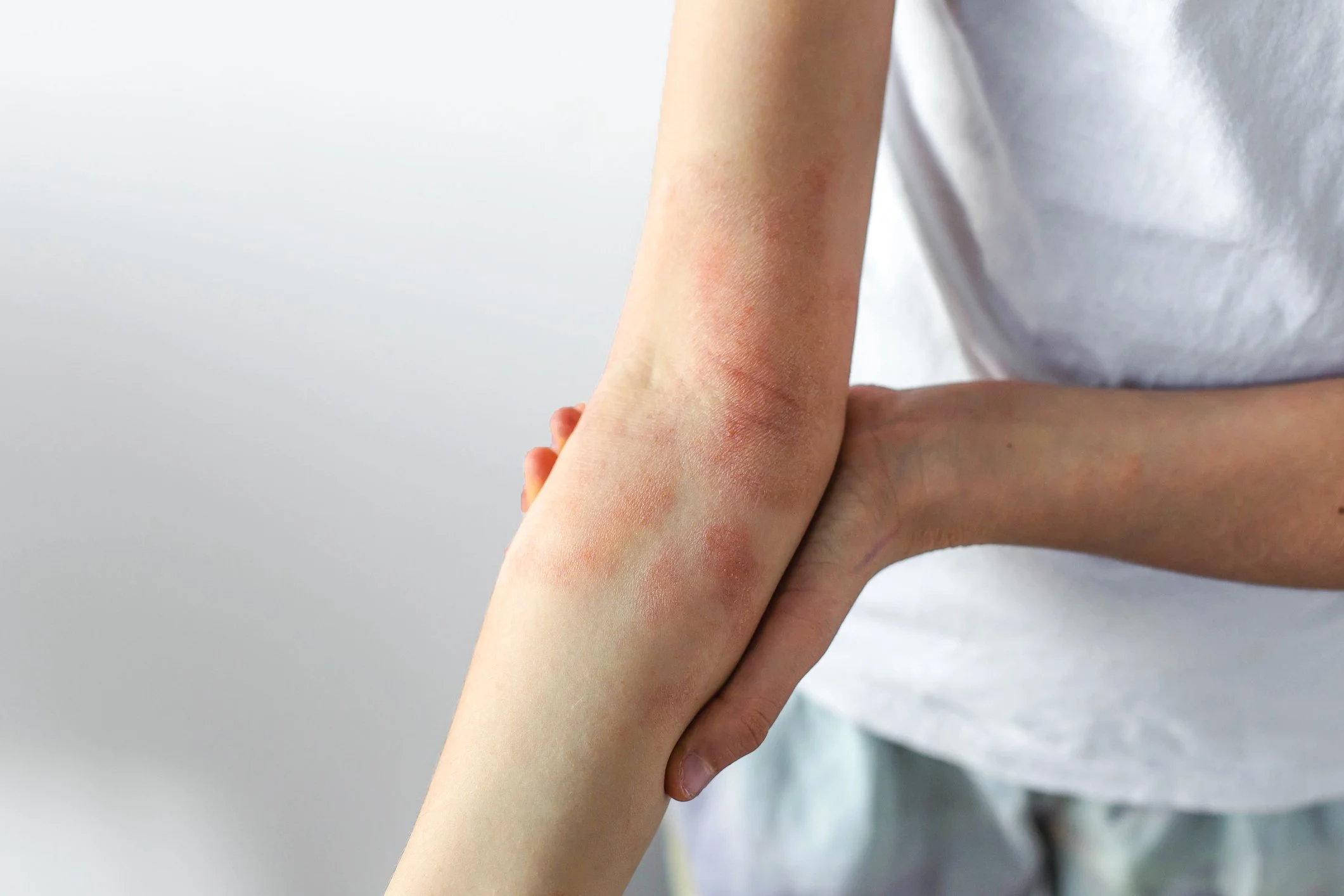
## Here, then gone
Hives come and go in a way that makes them hard to explain to anyone who hasn't had them. Raised, itchy welts appear on the arms or the trunk, move to the neck an hour later, and are gone by morning — only to come back the next evening. Antihistamines help, sometimes. When they stop helping, or the hives keep returning for weeks or months, people are told it is "chronic idiopathic urticaria": chronic, with no known cause.
The Donguibogam, the 1613 master text, describes hives in its chapter on the Skin, under a name that captures them exactly: the hidden rash. We translated it in full.
[→ The Skin — full translated chapter]
## The hidden rash
The chapter explains the name: the rash lies faintly between the skin and the flesh, hidden, and then breaks out. When it does, it itches intensely — without swelling or real pain — and then fades. It comes with wind, with heat, or with damp, and it is worst in spring.
That is an accurate picture of hives. The welts are real and raised, but they live just under the surface and move on within hours.
## Red or white?
The chapter's most useful rule is a simple test you can try yourself. Hives come in two kinds, it says. **Red welts** belong to heat, and settle when they meet coolness. **White welts** belong to cold, and settle when they meet warmth.
It adds a description anyone with cold-triggered hives will recognize: a white rash all over the body, with itching that won't stop, worse on overcast, cold days and lighter on clear, warm ones. It reads this as cold lying hidden in the skin. Modern medicine calls it cold urticaria.
So the first questions we ask are practical. Does a cool shower help, or make it worse? Is it worse in the cold, in the heat, after exercise, after a hot drink? Does it come at the same time each day?
## The skin belongs to the Lung — and the Spleen
The chapter places hives mainly with the Spleen, the organ of digestion, and the skin as a whole with the Lung. In practice, that is why we ask about digestion, food triggers, alcohol, and stress as well as the skin. The chapter itself notes a wine-triggered itch all over the body, and warns that people with hives should avoid vinegar.
Chronic hives often settle when what is underneath settles. Treating only the welt usually isn't enough.
## What treatment looks like here
Acupuncture is used to calm the itch and the over-reactive skin, and to address what drives the flares — stress, sleep, digestion. Herbal medicine is often central for chronic hives, chosen by whether the picture is hot or cold. From the Skin chapter:
[Homa-san 胡麻散] — the chapter's formula for red hives
[Sopung-san 消風散] — its formula for white hives
[Bangpungtongseong-san 防風通聖散], modified — for hives with heat inside and wind at the surface
[Oyaksungi-san 烏藥順氣散] — for cold hives, worse on cold, overcast days
[Cheonggi-san 淸肌散] and [Hwapi-san 樺皮散] — for hives in general
Between visits, a hives diary helps more than anything: what you ate, drank, wore, and did, and when the welts came. Patterns often show up within a few weeks.
Acute hives often settle within days to weeks. Chronic hives usually take longer to calm, and we work alongside the antihistamines or other medication you already take rather than replacing them.
## Please read this part
**Call 911 if hives come with:** swelling of the lips, tongue, or throat; trouble breathing or swallowing; wheezing; dizziness or fainting; or vomiting after eating something or being stung. This is anaphylaxis. Use your epinephrine auto-injector if you have one.
**See a physician if you have:** individual welts that last more than a day or leave a bruise behind; hives with fever, joint pain, or feeling generally unwell; hives that started with a new medication; or hives that keep returning for more than six weeks and have never been evaluated.
The 1613 chapter also separates the hidden rash from other eruptions that look similar but behave very differently — the flat red or purple spots of a fever illness, which it treats as far more serious. A rash that doesn't behave like ordinary hives deserves a proper look.
**This approach may help if you're dealing with:** chronic hives · hives that keep returning despite antihistamines · cold-triggered hives · hives with stress or poor sleep · hives tied to food or alcohol · itching welts that come and go · hives that flare with weather changes.
The Donguibogam translation project at formulas.raahacupuncture.com is researched and translated by Eui Young (Justin) Chung, L.Ac., Dipl. O.M. — the same clinician you'll see in the treatment room.