
The first step in the morning
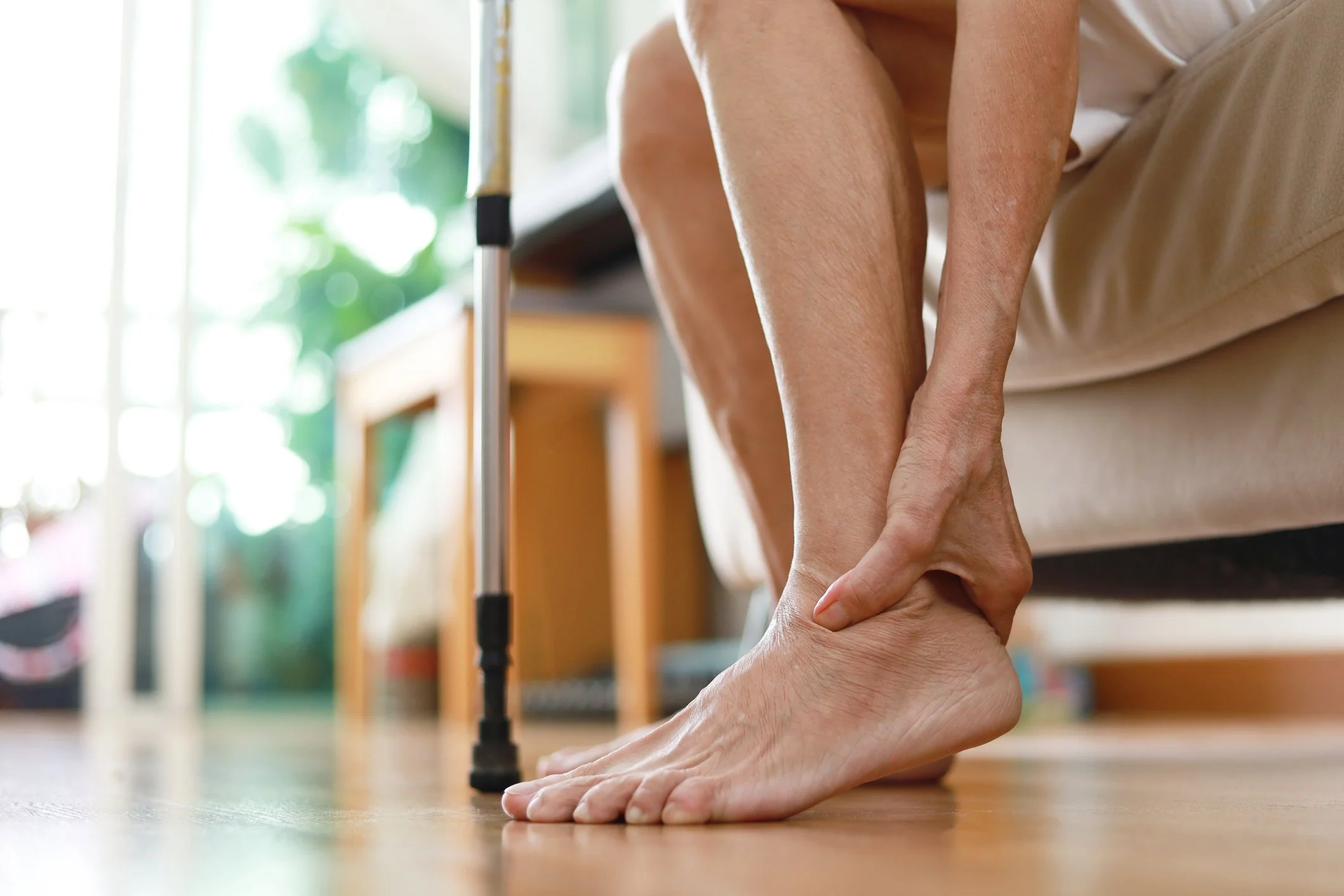
Foot pain has a way of announcing itself at the worst moment: the first step out of bed, the first few minutes after sitting, the walk to the car after a long day on hard floors. It usually has a name — plantar fasciitis, an old ankle sprain, Achilles tendinitis — and the name is often right. What it doesn't explain is why some heels settle in a few weeks and others stay sore for a year, or why an ankle sprained long ago still gives way.
The Donguibogam, the 1613 master text, gives everything from the hip down its own chapter. It is organized around the great leg illnesses of its time rather than around anatomy, but it ends with a region-by-region map of points for the leg and foot, and a set of practical observations about feet that have aged surprisingly well. We translated it in full.
[→ The Foot — full translated chapter]
Which part of the foot?
The first thing we'll ask is for you to point to it, because the foot is several different problems sharing one name.
**The bottom of the heel or the arch, worst on the first steps of the day** — the plantar fasciitis picture. Often follows a change: new shoes, more walking, more standing, a few extra pounds, or barefoot days on hard floors.
**The back of the heel, where the tendon attaches** — the Achilles picture. Usually stiff in the morning and sore at the start of activity, sometimes easing as you warm up.
**The outside of the ankle** — most often an old sprain that never fully recovered, with a sense that the ankle might roll.
**The inside of the ankle or the arch collapsing** — a different set of tendons, and often a change in how the foot carries weight.
**The toes or the ball of the foot** — joint pain, nerve pain between the toes, or pressure from shoes.
The chapter's prescription for ankle pain makes the same point in its own way. It does not give one point for the ankle; it gives eight, placed all the way around the joint — on the outside, the inside, and the front — so that the treatment follows where it actually hurts.
Swollen, or not?
Before anything else, the chapter sorts every leg complaint by one sign: does the foot swell, or not? It says the sign costs nothing to check, and it changes the treatment entirely. A foot that puffs up by evening, an ankle that holds water, a sprain that keeps swelling weeks later — these are treated differently from a foot that is painful but looks normal.
Swelling in both feet and ankles, especially with shortness of breath, is a different matter entirely. The chapter itself treats swelling that rises from the feet with breathlessness as an emergency, and so do we.
Warm it, or not?
The chapter is direct about one rule: needle the legs freely, but where there is heat, do not use moxibustion. A red, hot, swollen foot — a gout flare, an inflamed joint — is not something to warm.
For the foot that is cold, stiff, and aches in damp weather, the chapter offers one of its most appealing remedies: Sichuan peppercorns in a loose cloth bag, warmed over a low fire, and walked on barefoot until the cold and damp disperse. A heated foot pad, four centuries early. A warm foot soak does the same job today — for the cold foot, not the hot one.
If your feet burn rather than ache, especially at night, read more here — [Foot numbness & burning]
Narrow shoes
The chapter's closing sections cover corns and ingrown toenails, and on both it names the same cause: narrow boots. Corns grow between the toes from tight footwear; an infected ingrown nail is made worse by it. Four hundred years later, the advice is unchanged — and it extends to the heel and arch as well. Shoes with real support, no long hours barefoot on hard floors, and a few gentle stretches of the calf and the arch before standing up in the morning often matter as much as anything we do in the treatment room.
What treatment looks like here
Acupuncture is the main tool. For ankle pain, the chapter names BL60 Kunlun, BL62 Shenmai, and GB40 Qiuxu on the outside of the ankle; KI3 Taixi, KI6 Zhaohai, and SP5 Shangqiu on the inside; ST41 Jiexi at the front; and LR3 Taichong on the top of the foot. Several of these sit right around the heel and the Achilles tendon as well. For pain in all five toes, it uses KI1 Yongquan on the sole and KI2 Rangu on the inner arch. And it singles out one point above the ankle, GB39 Juegu, as treating illness of the legs "with divine effect."
Moxibustion and heat are used where the foot is cold and stiff, never where it is hot. Herbal medicine plays a supporting part, chosen by whether the picture is damp and hot or depleted and cold:
[Danggwiyeomtong-tang 當歸拈痛湯] — for legs and feet that are swollen, heavy, and hot
[Dokhwalgisaeng-tang 獨活寄生湯] — for aching, weak legs and feet that are worse with cold and fatigue
The chapter also gives achyranthes, a single herb, its strongest endorsement: for illnesses of the lumbus and the legs, it says, this must be used. It leads a formula downward, and it appears in many of the leg prescriptions we use.
A recent sprain often improves within a few weeks. Plantar fasciitis and Achilles problems that have been present for months usually take longer, and progress depends on how much the standing, walking, and footwear can change along the way.
Read a documented case — [Acute calf strain after running]
## Please read this part
Some foot and ankle pain needs a physician first, and not later.
**Get urgent evaluation if you have:** inability to put weight on the foot after an injury, or tenderness directly over the ankle bones; a sudden pop at the back of the ankle or calf with difficulty pushing off — a torn Achilles tendon is time-sensitive to treat; one calf that is swollen, warm, and painful; a red, hot, swollen joint with fever; or swelling in both feet together with shortness of breath.
**Get evaluated before starting here if you have:** diabetes with any foot sore, color change, or loss of feeling; foot pain that wakes you at night; numbness that is spreading; or foot or ankle pain after a work or car accident that hasn't been examined.
The 1613 chapter draws the same line. It names its own critical signs — swelling that rises from the feet with panting and fullness in the chest — and says they must be treated at once. It also describes a foot infection spreading up from a toenail. In diabetes today, any foot wound deserves prompt medical care.
**This approach may help if you're dealing with:** plantar fasciitis and heel pain · pain on the first steps of the morning · Achilles tendinitis · an ankle sprain that never fully healed · an ankle that keeps rolling · arch pain from long hours standing · toe and forefoot pain · foot and ankle pain from a workplace injury.
The Donguibogam translation project at formulas.raahacupuncture.com is researched and translated by Eui Young (Justin) Chung, L.Ac., Dipl. O.M. — the same clinician you'll see in the treatment room.