
## Where it hurts is the point
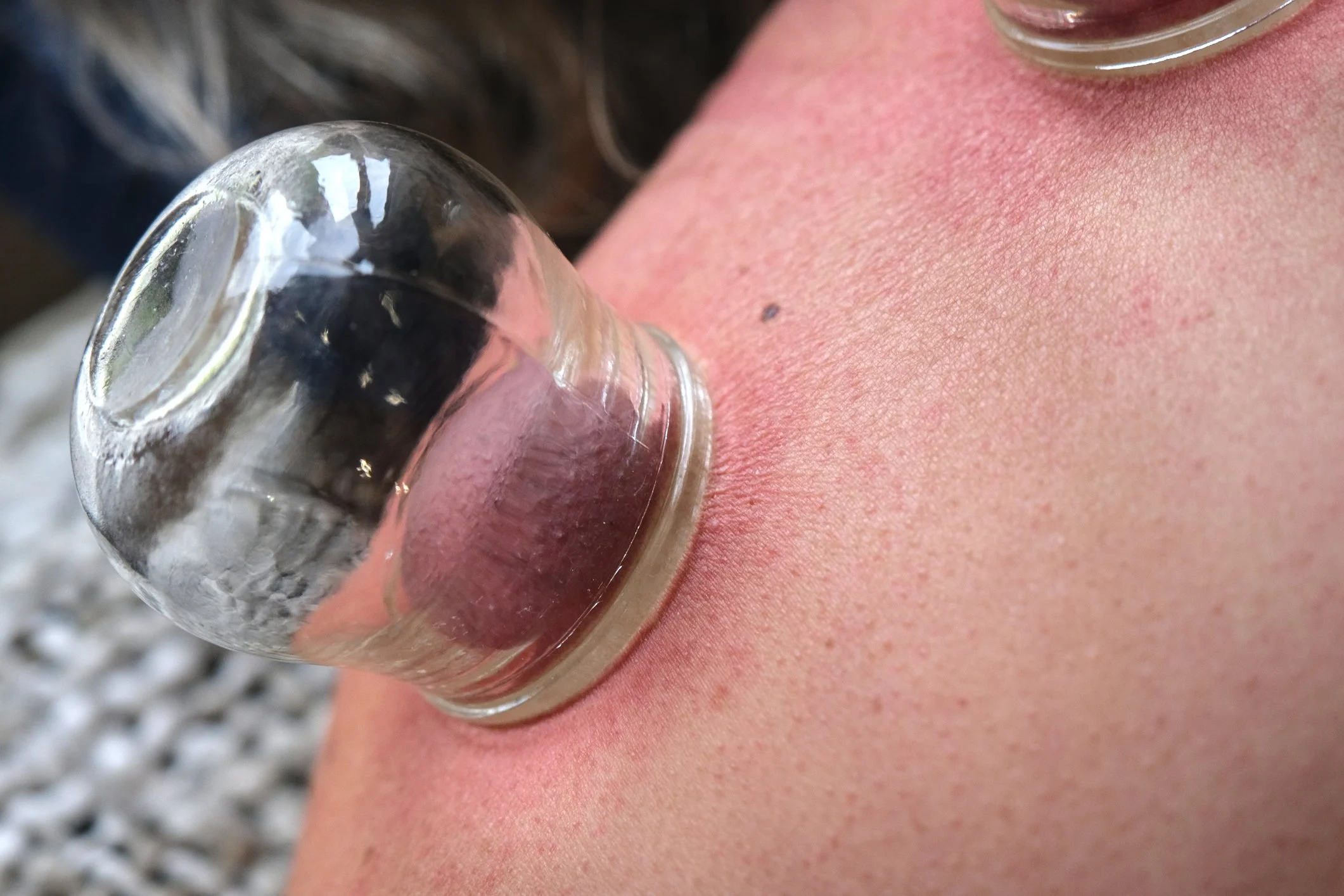
A pulled muscle from lifting. A knot under the shoulder blade that never quite lets go. A strained calf, a tweaked back, a body that has been tight and sore since an accident. These usually get called strains, sprains, or myofascial pain, and those names are fair. What they don't explain is why one strain heals in two weeks and another lingers, or why a knot keeps coming back to the same spot.
In Korean medicine, muscles, tendons, and ligaments are grouped together as the sinews — the tissue that moves the body and holds the joints together. The Donguibogam, the 1613 master text, gives them their own chapter: how they run, how they get hurt, why they tighten or go slack, and how to treat them. We translated it in full.
[→ The Sinews — full translated chapter]
## Take the sore spot as the point
The chapter traces twelve sinew lines through the body, each running from the fingers or toes up through the joints to the trunk and head. For every one of them it gives the same instruction, in a line that is still the foundation of how we treat muscle pain:
> Take the response as the count and the painful place as the point.
Needle where it hurts, and stop when it answers. This is the origin of what acupuncturists call ashi points — "that's the spot" points — and it is the classical recognition of what is now called a trigger point: a tender place in the muscle that, when found and released, eases pain that may be felt somewhere else along the line.
The sinew lines also explain why muscle pain travels. All the sinews, the chapter says, attach at the joints. A sore spot in the forearm, the calf, or the shoulder blade is one knot on a longer line, and the rest of that line is usually part of the problem.
## Tight, or slack?
The chapter's central distinction is between two opposite ways a sinew can fail. Cold, it says, tightens the sinews; heat draws them up into cramp; damp lets them go long and strengthless. One kind of muscle is short, tight, and won't stretch. The other is loose, weak, and won't hold.
The treatment follows. For a sinew tightened by cold, the chapter uses the heated needle; for one slackened by heat, it says plainly that the heated needle is of no use. In practice: a stiff, tight, cold muscle often answers well to heat, moxibustion, and infrared. A freshly injured muscle that is hot and swollen does not want more heat in the first days.
## The sinew that isn't being fed
The chapter makes a further point that changes how we treat cramps. Where the blood does not reach and nourish the sinews, it says, the sinews tighten. A cramping muscle may not need relaxing so much as feeding.
That is the reading for the calf cramps that wake people at night, the muscles that tighten in someone worn down or recovering from illness, and the cramps that come with heavy periods or after blood loss. The classical formula for it, Samul-tang, is a blood-building formula — not a muscle relaxant — and it appears in this chapter for exactly that reason.
## How sinews get hurt
The chapter names the plainest cause first: walking long injures the sinews. Overuse, repetition, and long hours on the feet or at the same task are the oldest explanation for muscle and tendon pain, and still the most common one.
It adds a striking observation about who gets it. Where the body labours hard but the mind is content, it says, illness arises in the sinews — and it prescribes not medicine but heat and stretching. That is the patient we see often: someone who enjoys their work, works hard at it, and feels it in their muscles rather than their mood.
## Do not count the labour
For sinews that have shortened after an injury, the chapter describes a method that is physiotherapy in all but name. A length of bamboo is hung from the waist on a cord; the patient sits, puts a foot on it, and rolls it back and forth. The instruction is four words: do not count the labour. In time, it says, it will surely answer. It records a man whose leg sinews had contracted after he broke his shin falling from a horse, unable to walk; he was taught this method and was walking normally within days.
A foam roller, a massage ball, a stretch done daily without keeping score — the principle is the same. What happens between visits is often what decides how fast a muscle recovers.
## What treatment looks like here
Acupuncture is the main tool, starting where the chapter starts: at the painful places themselves, then along the line they sit on. The chapter names GB34 Yanglingquan, below the knee, as the meeting point of all the sinews — "disease of the sinew is treated here." For calf cramp it uses BL57 Chengshan, in the belly of the calf, which is also a point you can press yourself the moment a cramp starts. For a knee too tight to straighten, LR8 Ququan; for tight sinews at the ankle, moxibustion on the ankle itself.
Heat, moxibustion, infrared, and manual treatment are used for tight, cold, stiff muscles. Herbal medicine is used where the pattern calls for it:
[Samul-tang 四物湯] — for cramping muscles the blood isn't reaching
[Wine-boiled quince poultice 酒煮木瓜粥] — wrapped over a tight, painful sinew
Quince is the chapter's favourite herb for the sinews: it enters the Liver, the text says, and so benefits the sinew, and treats every disease of it.
A fresh strain often improves within a few weeks. Myofascial pain that has been present for months, or soft tissue pain after an accident, usually takes longer, and progress depends a great deal on what happens at home and at work between visits.
Read a documented case — [Acute calf strain after running]
## Please read this part
Some muscle and soft tissue pain needs a physician first, and not later.
**Get urgent evaluation if you have:** a pop or tearing sensation followed by sudden weakness, a visible gap or deformity in the muscle, or heavy bruising; severe pain and tightness in a limb after an injury that keeps getting worse; one calf that is swollen, warm, and painful; or dark, cola-colored urine after intense exercise or a crush injury.
**Get evaluated before starting here if you have:** weakness that keeps progressing rather than pain alone, numbness or tingling, muscle pain with fever or unexplained weight loss, widespread muscle pain that started with a new medication, or soft tissue pain after a work or car accident that hasn't been examined.
The 1613 chapter draws a version of the same line. It separates the tight sinew from the wilting one — the muscle that cramps from the muscle that loses its strength — and treats the second as a different and more serious illness. Weakness that keeps getting worse deserves a proper evaluation.
**This approach may help if you're dealing with:** a pulled or strained muscle · knots and trigger points that keep coming back · muscle tightness from overuse or long hours at one task · calf cramps, including night cramps · stiffness and soreness after a car accident · soft tissue pain from a workplace injury · muscles that tighten in cold weather · a strain that has lingered longer than it should.
The Donguibogam translation project at formulas.raahacupuncture.com is researched and translated by Eui Young (Justin) Chung, L.Ac., Dipl. O.M. — the same clinician you'll see in the treatment room.