
Neck Pain
Four causes, one stiff neck
A neck that won't turn is one of the most common things we see — after sleeping wrong, after a car accident, after months at a desk. It usually arrives with a label already attached: a strain, whiplash, "tension." Those labels describe where it hurts. They don't explain why one stiff neck loosens in a day and another keeps coming back.
Korean medicine sorts neck pain by its details: when it started, what time of day it flares, whether it's stiff more than it hurts, and where else it reaches. The Donguibogam, the 1613 master text, gives the neck its own short chapter, and almost all of it is about one complaint — the neck that has gone rigid and will not turn. We translated it in full.
[→ The Neck and Nape — full translated chapter]
Neck and nape are not the same
The chapter opens with a distinction English has lost: *the front is called the neck; the back is called the nape.* A stiff nape — the back of the neck, where most neck pain lives — belongs to the channel that runs down the back of the body to the feet. A swollen front of the neck is a different problem, treated on different channels.
That one line explains something patients notice but rarely hear explained: why the back of the neck so often tightens together with the upper back, the low back, and even the backs of the legs. In this reading they are one line.
## The questions that sort it
The chapter gives four formulas for the stiff nape and attaches case histories to them. Translated into the questions we actually ask:
**Did you wake up with it, after sleeping in an awkward position?** — the acute wry neck. The text names it directly: the nape that cannot turn after a bad pillow. Usually the quickest to resolve.
**Does it feel pulled, as though something is drawing the neck back, and is it worse in cold, wind, or damp?** — wind and damp lodged in the channel at the back of the body. This is the pattern the classical theory predicts first, and the one most people have after a draft, an air-conditioned office, or a cold night.
**Does it flare at the same time every day — afternoon into evening — and settle by itself?** — the chapter's most interesting case. A patient's stiff neck came on every afternoon and eased by dusk. The physician's reading was that the problem must begin in the feet, because the sinew channel of the back runs from the foot all the way up to the nape, and the afternoon is when that pattern weakens. Three doses resolved it.
**Has it already failed every muscle relaxant and anti-inflammatory, and does it run from the neck down between the shoulder blades?** — the second case. A man's neck sinews hurt down into his shoulder blades so that he could not turn; every wind medicine had failed. The physician read it not as a neck problem at all but as something rising up the spine from below — and treated it with a warming formula aimed at the low back. One dose, and it resolved.
**Is it locked more than it hurts?** — a fifth pattern, given only as a case: a neck that would not turn, with only slight pain on movement. Read as phlegm and heat lodged in the channel. Two doses.
Why the low back matters to the neck
Two of those cases end the same way: the neck got better when something lower down was treated. The chapter gives the reason plainly. The channel that runs up the back of the neck is paired with the Kidney, which in Korean medicine governs the low back. A stiff nape can come from cold and damp striking the surface — or from the support underneath it failing.
That is why we ask about your low back, your sleep, and your energy when you come in for a neck. Sometimes the answer is that it's only the neck. Sometimes it isn't, and treating only the neck is why it keeps coming back.
Keep the back of the neck covered
The chapter ends with a piece of advice that sounds old-fashioned until you think about it. The point at the base of the skull, it says, is where cold first gets in — people in cold northern regions wrapped the nape in fur, and anyone who catches cold easily should keep it covered with a cloth.
The modern version: a scarf in an air-conditioned office, no sleeping directly under a fan, a collar on a windy day. For people whose stiff neck follows every cold draft, this one change often matters as much as treatment.
What treatment looks like here
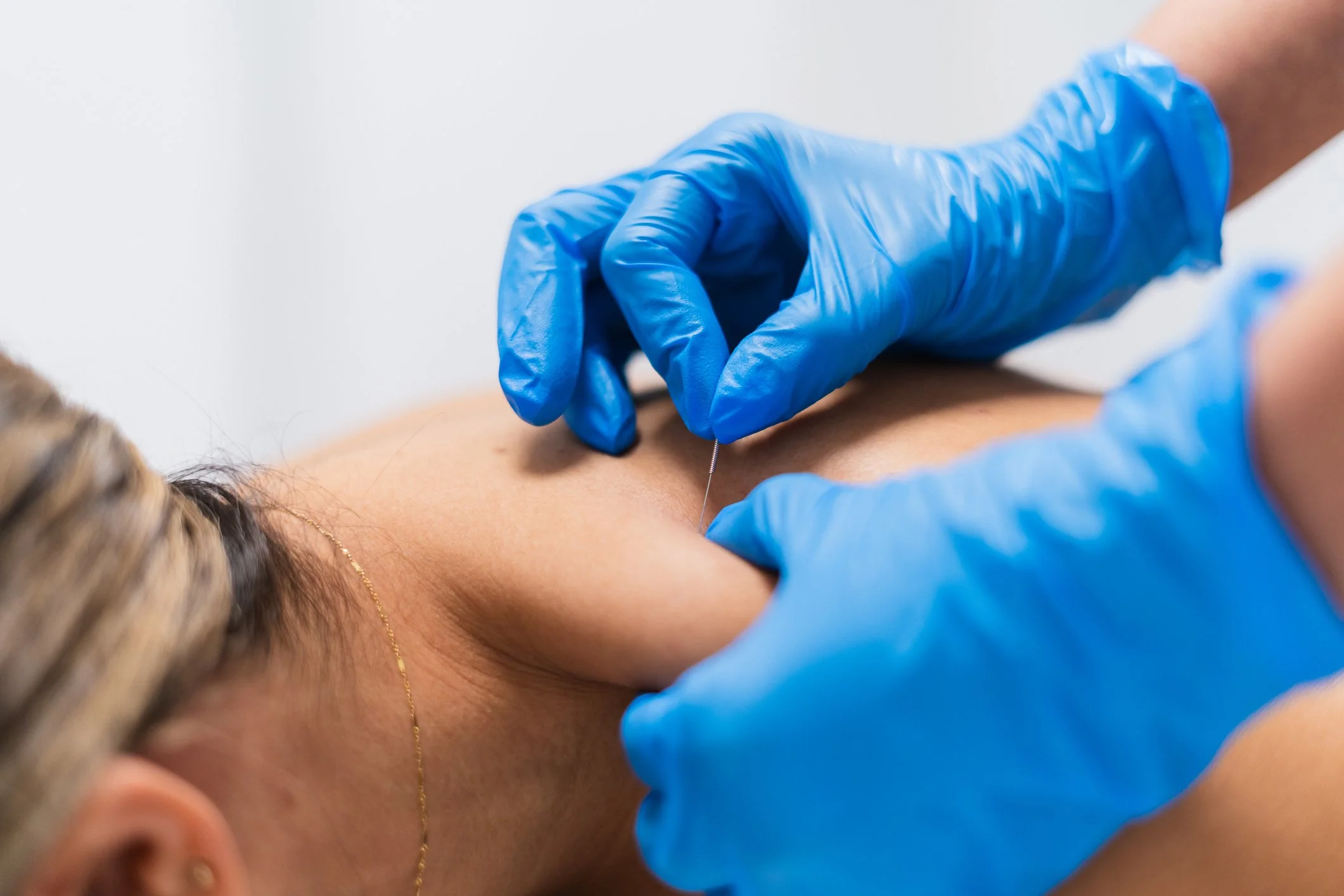
Acupuncture is the main tool. The points the chapter names are still in daily use — SI3 Houxi on the hand for neck pain, GB20 Fengchi and GV16 Fengfu at the base of the skull, and, less obviously, CV24 Chengjiang below the lower lip for a nape that won't turn: a point on the front of the body for a problem at the back. Distal points like these are often why a neck can loosen without anyone working directly on the sore spot.
Herbal formulas follow the pattern. The ones from the chapter:
[Hoesu-san 回首散] — for the neck that won't turn after a bad night's sleep
[Ganghwalseungseup-tang 羌活勝濕湯] — for the pulled, stiff neck that follows cold and damp
[Mogwa-jeon 木瓜煎] — for tight sinews, the afternoon-flaring case
[Chobu-san 椒附散] — for the chronic neck that has failed everything else
[Ijin-tang 二陳湯]modified — for the neck that is locked more than painful
A neck that seized overnight often loosens within one to three sessions. Neck pain after a car accident, and patterns that have been coming back for years, take longer.
If your neck pain comes with pain in the low back, read more here — [Low back pain]
## Please read this part ##
Some neck pain needs a physician first, and not later.
**Get urgent evaluation if you have:** a stiff neck with fever and headache, or a neck you cannot bend forward to touch chin to chest; a sudden severe headache; dizziness, double vision, slurred speech, or trouble swallowing after a neck injury; or new weakness, numbness, or clumsiness in the arms or hands. These can indicate meningitis, a vascular injury, or spinal cord compression, and all are time-sensitive.
**Get evaluated before starting here if you have:** neck pain after a car accident or fall that hasn't been examined, pain directly over the bones of the spine, pain that wakes you at night, unexplained weight loss, or a history of cancer.
The 1613 chapter draws the same line. Two sentences after its general discussion of the stiff nape, it describes a stiff neck with a clenched jaw and the back arched backward — and sets it apart as a different and dangerous illness, treated elsewhere. The chapter knows that not every stiff neck is a neck problem, and says so.
**This approach may help if you're dealing with:** a stiff neck on waking · neck pain after a car accident, once medically cleared · neck tension that runs into the shoulder blades · a neck that won't turn fully · neck pain that worsens in cold or air conditioning · recurring neck pain with tension headaches · neck stiffness from long hours at a desk.
The Donguibogam translation project at formulas.raahacupuncture.com is researched and translated by Eui Young (Justin) Chung, L.Ac., Dipl. O.M. — the same clinician you'll see in the treatment room.