
Sciatica
Which line does it run down?
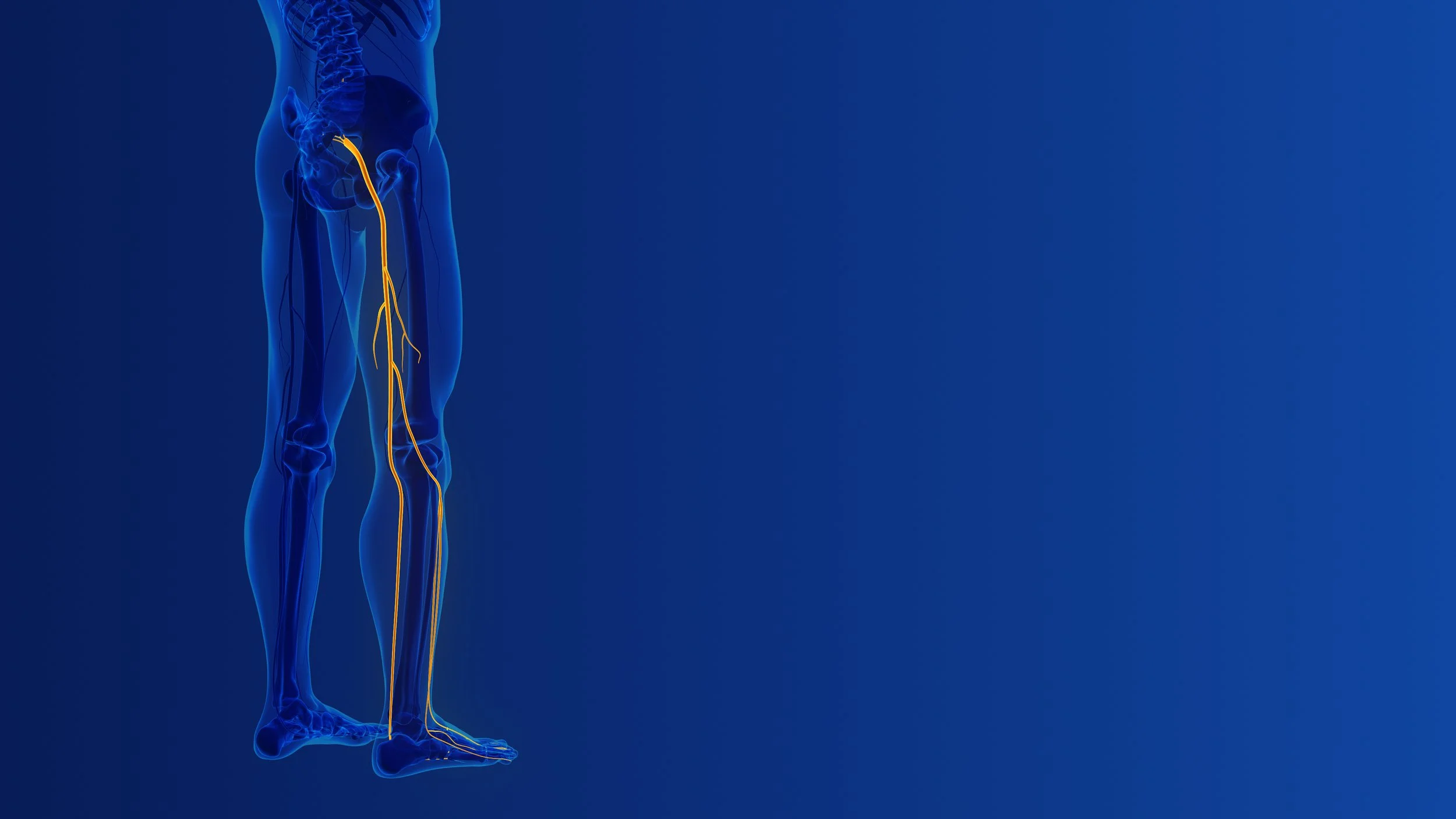
Pain that starts in the low back or buttock and travels down the leg has one name in modern practice — sciatica — and a fairly narrow set of causes behind it. But two people with the same diagnosis often describe very different legs. One feels it down the back of the thigh into the calf and heel. Another down the outside, along the hip and the seam of the trousers. A third down the front of the thigh.
Korean medicine starts from that difference. In the 1613 Donguibogam, pain that runs from the lumbus into the leg has its own name — 요각통 (腰脚痛) — and the first question is not what is pressing on what, but which channel the pain is following.
We translated both relevant chapters in full:
→ The Foot — full translated chapter
→ The Lumbus — full translated chapter
Three lines down the leg
The classical texts divide leg pain by the three Yang channels of the leg, and the divisions correspond closely to what a modern clinician maps as dermatomes.
Down the back — buttock, back of thigh, calf, into the heel or sole. This is the greater-Yang line, and it is the most common presentation of sciatica. The chapter's formula for it, Mahwangjwagyeong-tang 麻黃左經湯, is indicated for the lumbus and legs cramped, numb, and heavily painful.
Down the outside — hip, outer thigh, along the side of the knee, into the outer ankle. The lesser-Yang line.
Its formula, Banhajwagyeong-tang 半夏左經湯, names the complaint precisely: 腰脚引痛 — lumbar pain drawing into the leg.
Down the front — front of the thigh, over the knee, down the shin. The Yang-brightness line, and the least common.
Daehwangjwagyeong-tang 大黃左經湯 covers it, and its indication includes something modern practice also notices — that this presentation often comes with the bowels bound.
Knowing which line yours follows changes both the acupuncture points and the formula. It is also the single most useful thing you can bring to any appointment about this problem.
The other questions that sort it
The Lumbus chapter adds features that separate the causes rather than the routes:
Does the sore spot move from side to side? The text describes wind pain as keeping to no fixed place — now the left, now the right — and adds a detail worth noting: drawing both legs into tension. Bilateral, shifting, and tight rather than sharp.
Is it worse at night? Read as stasis, and often following an old injury. The classical phrase is light by day and heavy by night, with a stabbing quality on turning over.
Does it come on after sitting? Read as damp heat, and named as its own category in 1613. This is the most common presentation in a modern clinic.
Is one leg visibly thinner than the other? The Foot chapter has a term for this — 脚膝偏枯, one leg withered and shrunken — and treats it as a different problem from pain alone. In modern terms this is where you check for real motor loss rather than guarding.
Does the heat or numbness climb? One formula's indication describes heat beginning at the instep and rising by degrees to the hips, with numbness and weakness behind it. That ascending pattern points away from a compressed nerve root and toward a neuropathy, which is worth catching early.
The points
The Foot chapter gives a direct prescription for 요각통 — pain from lumbus into leg:
> **BL40 Wijung, BL60 Gonryun, GV26 Insu, ST33 Eumsi.**
Four points, and the logic is legible: Wijung behind the knee and Gonryun at the ankle sit on the line the pain follows; Insu is used for acute back pain of any kind; Eumsi covers the front of the thigh. It is the same Wijung the Lumbus chapter reaches for when a back will not straighten, extended down the leg.
The chapter's neighboring entries add points by region — the lateral knee, the inner knee, the ankle, the toes — which is how a treatment is actually built: the standing prescription, then points along wherever the patient's own pain runs.
What treatment looks like
Acupuncture is the main tool, and sciatica is among the presentations where patients most often notice change quickly — usually within four to six sessions, sometimes sooner for an acute onset. Points follow the affected line rather than a fixed recipe.
Herbal formulas matter more for the recurrent and the chronic. Which one depends on both the line and the cause:
Dokhwalgisaeng-tang 獨活寄生湯 — the standard for chronic leg pain on a depleted frame, where the sinews cramp and the bones ache
Cheongungyukgye-tang 川芎肉桂湯 — named for stasis lodged in exactly the three leg channels above
Jiryong-san 地龍散 — for the greater-Yang line specifically, with earthworm to open what has lodged along the spine
Chilmichangbaek-san 七味蒼柏散 — for the pain that comes on from sitting
read more about low back pain here — https://www.raahacupuncture.com/low-back-pain
Please read this part
Some leg pain needs a physician first, and quickly.
Get urgent care if you have: numbness in the groin, genitals, or inner thighs; loss of bladder or bowel control; weakness in both legs; or a foot that drags or slaps when you walk. These can indicate cauda equina syndrome or significant nerve compression, and delay costs function permanently.
Get evaluated before starting here if you have: progressive weakness in the leg, fever with back pain, unexplained weight loss, night pain that wakes you from sleep, a history of cancer, or pain following a fall.
And if numbness or burning is climbing upward from both feet rather than running down one leg, that is a different problem — peripheral neuropathy has treatable causes including diabetes, B12 deficiency, and thyroid disease, and bloodwork is the first step.
The classical chapters have their own version of this boundary. The Foot chapter's section on inauspicious signs exists precisely to mark where the physician's art stopped, and the instinct behind it — that leg pain is sometimes a symptom of something else entirely — is correct even where the specific signs belong to their era.
This approach may help if you're dealing with: pain radiating from low back into buttock and leg · pain down the back of the thigh and calf · pain along the outer hip and thigh · numbness or tingling in the leg or foot · pain worse after sitting or driving · leg pain that shifts sides · recurring sciatica after an old injury · leg pain that flares in cold or damp weather.
The Donguibogam translation project at formulas.raahacupuncture.com is researched and translated by
Eui Young (Justin) Chung, L.Ac., Dipl. O.M. — the same clinician you'll see in the treatment room.
─────────────────────────────────────────────