
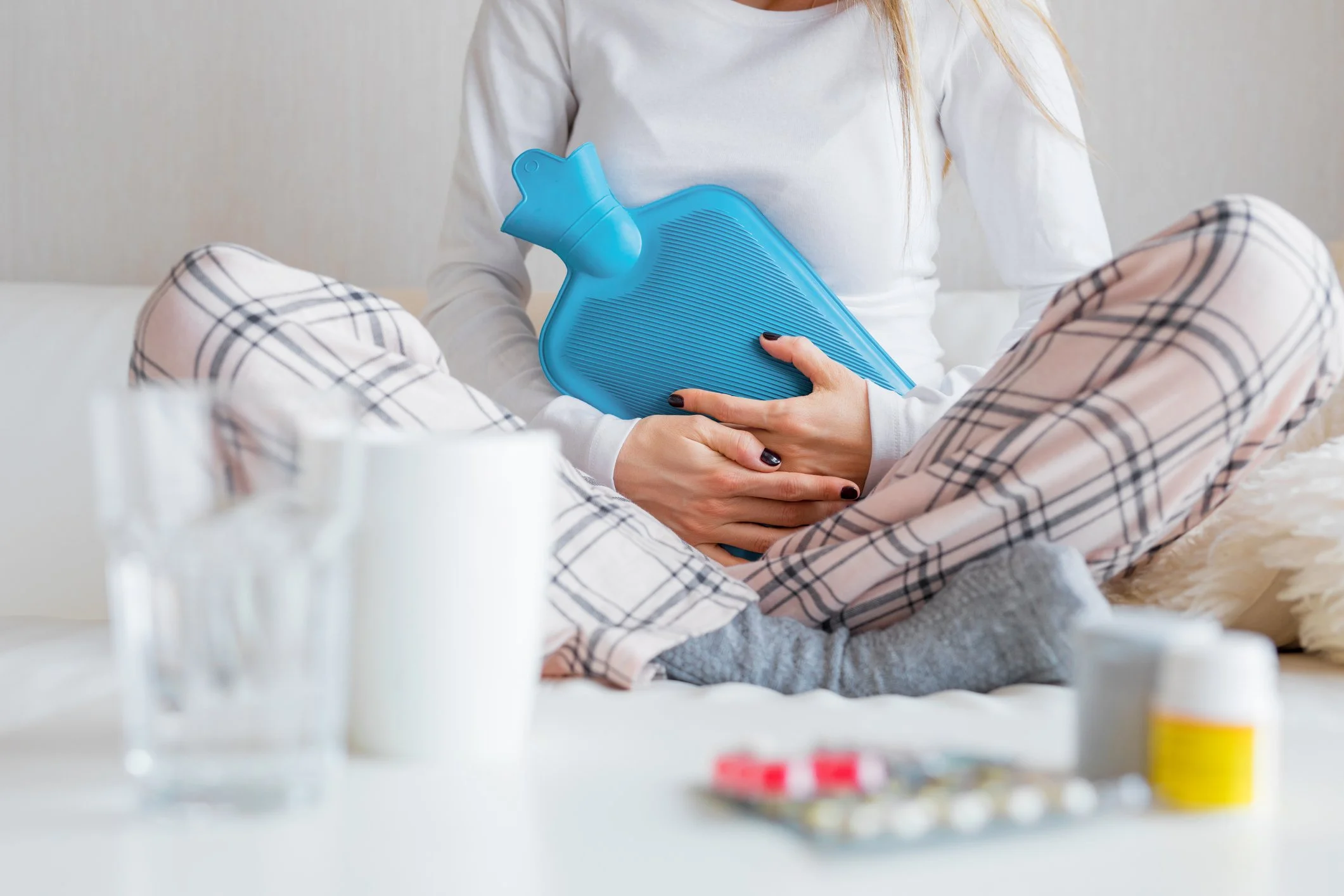
If you dread the week before your period, you are not alone. Bloating, mood swings, breast tenderness, headaches, irritability, fatigue, and cramps that range from uncomfortable to debilitating — these are the hallmarks of premenstrual syndrome (PMS) and dysmenorrhea (painful periods) that affect millions of women every month.
The conventional medical response is familiar: NSAIDs for pain, oral contraceptives to regulate hormones, or SSRIs for mood symptoms. These approaches work for some women. But for many, they manage symptoms without addressing the underlying cause — and for women who are trying to conceive, cannot tolerate hormonal medications, or simply want a more root-level solution, they fall short.
Classical Korean medicine has been observing and treating menstrual disorders for thousands of years. It offers a framework that explains not just what is happening during your cycle — but why, and what can be done about it at the source.
The Menstrual Cycle in Korean Medicine
To understand PMS and menstrual pain from a Korean medicine perspective, it helps to understand how classical medicine views the menstrual cycle itself.
In Korean and Chinese medicine, healthy menstruation depends on the smooth flow of qi and Blood through the Liver channel, the Uterus (자궁, Jagung), and the Chong and Ren vessels (충맥과 임맥) — the two extraordinary vessels that govern the uterus, menstruation, and reproductive vitality.
The Liver plays a central role in menstrual health for two reasons:
First, the Liver stores Blood — and menstrual blood is derived from the Liver's stored Blood reserve. If Liver Blood is sufficient, periods are regular, adequate in volume, and healthy in color. If Liver Blood is deficient, periods become scanty, pale, or late.
Second, the Liver governs the smooth flow of qi throughout the body. When Liver qi flows freely, emotions are balanced, digestion is comfortable, and the menstrual cycle proceeds smoothly. When Liver qi becomes stagnant — which happens easily under conditions of stress, frustration, emotional suppression, overwork, or irregular eating — the ripple effects are felt throughout the entire cycle.
This is why in classical Korean medicine, the Liver is considered the organ most central to menstrual health — and why the most common patterns underlying PMS and dysmenorrhea involve the Liver in some way.
The Five Root Patterns Behind PMS and Menstrual Pain
① Liver Qi Stagnation (간기울결, Gangi Ulgyeol)
The most common pattern — particularly in modern, urban women living with chronic stress.
The Liver's natural tendency is to move freely in all directions. When stress, frustration, emotional suppression, or irregular lifestyle obstruct this movement, qi stagnates. Stagnant qi cannot move Blood smoothly through the uterus, leading to premenstrual tension and cramping.
PMS symptoms: Irritability, mood swings, depression before the period, breast distension and tenderness, abdominal bloating, sighing, a feeling of being "bottled up"
Menstrual symptoms: Cramping that precedes the flow, clots, irregular cycle length, periods that start and stop, relief of pain once the flow establishes
Tongue and pulse: Slightly purple or dusky tongue body, wiry pulse (especially on the left)
② Liver Blood Deficiency with Qi Stagnation (간혈허 간기울결)
An extremely common combined pattern — particularly in women who are vegan or vegetarian, overwork, or have a history of heavy periods or childbirth.
When Blood is deficient, the Liver cannot store adequate Blood to release at menstruation. When there is not enough Blood to anchor Liver qi, the qi stagnates further — creating a reinforcing cycle of deficiency and stagnation.
PMS symptoms: Anxiety, mild depression, insomnia, headaches, dry eyes, restlessness before the period
Menstrual symptoms: Scanty flow, pale blood, cramping that improves with pressure, delayed periods, dull rather than sharp pain
Tongue and pulse: Pale tongue (or pale sides), thin and slightly wiry pulse
③ Cold Obstructing the Uterus (한응포궁, Han-eung Pogung)
Cold — whether from external exposure, consumption of cold foods and beverages, or constitutional yang deficiency — can invade the uterus and obstruct the flow of Blood.
This pattern is more common than most women realize, particularly in Los Angeles where iced drinks, cold smoothies, raw salads, and air conditioning are constant features of daily life.
PMS symptoms: Coldness in the lower abdomen, back, or feet before the period; a desire for warmth; low mood or withdrawal
Menstrual symptoms: Severe cramping that is dramatically better with heat (heating pad, hot water bottle); dark, clotted blood; pain that begins before the flow; cold lower back and legs during the period
Tongue and pulse: Pale or bluish-purple tongue, deep and tight pulse
④ Blood Stagnation (혈어, Hyeol-eo)
When qi stagnates long enough, Blood stagnation follows. Blood stagnation in the uterus is the pattern most directly associated with severe, debilitating menstrual pain — including the pain of endometriosis and uterine fibroids.
PMS symptoms: Fixed lower abdominal pain or pressure before the period, emotional intensity, possible dark circles under the eyes
Menstrual symptoms: Severe, sharp, fixed cramping — often described as stabbing or drilling; dark, purple blood with significant clots; relief of pain once clots are passed; pain that is worse with pressure
Tongue and pulse: Purple or dark tongue body, possibly with purple spots; choppy or wiry pulse
⑤ Liver and Kidney Deficiency (간신허, Gan-sin Heo)
A deeper constitutional pattern more common in women over 35 or those with a history of reproductive depletion — multiple pregnancies, prolonged contraceptive use, or long-term overwork.
PMS symptoms: Lower back aching before the period, knee weakness, fatigue, mild depression, poor memory
Menstrual symptoms: Scanty or absent flow, dull lower back pain during the period, prolonged light spotting, delayed cycle
Tongue and pulse: Pale or slightly red tongue without coating, deep and weak pulse — especially in the chi (尺) position
How Acupuncture and Saam Treat PMS and Dysmenorrhea
Saam Acupuncture (사암침법)
In Saam, PMS and menstrual pain are understood as expressions of elemental imbalance in the organ systems governing reproduction and blood flow. Rather than applying a standard "PMS protocol," Saam identifies the specific constitutional pattern and corrects it at the root.
For Liver qi stagnation patterns: Saam tonifies the Water point of the Liver channel and sedates the Fire point — a classical technique for smoothing Liver qi and relieving constraint. The beauty of Saam is that this correction is made using distal points on the hands and feet, far from the abdomen — yet the effect on the Liver's ability to move qi and Blood is profound and immediate.
For Blood deficiency patterns: Saam tonifies the Earth system (Spleen-Stomach) to strengthen Blood production alongside Liver tonification. This combined approach addresses both the deficiency driving the stagnation and the stagnation itself.
For cold uterus patterns: Saam warms the Kidney-yang and Mingmen fire using the classical Fire point tonification technique on the Kidney channel — restoring the warmth that drives Blood circulation through the uterus. Moxibustion (쑥뜸, Ssukddeum) is frequently added — warming specific acupuncture points with burning moxa (artemisia/mugwort) to directly penetrate cold from the uterine area.
For blood stagnation patterns (including endometriosis): Saam activates the Metal-Water axis to break stagnation and restore free flow. This is combined with specific Blood-invigorating points that have been used for millennia for uterine blood stagnation.
Key Acupuncture Points
SP 6 (삼음교, Sameuingyo) — The meeting point of all three yin channels of the leg: Spleen, Liver, and Kidney. Regulates menstruation, nourishes Blood, moves stagnation, calms the mind. One of the most versatile and clinically important points in all of women's health acupuncture. Used in virtually every menstrual protocol.
LV 3 (태충, Taechung) — The source point of the Liver. Smooths Liver qi, moves Blood stagnation, calms irritability and mood swings, relieves headaches and breast distension. The primary point for Liver qi stagnation underlying PMS.
CV 4 (관원, Gwanwon) — Located on the lower abdomen, this point nourishes the Uterus, tonifies Kidney yang and yin, and regulates the Chong and Ren vessels. Fundamental for menstrual regulation and uterine health.
CV 6 (기해, Gihae) — "Sea of Qi." Tonifies yuan qi, warms the lower burner, and strengthens the Uterus. Used with moxibustion for cold uterus patterns.
ST 29 (귀래, Gwirae) — Located directly above the uterus. Invigorates Blood in the lower abdomen, warms cold stagnation, and is specifically indicated for menstrual pain and irregular periods.
SP 8 (지기, Jigi) — The xi-cleft point of the Spleen channel — the most powerful point on the channel for acute pain. Used specifically for acute dysmenorrhea, particularly for Blood stagnation type cramping.
LV 8 (곡천, Gokcheon) — The water point of the Liver — tonifies Liver Blood and yin, benefits the sinews, and nourishes the lower reproductive area.
KD 3 (태계, Taegye) — The source point of the Kidney. Nourishes Kidney yin and yang, supports the Uterus through the Kidney's connection to the Chong and Ren vessels.
BL 17 (격수, Gyeoksu) — The influential point for Blood. Nourishes and invigorates Blood throughout the body — particularly important for Blood stagnation and deficiency patterns.
BL 23 (신수, Sinsu) — The back-shu point of the Kidney. Strengthens Kidney yang and yin, warms the lower back, and supports the uterus through the Kidney's governing role in reproduction.
Moxibustion (쑥뜸)
For cold uterus and Blood stagnation patterns, moxibustion is often as important as acupuncture — if not more so. Burning moxa on or near specific acupuncture points penetrates warming yang energy directly into the lower burner and uterus, dissolving cold obstruction that needles alone cannot fully reach.
Classical Korean medicine has used moxa on CV 4, CV 6, and ST 29 for cold uterine patterns for centuries. Many patients with cold-type dysmenorrhea — whose cramps are dramatically better with a heating pad — find that a course of moxibustion treatment produces lasting relief that persists long after treatment ends.
Herbal Medicine for PMS and Menstrual Pain
Liver Qi Stagnation Patterns
소요산 (Soyosan / Xiao Yao San — Free and Easy Wanderer) The most widely used formula for Liver qi stagnation with underlying Blood deficiency — the classic PMS formula. Smooths Liver qi, nourishes Liver Blood, and strengthens the Spleen simultaneously. Addresses irritability, mood swings, breast distension, bloating, fatigue, and irregular periods. The modified version 가미소요산 (Gami Soyosan / Jia Wei Xiao Yao San) adds Moutan bark and Gardenia to address heat signs — particularly useful when PMS involves significant anger, hot flashes, or insomnia.
시호소간산 (Siho Sogan-san / Chai Hu Shu Gan San) For more significant Liver qi stagnation with pain — hypochondriac pain, abdominal distension, irritability, and premenstrual cramping. Moves qi more powerfully than Soyosan.
Blood Stagnation Patterns
혈부축어탕 (Hyeolbu Chugeo-tang / Xue Fu Zhu Yu Tang — Drive Out Stasis in the Mansion of Blood) The foundational formula for Blood stagnation — one of Wang Qingren's classical formulas from the Qing dynasty. For fixed, stabbing menstrual pain with dark clotted blood. Also addresses the emotional component of blood stagnation: depression, restlessness, and a persistent sense of constraint.
계지복령환 (Gyeji Bokryeonghwan / Gui Zhi Fu Ling Wan) A classical formula from the Jinkui Yaolue specifically for Blood stagnation in the uterus. Used for dysmenorrhea with dark clots, uterine fibroids, endometriosis, and ovarian cysts. Gentler than Xue Fu Zhu Yu Tang — appropriate for longer-term use and for patients with some underlying deficiency.
온경탕 (Ongyeong-tang / Wen Jing Tang — Warm the Menses) A classical formula for cold Blood stagnation in the uterus — combining warming yang herbs with Blood-nourishing and Blood-invigorating herbs. For women with cold lower abdomen, irregular periods, scanty flow, dry lips, warm palms alongside cold lower body, and infertility. One of the most nuanced and clinically important formulas in classical women's medicine.
Blood Deficiency Patterns
사물탕 (Samul-tang / Si Wu Tang — Four Substance Decoction) The foundational blood-nourishing formula, containing Dang Gui, Rehmannia, Peony, and Cnidium. Used as the base from which most menstrual blood deficiency formulas are derived.
당귀작약산 (Dang Gui Jakyak-san / Dang Gui Shao Yao San) Dang Gui and Peony formula — specifically designed for women with Blood deficiency and Spleen dampness causing abdominal pain, bloating, and scanty periods.
팔진탕 (Paljin-tang / Eight Treasure Decoction) For dual qi and Blood deficiency — the exhausted woman with very scanty periods, fatigue, palpitations, and dizziness.
Cold Uterus Patterns
애부난궁환 (Aebu Nangung-hwan) A classical warming formula specifically for cold uterus — combining moxa leaf (艾葉, aigyo), cyperus (부자,附子), and other warming herbs to dispel cold from the uterine area and restore the Mingmen fire that drives reproductive vitality.
A Practical Note on Timing
In classical Korean medicine, treatment timing matters for menstrual disorders. The ideal approach:
Week 1–2 (follicular phase, after period ends): Focus on nourishing Blood and yin — building the Blood reserves that will be needed for the next cycle. Herbal formulas that tonify Blood are most effective during this phase.
Week 3 (pre-ovulatory and ovulatory phase): Transition to formulas that support smooth qi flow and gentle Blood movement.
Week 4 (premenstrual phase): Focus on moving Liver qi and Blood stagnation — preventing the buildup of tension and obstruction that causes PMS and cramping. This is when Soyosan, Xue Fu Zhu Yu Tang, or other qi and Blood moving formulas are most effective.
During the period: Focus on pain relief and supporting smooth flow — Gui Zhi Fu Ling Wan, warming formulas for cold patterns, and acupuncture points that move Blood and relieve cramping.
This phase-based approach, adapted from classical Korean gynecological medicine, often produces significantly better results than a fixed formula used throughout the entire cycle.
Lifestyle Adjustments That Make a Real Difference
Keep warm. Cold is one of the most significant aggravating factors for menstrual pain — particularly the cold uterus pattern. Avoid iced drinks, cold foods, and exposure of the lower abdomen to cold in the week before and during your period. A hot water bottle or heating pad on the lower abdomen during cramping is not just symptomatic relief — it is genuinely therapeutic.
Reduce caffeine before your period. Caffeine promotes Liver qi stagnation and can worsen breast tenderness, irritability, and headaches in the premenstrual phase.
Move gently. Moderate exercise — walking, yoga, gentle stretching — supports Liver qi flow and reduces PMS. Vigorous exercise during the period itself, however, can deplete Blood and worsen cramping.
Address stress. In Korean medicine, chronic emotional stress is one of the primary causes of Liver qi stagnation — the root of most PMS presentations. Acupuncture directly addresses the nervous system's stress response, but the underlying lifestyle factors need attention too.
Eat warm, cooked foods during your period. Raw and cold foods weaken the Spleen and invite cold into the lower burner during the most vulnerable phase of the cycle. Warm soups, congee (죽), and cooked grains support rather than deplete the body during menstruation.
What to Expect from Treatment
Acute pain relief: Many patients experience significant reduction in menstrual cramping during or immediately after a single acupuncture session — particularly with Blood stagnation and cold uterus patterns.
Cycle regulation: Most patients notice measurable improvements in cycle regularity, flow volume, and PMS symptoms within 2 to 3 cycles of consistent treatment. The body needs time to rebuild Blood, clear stagnation, and re-establish hormonal rhythms.
Full resolution: For mild to moderate PMS and dysmenorrhea, a course of 8 to 12 sessions combined with appropriate herbal medicine typically produces significant, lasting improvement. For conditions involving endometriosis, fibroids, or longstanding blood stagnation, longer treatment is realistic — but meaningful improvement is achievable.
We reassess at every visit and adjust the treatment plan as your pattern shifts.
Frequently Asked Questions
Can acupuncture help endometriosis? Yes — though it is important to be realistic about what acupuncture can and cannot do. Acupuncture and herbal medicine do not remove endometrial tissue, but they can significantly reduce inflammation, break down blood stagnation, improve circulation to the pelvis, and modulate the immune and hormonal factors that drive endometriosis. Many patients with endometriosis find that acupuncture substantially reduces their pain and improves their quality of life — often allowing them to reduce their reliance on pain medication.
Can acupuncture regulate irregular cycles? Yes — cycle regulation is one of the most consistent outcomes we see with classical Korean medicine treatment. Irregular cycles almost always reflect an underlying pattern of Liver qi stagnation, Blood deficiency, or Kidney deficiency that responds well to the combination of acupuncture and herbal medicine.
Is it safe to have acupuncture during my period? Yes, in most cases. Certain points are used more cautiously during menstruation — particularly strong Blood-moving points in patients with heavy flow — but acupuncture during the period is both safe and often very effective for relieving cramping in real time.
How does acupuncture compare to ibuprofen for menstrual pain? Several studies have found acupuncture to be as effective as or superior to NSAIDs for dysmenorrhea — with the additional advantage of addressing the root cause rather than simply blocking pain signals. Unlike NSAIDs, regular acupuncture treatment can reduce the severity of future cycles rather than just managing each episode as it occurs.
I am trying to conceive — is treatment compatible with fertility efforts? Absolutely — and addressing PMS and menstrual pain through Korean medicine often improves fertility outcomes simultaneously, because the patterns driving menstrual dysfunction (Liver qi stagnation, Blood deficiency, cold uterus) are the same patterns that impair conception. Treating them together is entirely appropriate.
Ready to Address Your Menstrual Health?
At Raah Acupuncture in Koreatown, Los Angeles, we specialize in women's health using Saam Acupuncture, classical Korean herbal medicine, moxibustion, and the Balance Method. We take the time to properly diagnose your individual pattern and treat accordingly — not with a generic "PMS protocol" but with a fully individualized approach that addresses your specific root cause.
We accept most major health insurance plans including Cigna, Blue Cross, Blue Shield, Kaiser, UnitedHealthCare, Health Net, and ASH Network. HSA and FSA cards accepted.
Call us at 323-422-4964, email contact@raahacupuncture.com, or visit raahacupuncture.com/contact to schedule your first consultation.
3407 West 6th Street, Suite 702 · Los Angeles, CA 90020 · Koreatown, Los Angeles
Raah Acupuncture Inc. is a licensed acupuncture and herbal medicine practice in Koreatown, Los Angeles. All treatments and herbal formulas are prescribed by a licensed acupuncturist and herbalist (L.Ac., Dipl. O.M.). This post is for educational purposes and does not constitute medical advice.