
## Long looking wears the blood
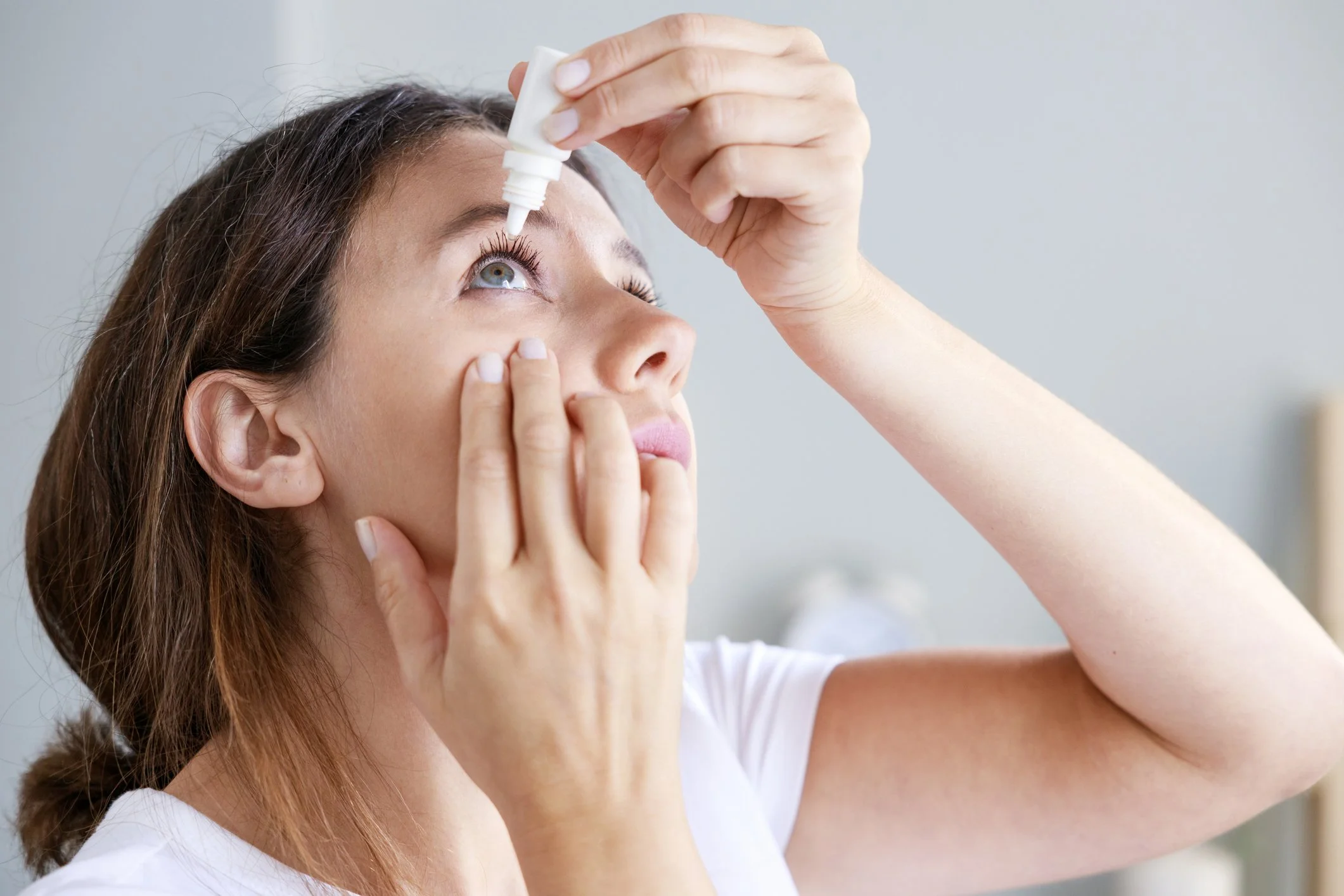
Most of us spend the day looking at something a foot or two away. By late afternoon the eyes burn, the focus drifts, the screen feels too bright, and there's a dull ache behind the eyes or across the brow. Eye drops help for an hour. A new prescription helps a little. It's usually called digital eye strain or dry eye, and both are real. What they don't explain is why some people's eyes recover overnight and others start the next day already tired.
The Donguibogam, the 1613 master text, gives the eye one of its longest chapters. It has a section titled, plainly, "Reading Injures the Eyes." We translated it in full.
[→ The Eye — full translated chapter]
## Reading injures the eyes
The chapter's explanation is simple. The eye sees because it receives Blood; long looking uses that Blood up; and the Blood is governed by the Liver. So, it says, diligence at books wears down the Liver, heat rises, and the eyes grow dim. It gives the condition a name — liver taxation — and says it comes from reading, needlework, and games like chess carried to excess.
Replace books with screens and the description fits most office workers today. It also explains why eye strain so often comes with headache, irritability, neck tension, and poor sleep: in this reading, the eyes are where a wider depletion shows.
The chapter is honest about the cure. Medicine alone, it says, won't fix it; the eyes need rest.
## A prescription with six ingredients
The chapter records a story worth knowing. A scholar named Fan Ning, troubled by his eyes, asked a physician for a remedy. The physician, half joking, gave him six: read less; think less; look inward; look outward less; rise late; go to bed early. Take these six, he said, and not only will your eyes see clearly, you will live longer.
Four hundred years later, the advice holds up better than most eye products. Breaks from the screen, less late-night scrolling, and more sleep are still the foundation.
## Sleep is when the eyes recover
The chapter quotes the Neijing on why: when a person lies down, the Blood returns to the Liver; the Liver receives the Blood, and so the eyes can see. In other words, sight is restored at night. Short or broken sleep means the eyes start the next day already behind.
## Far and near
The chapter even divides failing focus into two kinds. Seeing well far away but not up close, it reads as too little "water" — the Kidney side. Seeing well up close but not far, it reads as too little "fire" — the Heart side. It gives a different formula for each. We use these alongside, not instead of, your optometrist's prescription; they speak to the tired eye behind the lens.
## Dry and tired with age
The chapter notes that older people's eyes dim because Blood and Qi decline and the Liver's lobes grow thin. It contrasts a child's eyes, bright and clear, with an older person's, dim and drowsy. Dry eye and slower focusing do become more common with age, and they respond to the same approach: nourish what is running low, rather than only lubricating the surface.
## One thing to do every day
The chapter's section on caring for the eyes recommends this: rub your palms together until they are warm, and cup them over your closed eyes, fourteen times. It also suggests pressing the small hollows at the outer ends of the brows, and keeping the eyes closed more often than you think you need to. A minute of this between tasks is one of the simplest things you can do.
## What treatment looks like here
Acupuncture is used to relieve eye strain, dryness, and the headache and neck tension that come with them. The chapter's points include BL2 Zanzhu at the inner brow, TE23 Sizhukong at the outer brow, BL1 Jingming at the inner corner of the eye, GV23 Shangxing and GV20 Baihui on the head, LI4 Hegu on the hand, and GB37 Guangming on the lower leg — its name means "bright light."
Herbal medicine nourishes what the eyes run on. From the Eye chapter:
[Jihwang-won 地黃元] — the chapter's formula for eyes tired from reading, and for difficulty seeing up close
[Jeongji-hwan 定志丸] — for difficulty seeing far
[Ikgichongmyeong-tang 益氣聦明湯] — for dim, tired eyes from overwork and exhaustion
[Myeongan-jihwang-hwan 明眼地黃丸] — for dimming vision in older adults
Between visits:
- Every 20 minutes, look at something 20 feet away for 20 seconds
- Keep the screen at arm's length and a little below eye level; turn down the brightness
- Blink fully and often — we blink far less when we stare at screens
- Put screens away an hour before bed
Most people notice their eyes feel less tired within a few weeks, especially when the habits change too.
If your eye strain comes with headaches, read more here — [Headaches & migraines]
## Please read this part
Some eye symptoms need an eye doctor first, and not later.
**Get emergency care if you have:** sudden loss of vision, even briefly; a sudden shower of floaters or flashes of light, or a curtain or shadow across your vision — these can mean a retinal tear or detachment; a severely painful red eye with blurred vision, halos around lights, headache, or nausea, which can be acute glaucoma; double vision that starts suddenly; or an eye injury or chemical in the eye.
**See an eye doctor before starting here if you have:** vision that is getting steadily worse; a red, painful, or light-sensitive eye; discharge from the eye; dry eyes with dry mouth or joint pain; or you haven't had an eye exam in two years.
The 1613 chapter draws some of the same lines. It describes seeing "flies scattering in disorder, or a spider hanging in empty air" as a sign of something deep in the eye, and treats sudden loss of sight as a collapse to be dealt with at once. Some changes in vision are not to be waited on.
**This approach may help if you're dealing with:** digital eye strain · dry, tired, burning eyes · eyes that tire by the afternoon · headaches behind the eyes or across the brow · eye fatigue with neck tension · difficulty focusing up close as you get older · tired eyes with poor sleep.
The Donguibogam translation project at formulas.raahacupuncture.com is researched and translated by Eui Young (Justin) Chung, L.Ac., Dipl. O.M. — the same clinician you'll see in the treatment room.