
## Where it hurts, and when
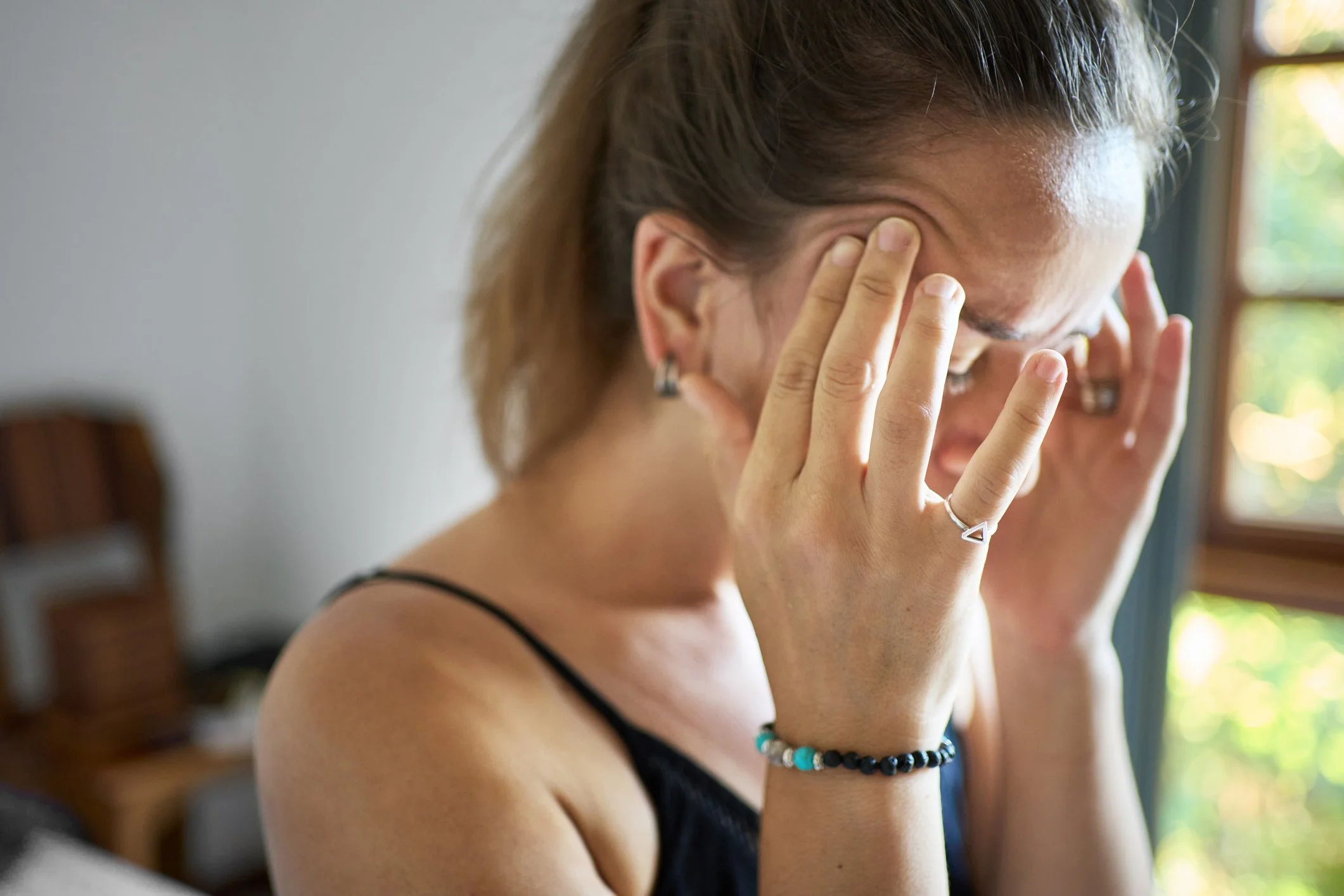
Headaches are among the most common reasons people come to see us, and among the most varied. A band across the forehead by mid-afternoon. A throbbing on one side with nausea and a need for a dark room. A dull pressure at the back of the head that runs down into the neck. A head that aches the day before the weather turns. Most have been called tension headaches or migraines, and those names are useful. What they don't explain is why one person's headache answers to rest and another's to a cold compress, or why the same medication that works for a friend does nothing for you.
The Donguibogam, the 1613 master text, gives the head its own chapter. It names more than ten distinct kinds of headache, each with its own signs, and it sorts them first by the simplest question there is: where on the head does it hurt? We translated it in full.
[→ The Head — full translated chapter]
## Point to it
The chapter's organizing idea is that the head is where the body's yang channels meet. Six of them rise to the head, each covering its own territory, and a headache belongs to the channel whose ground it sits on:
**The back of the head, running into the neck** — the channel that runs down the back of the body. Often comes with stiffness at the nape and an aversion to wind and cold.
**The forehead and around the eyes** — the channel of the stomach and large intestine. Often comes with heat, sweating, or digestive trouble.
**The sides of the head and the temples** — the channel of the gallbladder. This is where the chapter places one-sided headache, and its description of the territory, from the outer corner of the eye up to the corner of the forehead, is a description of where most migraines sit.
**The top of the head** — the channel of the liver, the only yin channel that reaches the crown.
The chapter's herbal rule follows the same map: one herb, chuanxiong, is used for almost every headache, and a second is added to lead it to the right territory. Treatment in the acupuncture room follows the same logic.
## One side of the head
The chapter treats migraine — one-sided headache — as its own illness, and adds a distinction that surprises patients: whether it sits on the right or the left. On the right, it says, it tends to come from phlegm and heat; on the left, from wind and from Blood that is running short. The rule is a starting point, not a verdict, but it is one of the reasons two people with "migraine" can leave with different treatments.
It also describes, under a different name, the headache that most migraine sufferers will recognize at once: the head splitting with pain, the body heavy as a mountain, hands and feet cold, nausea and vomiting, dizziness, the eyes unwilling to open, as though one were lost in wind and cloud. The chapter reads this as phlegm rising from a weak digestive centre, and its formula for it is still one of the most widely used for this kind of headache today.
## The other questions that sort it
**Does it come with the weather?** The chapter describes a headache brought on by catching wind after washing the hair, with an observation that anyone with weather-sensitive headaches will appreciate: it is worst the day before the wind arrives, and eases on the windy day itself. A separate kind is worse in rainy, overcast weather, with the head feeling heavy and wrapped.
**Does cold help, or warmth?** One kind of headache, the chapter says, makes a person want cold air even in deep winter; the pain eases in the cold and returns the moment they step into a warm room or near smoke. That is a heat headache, and treating it with warmth makes it worse. Another kind wants the head wrapped and covered — which, the chapter notes, can mean heat trapped inside rather than cold.
**Does it come with fatigue, after illness, or after blood loss?** A dull headache with ringing in the ears and pain at both temples is read as depleted Qi. One that rises from the outer tip of the eyebrow is read as depleted Blood. The chapter notes that headaches of this kind are especially common in women, often with dizziness "as if standing on a boat."
**Is it the brow bone?** Pain over the eyebrow ridge, worse at night, with the eyes hard to open, has its own section and its own formulas.
**Did it start after drinking?** Treated separately, in the Internal Damage chapter.
## What treatment looks like here
Acupuncture is the main tool for headache. The chapter's point selections are still used every day: GV20 Baihui at the crown, GV23 Shangxing and GV24 Shenting at the hairline, and LI4 Hegu on the hand for a headache across the whole head; TE23 Sizhukong at the tail of the eyebrow and GB20 Fengchi at the base of the skull for one-sided headache; ST40 Fenglong on the lower leg where phlegm is driving it; BL2 Zanzhu for pain over the brow bone. And for any headache, one-sided or whole-head, it gives the same instruction it gives for muscle pain: find the tender spot and needle it.
The chapter also records a case. An elderly woman had suffered from headaches for a long time. The physician noticed dark, congested vessels on her hands and feet, bled them until the blood ran like ink, then treated the channel at fault. She recovered completely.
Herbal formulas follow the kind of headache. A few from the chapter:
[Cheongungdajo-san 川芎茶調散] — the general formula for headache on one side or across the whole head, taken with green tea
[Banhabaekchulcheonma-tang 半夏白朮天麻湯] — for the splitting, nauseating headache with dizziness and heaviness
[Cheonggong-go 淸空膏] — for headache with heat and agitation
[Yanghyeolgeopung-tang 養血祛風湯] — for headaches in women with dizziness, from Blood running short
[Seongi-tang 選奇湯] — for pain over the brow bone
Many people notice a change in the frequency or severity of their headaches within a few weeks. For long-standing migraine, the goal is usually fewer and milder attacks over several months, and a headache diary — when it comes, where it sits, what it follows — is one of the most useful things you can bring.
If your headaches come with a stiff neck, read more here — [Neck pain]
## Please read this part
Some headaches need a physician first, and not later.
**Get emergency care if you have:** a sudden, explosive headache that reaches full strength within a minute — the worst of your life; a headache with fever and a stiff neck; a headache with weakness, numbness, confusion, slurred speech, or loss of vision; a headache after a blow to the head; or a headache shared by others in the same room, especially with a heater, generator, or stove running.
**Get evaluated before starting here if you have:** a new headache after age 50, a headache that is steadily getting worse over weeks, headaches that wake you from sleep or are worst on waking with vomiting, headaches that change pattern, headaches in pregnancy, or a history of cancer or a weakened immune system.
The 1613 chapter draws the same line, and in places it is remarkably exact. It describes a "true headache" — the whole brain in pain, the hands and feet cold to the joints — and says it cannot be treated with medicine; death comes within a day. It warns that a headache with sudden loss of vision is fatal. And it records that the fumes of burning charcoal can cause headache: an account, four centuries early, of carbon monoxide.
**This approach may help if you're dealing with:** tension headaches · migraines, with or without nausea · headaches on one side of the head · headaches at the back of the head and neck · weather-sensitive headaches · headaches around the menstrual cycle · headaches over the brow and eyes · headaches after a car accident, once medically evaluated.
The Donguibogam translation project at formulas.raahacupuncture.com is researched and translated by Eui Young (Justin) Chung, L.Ac., Dipl. O.M. — the same clinician you'll see in the treatment room.