
## The root is still alive
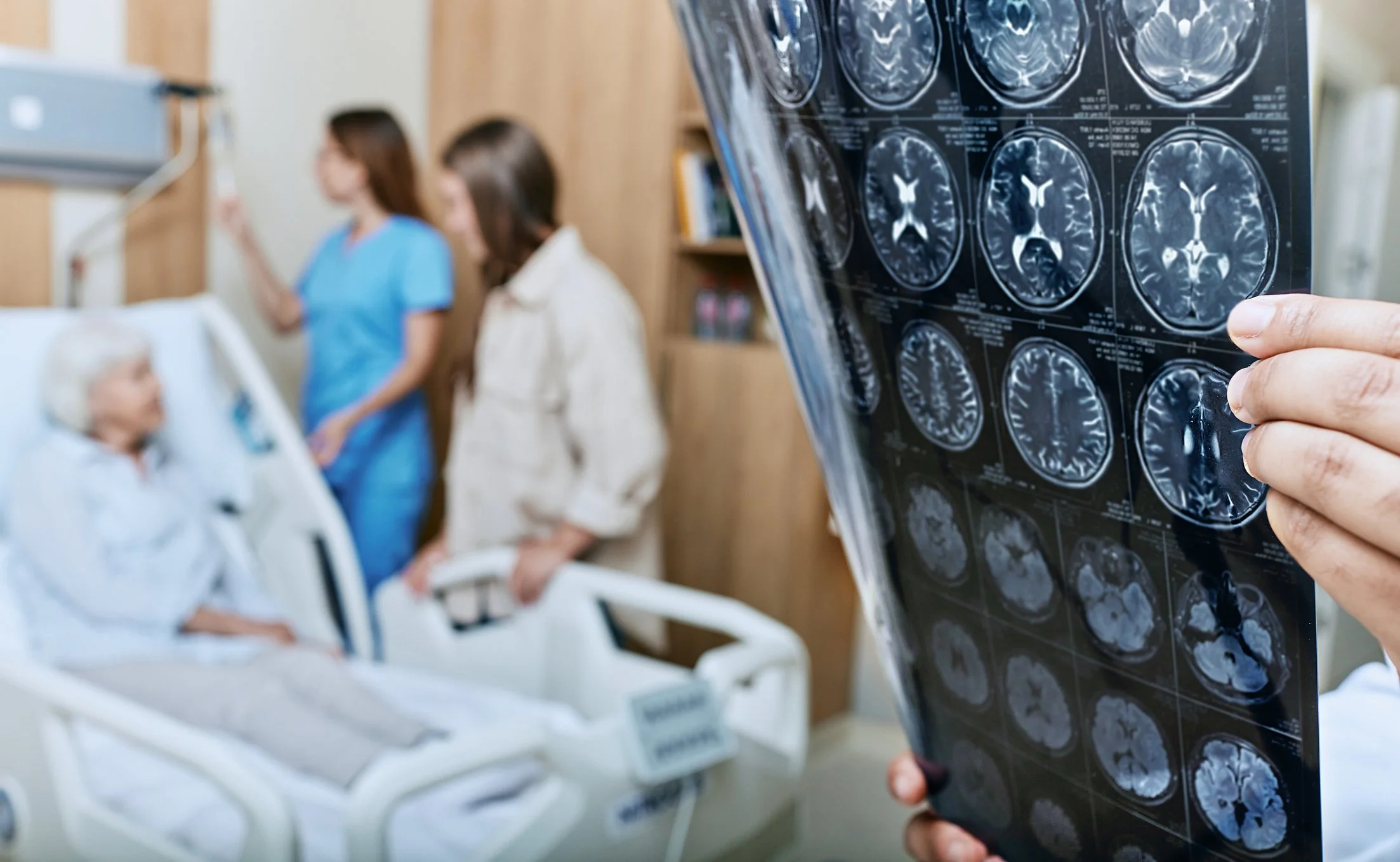
A stroke changes life in an afternoon. Afterwards come months of work: getting a hand to open again, a foot to clear the floor, words to come when they're wanted, and a body that tires far faster than it used to. Hospital rehabilitation does a great deal in the first weeks. Then, for many people, formal therapy winds down while the recovery is still going.
Acupuncture and herbal medicine can be part of that longer stretch — alongside physical, occupational, and speech therapy, and the medications that prevent a second stroke, never instead of them.
The Donguibogam, the 1613 master text, gives stroke the longest chapter in its whole section on disease, under the name "wind stroke." We translated it in full.
[→ Wind — full translated chapter]
## A tree with one side withered
The chapter asks a question families often ask: if half the body has stopped working, how can a person go on living for years? Its answer is an image worth keeping. It is like a tree whose root and trunk are still sound, while the branches on one side have withered first. As long as the root is alive, the tree is alive.
That is the frame we bring to rehabilitation. The damaged side gets direct attention, but so does the root — sleep, digestion, energy, mood, circulation — because recovery draws on the whole person, not only the arm or the leg.
## Not all strokes look the same
The chapter separates three pictures that still matter clinically.
**Half the body weak, but speech and thinking intact** — it calls this "withered half body," and treats it as the more favourable kind, with the illness lodged in the flesh and channels.
**Weakness with changed speech and clouded thinking** — a separate and heavier picture.
**Weakness that comes on gradually, without a sudden event** — not a stroke at all, it says, but a wasting illness of a different kind. That distinction still matters: slowly progressive weakness needs a different medical workup.
It also notes that some patients are left with pain on the affected side, and that pain and no-pain call for different treatment. Post-stroke pain, stiffness, and spasticity are common, and they are among the things we work on most.
## Early is better
The chapter is plain about timing: treated urgently, paralysis can recover; left long, the obstruction sets and becomes hard to move. Modern stroke rehabilitation says much the same — the first three to six months are when the brain is most ready to rewire, and the more practice and stimulation in that window, the better.
That does not mean later is hopeless. People continue to make gains for a year and more, and treatment can still help with stiffness, pain, fatigue, sleep, and mood long after the early period.
## Guard against the second one
The chapter's warning about recurrence is one of its most important lines: a wind illness, even once recovered, will come again, and when it comes again it will be heavier. So medicine must be kept up to prevent it.
Four hundred years later, that is the core of stroke care. A second stroke is common and usually more disabling. Blood pressure, cholesterol, blood sugar, heart rhythm, smoking, and alcohol all matter, and the medications your physician prescribes for them are the most important thing you take. We see our part as supporting the person who has to live with that plan: sleep, stress, digestion, energy, and the habits that make it easier to keep.
## Gentle, not forceful
The chapter adds a passage that is easy to read as kindness, because it is. Where the stroke has settled into the limbs, it says — a "minor stroke" — the harsh wind medicines should not be used to treat it deeply; give only mild, harmonious ones. The person may not be made whole again, but they can live on well for years. It repeats the warning twice.
That is how we work with stroke survivors: steady, gentle, regular treatment rather than aggressive intervention, matched to how much the person can take on any given week.
## What treatment looks like here
Acupuncture is the main tool. The chapter's prescription for paralysis of half the body is still close to what is used today: GV20 Baihui at the crown, GB20 Fengchi at the base of the skull, LI15 Jianyu at the shoulder, LI11 Quchi at the elbow, LI4 Hegu on the hand, GB30 Huantiao at the hip, GB31 Fengshi on the thigh, ST36 Zusanli below the knee, and GB39 Xuanzhong above the ankle — and it singles out Huantiao as the essential point for a paralysed leg. We often add scalp acupuncture and electroacupuncture, and work on the stiff, overactive muscles as well as the weak ones.
Herbal medicine supports recovery and the person behind it. From the Wind chapter:
[Samul-tang 四物湯] — the chapter's base for weakness with the blood depleted
[Sagunja-tang 四君子湯] — its base for weakness with the Qi depleted
[Gagam-yunjo-tang 加減潤燥湯] and [Geopung-jeseup-tang 祛風除濕湯] — the chapter's paired formulas for paralysis of one side
[Ganghwal-yupung-tang 羌活愈風湯] — which the chapter names for prevention, to be taken "as soon as the wind is felt to stir"
Any herbal formula is chosen around the medications you already take. Blood thinners in particular interact with some herbs, and we coordinate with your physician.
Progress after a stroke is measured in small, real gains — a finger that opens, a step that clears, a word that comes back. We'll talk honestly about goals, and we work best as one part of your rehabilitation team.
If speech, swallowing, or mood are part of your recovery, read more here — [Anxiety, insomnia & mental health]
## Please read this part
**Call 911 at once for any of these, even if they pass:** sudden weakness or numbness of the face, arm, or leg, especially on one side; sudden trouble speaking or understanding; sudden loss of vision; sudden dizziness or loss of balance; a sudden, severe headache. Remember **BE FAST** — Balance, Eyes, Face, Arm, Speech, Time to call. Clot-busting treatment works only within hours.
**Symptoms that come and go are not a reason to wait.** A "mini-stroke" (TIA) is a warning, and a full stroke often follows within days. Get evaluated the same day.
**Talk to your physician before starting here if you take:** blood thinners or antiplatelet medications, or if you have had recent surgery, a seizure, or a fall.
The 1613 chapter begins in exactly this place. Its very first section lists the warning signs that come before a stroke — numbness in the thumb and index finger, weakness in the hands, twitching flesh, a deviated mouth, halting speech — and says the time to act is then, before the fall. Its second warns that a stroke, once recovered, will come back heavier. Both are still the heart of stroke care.
**This approach may help if you're dealing with:** weakness or reduced movement on one side after a stroke · stiffness and spasticity · pain on the affected side · a hand that won't open or a foot that drags · fatigue after stroke · sleep and mood changes after stroke · support between and after formal rehabilitation · support for preventing a second stroke, alongside your physician's care.
The Donguibogam translation project at formulas.raahacupuncture.com is researched and translated by Eui Young (Justin) Chung, L.Ac., Dipl. O.M. — the same clinician you'll see in the treatment room.