
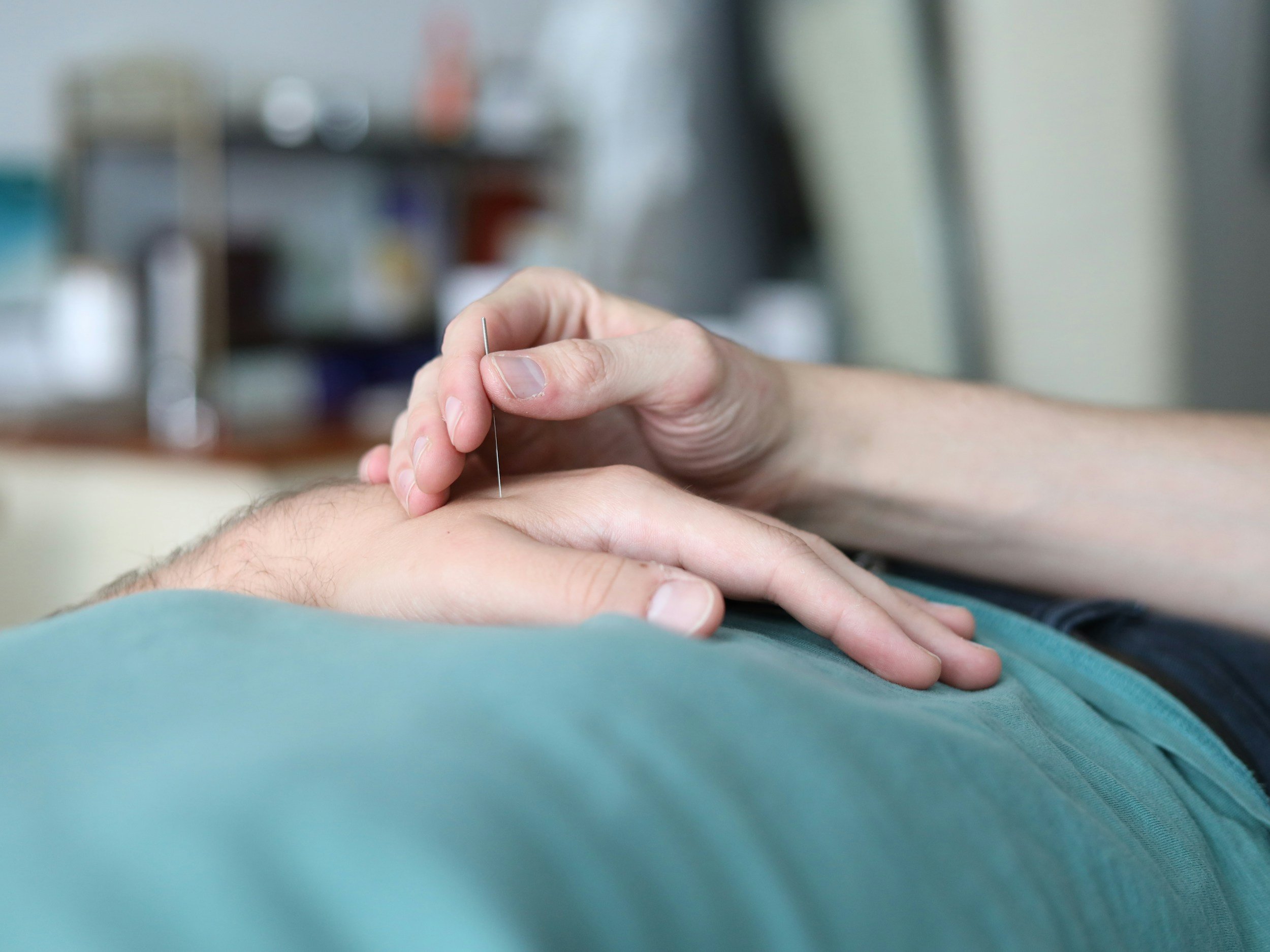
Does acupuncture improve fertility? The honest answer: the evidence is mixed. Some meta-analyses of acupuncture alongside IVF show improved pregnancy rates, while the largest sham-controlled trial found no significant difference in live births — though acupuncture consistently reduces stress and anxiety during fertility treatment, and structured courses over multiple cycles appear more promising than single sessions around embryo transfer. This post walks through that evidence honestly, and explains how Korean medicine actually assesses and treats fertility patterns.
If you have been researching fertility acupuncture in Los Angeles, you have probably encountered two extremes: clinics that imply acupuncture can practically guarantee a pregnancy, and skeptics who dismiss it entirely. Neither position reflects the research, and neither reflects what I see clinically. As a practitioner of Saam acupuncture and Korean medicine here in Koreatown, fertility support is one of the core reasons patients come through my door — often mid-IVF cycle, often exhausted, and almost always confused about what acupuncture can and cannot do for them. You deserve a straight answer. Let's start with the evidence.
What the Research Actually Shows
The case for optimism
The modern wave of fertility acupuncture research began with studies of acupuncture administered around embryo transfer. A 2008 systematic review and meta-analysis in BJOG by El-Toukhy and colleagues, covering 13 randomized trials and over 2,500 women, examined acupuncture around oocyte retrieval and embryo transfer. Earlier pooled analyses had suggested a meaningful benefit for clinical pregnancy; this larger review found no statistically significant improvement in live birth rates — an early sign that the story was more complicated than the first headlines suggested.
More recent and more comprehensive analyses have been cautiously favorable. A 2023 updated systematic review and meta-analysis in Archives of Gynecology and Obstetrics pooled 27 randomized controlled trials with 7,676 participants and found that acupuncture was associated with improved clinical pregnancy rates in women undergoing IVF, with subgroup analyses suggesting the timing, dose, and duration of treatment matter — more sessions delivered across the treatment cycle appeared more useful than minimal protocols. Similarly, a 2021 overview of systematic reviews in Frontiers in Public Health examined the full landscape of published reviews on acupuncture for women undergoing IVF and embryo transfer, concluding that acupuncture may improve clinical pregnancy rates — while candidly noting that the methodological quality of many underlying trials is limited and that better-designed studies are needed.
The case for skepticism
Now the study every honest practitioner has to reckon with. In 2018, Caroline Smith and colleagues published in JAMA the largest rigorous trial to date: a randomized clinical trial of acupuncture versus sham acupuncture in 848 women undergoing IVF. Women received acupuncture or a non-insertive sham control around ovarian stimulation and embryo transfer. The result: live birth rates were 18.3% in the acupuncture group versus 17.8% in the sham group — no significant difference.
I will not spin this study away, because it is a good study. But two caveats are worth understanding, and they are the same caveats the researchers themselves discussed. First, the protocol was short — as few as three sessions clustered around the transfer itself. That does not resemble how acupuncture is traditionally practiced for fertility, where treatment typically spans two to three months before a transfer. Second, the "sham" control used a non-penetrating needle at real acupuncture point locations, which produces measurable physiological effects of its own; both groups may have received something, which narrows any detectable gap. Neither caveat rescues a claim the data cannot support. What the JAMA trial tells us clearly is this: a handful of acupuncture sessions squeezed in around embryo transfer should not be expected to change your live birth outcome.
Where the evidence is more consistent: stress
One area where findings are steadier is the psychological and neuroendocrine side of fertility treatment. IVF is, by any measure, stressful — and chronic stress affects the hypothalamic-pituitary-adrenal axis, which sits directly upstream of reproductive hormone regulation. A study published in Fertility and Sterility by Magarelli and colleagues found that acupuncture during controlled ovarian hyperstimulation was associated with measurable changes in serum cortisol and prolactin in women undergoing IVF, with hormone profiles in the acupuncture group trending toward those seen in cycles with better outcomes. And a pilot study on perceived stress, acupuncture, and pregnancy rates among IVF patients found that women who received acupuncture on the day of embryo transfer reported significantly lower stress both before and after transfer, and that lower stress scores were associated with higher pregnancy rates.
These are smaller studies and should be weighted accordingly. But they align with what nearly every fertility patient tells me: the treatment cycle itself — the injections, the monitoring appointments, the two-week waits — is one of the most stressful experiences of their lives. If acupuncture reliably helps people move through that process calmer and sleeping better, that alone is a legitimate clinical outcome, independent of whether it moves the pregnancy statistics.
My honest summary of the evidence
- Acupuncture concentrated only around embryo transfer probably does not improve live birth rates. The JAMA trial is persuasive on this point.
- Longer courses of treatment — the kind that actually resemble traditional practice — show more encouraging signals in recent meta-analyses, but the underlying trials vary in quality, and no one should present this as settled.
- The stress, anxiety, and quality-of-life benefits during fertility treatment are the most consistent findings, and they are not trivial.
- No credible study suggests acupuncture harms IVF outcomes when performed by a licensed practitioner. It is a low-risk adjunct.
If a clinic tells you acupuncture will raise your IVF success rate by some specific percentage, be skeptical. If a clinic tells you acupuncture is worthless for fertility, they have not read past 2018.
How Korean Medicine Assesses Fertility
Biomedicine asks: are you ovulating, are the tubes patent, what are the AMH and FSH values, what is the sperm analysis? These are essential questions, and I want every fertility patient to have that workup — Los Angeles has excellent reproductive endocrinologists, and Korean medicine works best alongside them, not instead of them.
Korean medicine asks a different set of questions, and the difference is the point. Rather than looking only at whether the reproductive system passes or fails discrete tests, we assess the pattern of the whole system — because two women with identical lab values can present completely differently.
The menstrual cycle as a diagnostic window
In Korean medicine, the menstrual cycle is the single richest source of diagnostic information for fertility. I ask about things a standard workup rarely covers in detail: cycle length and its variability, the color and consistency of menstrual blood, clotting, premenstrual breast tenderness or irritability, mid-cycle spotting, cramping quality (dull versus sharp, before versus during bleeding), basal body temperature patterns if you chart them, and cervical fluid changes. A cycle that arrives every 28 days can still tell us a great deal — pale scanty bleeding suggests one pattern, dark clotted painful bleeding another, a short luteal phase with pre-period spotting yet another.
Blood, yin, and yang patterns
Classical Korean medicine describes fertility through the sufficiency and movement of fundamental substances. Without turning this into a textbook chapter, the patterns I most often see in fertility patients include:
- Blood deficiency — often presenting with light periods, fatigue, dizziness, pale complexion, thin endometrial lining on ultrasound. Common in patients who are chronically depleted: overworked, under-slept, under-nourished.
- Yin deficiency — night sweats, a sensation of heat in the evenings, short cycles, scant cervical fluid. This pattern shows up frequently in patients over 38 and in those who have been through multiple stimulated cycles, which are demanding on the body.
- Yang deficiency — cold hands and feet, low basal body temperatures, a sluggish follicular phase, low libido, loose stools. These patients often feel cold in ways their labs never explain.
- Blood stasis and qi stagnation — clotted painful periods, premenstrual tension, cycles that stop and start. Frequently relevant in patients with endometriosis or a history of pelvic surgery.
In Saam acupuncture — the classical Korean four-needle system I practice — these patterns map to specific channel relationships, and treatment uses points on the arms and legs to rebalance the relevant systems rather than needling directly over the abdomen in every case. It is a precise, minimal style: fewer needles, chosen deliberately.
Stress and shen
Korean medicine has never treated the mind and the reproductive system as separate departments. The classical concept of shen — roughly, the settled or unsettled state of the spirit — is assessed in every fertility consultation: sleep quality, rumination, anxiety, the grief that often accompanies a long fertility journey. Physiologically, this maps reasonably well onto what we now describe as HPA-axis dysregulation. Clinically, it means that treating a fertility patient without addressing her sleep, her nervous system, and the emotional weight she is carrying is treating half the picture.
What a Treatment Course Actually Looks Like
Patients often arrive expecting a single magic session before embryo transfer. Based on both the evidence above and classical practice, that is not how I recommend working.
If you are trying to conceive naturally
A typical course is weekly treatment for 8 to 12 weeks — roughly three menstrual cycles. That is not an arbitrary number: folliculogenesis, the maturation of the follicle that will ovulate, takes approximately 90 days. Treatment is timed to the phase of your cycle:
- Menstrual phase: supporting smooth, complete shedding; addressing pain and clotting.
- Follicular phase: nourishing blood and yin to support follicle development and endometrial growth.
- Ovulation: promoting qi and blood movement to support the ovulatory transition.
- Luteal phase: supporting yang and warmth to sustain the luteal phase; calming the shen during the wait.
We reassess at each visit based on what your current cycle is doing — Korean medicine is iterative, not a fixed protocol.
If you are preparing for IVF or an embryo transfer
Ideally, I like to see patients two to three months before a retrieval or transfer, once or twice weekly. During stimulation, treatment supports sleep, side effects, and stress. Around transfer, sessions before and after are reasonable and low-risk — but I am direct with patients that, per the JAMA data, transfer-day sessions alone are the least evidence-supported part of the process. The preparation phase is where I believe the real work happens. After transfer, gentle treatment focuses almost entirely on calming the nervous system through the two-week wait.
I coordinate willingly with reproductive endocrinologists, and nothing in a well-run acupuncture plan should ever conflict with your REI's protocol. If it does, your REI's protocol wins.
Realistic Expectations, and Who Benefits Most
Let me be plain about what I tell patients in my Koreatown clinic.
What acupuncture and Korean medicine can reasonably offer: more regular, less painful cycles; measurable improvements in sleep and stress during treatment; a structured, supportive framework during one of the hardest seasons of your life; and a possible — not guaranteed — improvement in the conditions for conception when treatment is sustained over months.
What it cannot do: reverse diminished ovarian reserve, open blocked fallopian tubes, override severe male-factor infertility, or substitute for IVF when IVF is genuinely indicated. Anyone promising otherwise is selling you something.
In my experience, the patients who benefit most from fertility acupuncture are those with irregular or painful cycles, unexplained infertility, stress-dominant presentations, luteal phase concerns, and those preparing for IVF with enough lead time to do the work properly — as well as patients who have been through failed cycles and need both physiological support and a place to steady themselves before trying again. Patients with clear structural or severe factor infertility should pursue reproductive medicine first, with acupuncture as a supportive adjunct if they wish.
Living in Los Angeles cuts both ways for fertility. Access to world-class fertility clinics is a genuine advantage. The pace, the commutes, the cost-of-living stress, and the culture of postponing rest are not. A significant part of my work with fertility patients here is, frankly, helping high-functioning, chronically depleted people slow down enough for their physiology to cooperate.
Frequently Asked Questions
Does acupuncture increase IVF success rates?
The evidence is genuinely mixed. Recent meta-analyses pooling thousands of patients suggest improved clinical pregnancy rates with adequate courses of treatment, while the largest sham-controlled trial found no live-birth benefit from brief treatment around embryo transfer. A fair summary: sustained treatment over two to three months may help; a few sessions at transfer probably does not change outcomes.
When should I start acupuncture before IVF or embryo transfer?
Ideally two to three months before your retrieval or transfer, at one to two sessions per week. This window matches the roughly 90-day timeline of follicle maturation and gives us time to work on cycle quality, sleep, and stress. Starting the week of your transfer is still safe, but it is the least evidence-supported approach.
How many fertility acupuncture sessions will I need?
A typical course is 8 to 12 weekly sessions, spanning about three menstrual cycles, with treatment adjusted to your cycle phase. Patients preparing for IVF often come twice weekly during stimulation. We reassess regularly — if you are not seeing changes in your cycle, sleep, or stress within that window, we discuss it honestly.
Is fertility acupuncture safe during an IVF cycle or after embryo transfer?
Yes — in the hands of a licensed acupuncturist, adverse events in fertility acupuncture research are rare and minor, and no credible study shows harm to IVF outcomes. After transfer, treatment is gentle and focused on calming the nervous system. I coordinate with your reproductive endocrinologist, and their protocol always takes precedence.
How does Korean medicine differ from generic fertility acupuncture?
Korean medicine, including the Saam four-needle technique I practice, treats fertility by diagnosing your individual pattern — blood, yin, yang, qi movement, and shen — primarily through detailed menstrual history and constitutional assessment. Treatment uses precise, minimal point selections on the arms and legs rather than a one-size-fits-all fertility protocol, and it changes as your cycle changes.
Ready to Talk About Your Fertility Plan?
If you are looking for fertility acupuncture in Los Angeles — whether you are trying to conceive naturally, preparing for IVF, or recovering from a difficult cycle — I would rather give you an honest assessment than a sales pitch. At Raah Acupuncture in Koreatown, your first visit includes a full Korean medicine fertility evaluation and a realistic conversation about whether and how acupuncture fits your situation.
Call 323-422-4964 or book online at raahacupuncture.com. We are located at 3407 W 6th St, Suite 702, Los Angeles — in the heart of Koreatown, and easy to reach from Mid-Wilshire, Hancock Park, and Downtown LA.
Justin Chung, L.Ac., is the owner of Raah Acupuncture Inc, a Korean medicine and acupuncture clinic in Los Angeles Koreatown specializing in Saam acupuncture and fertility support.