
There's a particular state that sends people to a clinic without a clear complaint. You're exhausted, but it isn't ordinary tiredness — you feel faintly feverish, or hot in the palms at night. You'd rather not talk. You sweat sitting still. Your body aches without having done anything. You've had bloodwork; it was normal.
The first question is one that modern medicine answers quickly when it can and shrugs at when it can't: is something attacking you, or have you run out?
Korean medicine has been asking exactly that question for four centuries, and its answer is an eleven-point differential you can largely run at a kitchen table.
The table that made a physician's reputation
The Donguibogam (1613), the master text of Korean medicine, contains a chapter on internal damage — illness that comes from within, from overwork and irregular eating, rather than from an invading cold or heat. It opens its differential section with something close to a credential exam: get this distinction wrong, it says, and you have no business calling yourself a physician.
Then it lays out the table. What's striking is that every test uses an everyday object — a stove, a draft, an open collar, the time of day.
We translated this chapter in full: Internal Damage — full translated chapter.
The tests
The stove. In an invasion (an infection coming on), the chills don't lift even beside a fierce fire. In internal damage, the chill stops the moment you get near warmth. The invaded body cannot be consoled; the depleted one can.
The draft. An invaded person can't bear any wind at all. A depleted person shrinks only from a small draft — close the door, and they're fine.
The clock. An invading fever doesn't pause, and worsens toward late afternoon until you sweat it out. Depletion fever comes and goes — bare your shoulders, and you're promptly cool again.
The ache. Invasion aches in the sinews and bones, or in every joint. Depletion isn't really pain: the limbs simply won't gather, there's no energy to move them, and all you want is to lie down.
The flipped hand. This is the one clinicians still use. In an invasion, the back of the hand is hot and the palm is not. In depletion, the palm is hot and the back of the hand is not. Two seconds, no equipment.
The lost taste. The most quietly devastating entry: in an invasion, you can't eat, but you'd still recognize the taste of food. In internal damage, you eat, and you can't taste it.
That last one is what the chapter is really about. Its whole doctrine, compressed: internal damage is, first and last, a disorder of appetite's meaning.
The voice. In invasion, speech is loud and forceful. In depletion, speech is weak and you'd rather not talk at all.
What the text says causes it
The chapter's account of how a person arrives here has aged unusually well:
> Joy and anger without measure, rising and resting out of season, and taxing toil — all of these damage the Qi.
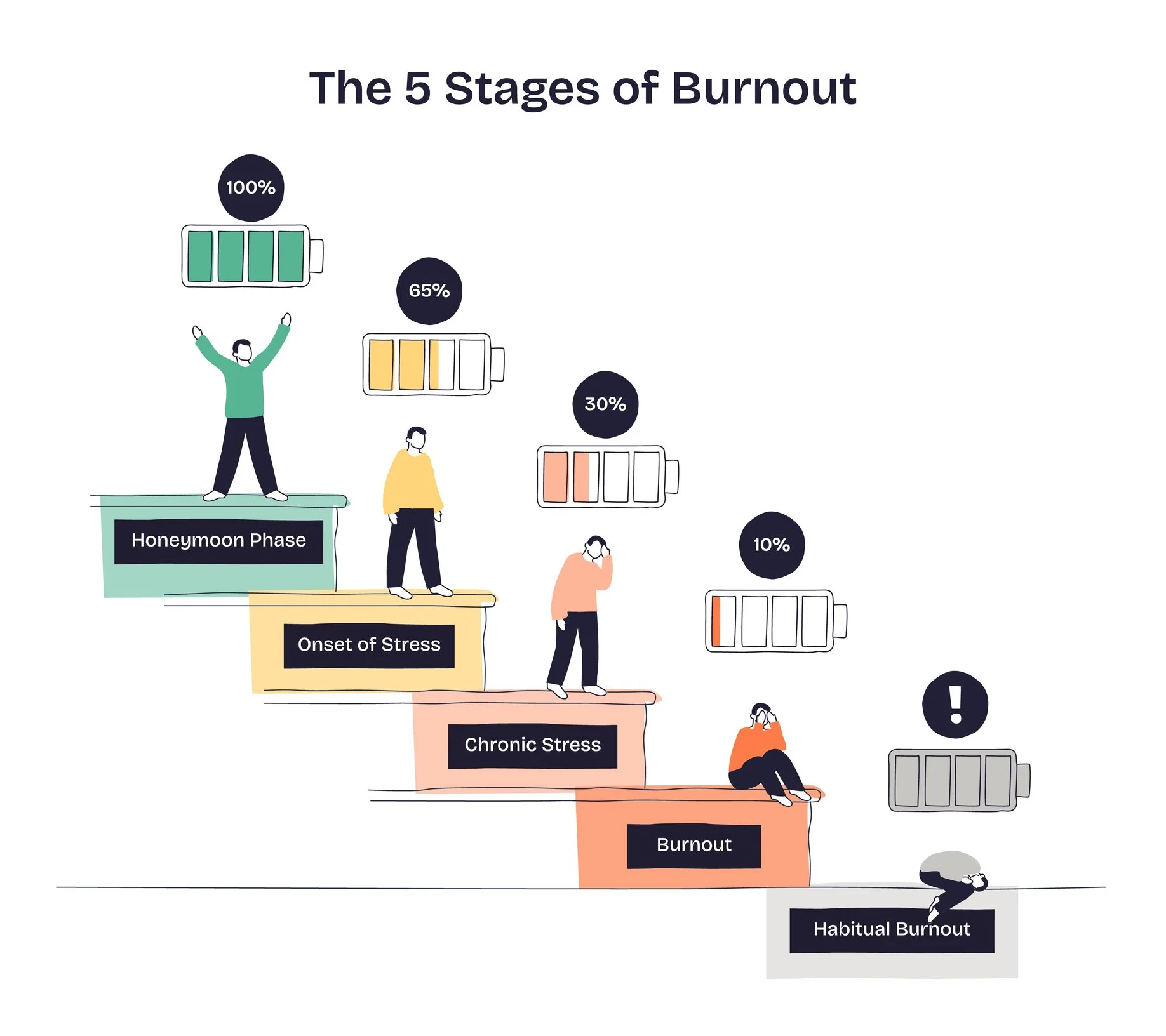
Irregular emotion, irregular sleep, and overwork. The picture it then describes — weary heat with nothing left to move with, reluctance to speak, breathlessness at the smallest effort, sweat at rest, and a restless unquiet heart — is a portrait of burnout written five centuries before the word.
And its first prescription is not an herb. Quiet the mind and sit still to nourish the Qi. Only then does it name the flavors: cool the fire with sweet-cold, gather the scattered Qi with sour, and attune the center with sweet-warm.
That last clause is the seed of the tradition's most-used formula for this state, Bojungikgi-tang 補中益氣湯 — literally, supplement the center and boost the Qi.
The trap this table exists to prevent
Here's the practical stake, and it's real: the two states want opposite treatments.
An invasion is treated by pushing something out — sweating, clearing, draining. Depletion is treated by putting something back. Treat a depleted person as though they were invaded, and you drain someone who had nothing to spare. The chapter is emphatic about this, and it's the reason for all eleven columns.
You see the modern version of this every day. Someone runs themselves down for eight months, feels feverish and awful, and responds by pushing harder — more coffee, more workouts, a cleanse. Every one of those is a draining treatment applied to a deficiency.
What this looks like in practice
If the table points toward depletion, treatment is straightforward in principle and slow in practice: acupuncture to settle the nervous system's part of it, tonifying herbal formulas to rebuild, and — the chapter is explicit — a genuine change in the pace of the person's days. Formulas commonly used include Bojungikgi-tang and, where sleep and worry dominate, Ssanghwa-tang 雙和湯 for someone taxed in body and mind together.
If the table points toward an actual infection, that belongs elsewhere first, and we'll say so.
Read more: Chronic Fatigue & Burnout
---
Frequently asked questions
Can burnout cause an actual low-grade fever?
Feeling feverish with normal or near-normal readings is common in exhaustion states, and this tradition treats it as a distinct pattern rather than as imagination. That said, a measured fever above 100.4°F, or any fever lasting more than a few days, should be evaluated medically.
What does hot palms at night mean?
In this framework, heat in the palms and soles — especially at night — points toward depletion rather than invasion. It's one of the classic findings in the burnout pattern, alongside night sweats and a restless mind.
My bloodwork was normal. Does that mean nothing is wrong?
It means the things that were tested are within range, which is genuinely useful information. Korean medicine sorts by pattern rather than by lab value, so it can often describe and treat a state that hasn't yet produced an abnormal result. Both readings are worth having.
How long does it take to recover?
Honestly: longer than most people want. Patients often notice sleep and appetite shifting within two to four weeks, with stamina following more slowly. The chapter's own advice about pacing is not optional — treatment can rebuild, but not faster than the person is spending.
Should I see a doctor first?
If you have measured fever, unexplained weight loss, night sweats that soak the bed, or fatigue that came on suddenly, yes — those warrant a medical workup before anything else. We work alongside that.
---
Eui Young (Justin) Chung, L.Ac., Dipl. O.M. practices at Raah Acupuncture in Koreatown, Los Angeles, and is the translator of the ongoing English edition of the Donguibogam at formulas.raahacupuncture.com.