
Published by Raah Acupuncture | Koreatown, Los Angeles Category: Saam Acupuncture & Classical Medicine
If you've been searching for acupuncture in Los Angeles and come across the term "Saam Acupuncture," you may have wondered what it is and how it differs from the acupuncture you already know. Most people have a general idea of what acupuncture looks like — needles placed along the body to relieve pain or stress. Saam Acupuncture looks quite different, works on a different principle, and often produces results that surprise patients who have tried other forms of acupuncture without lasting relief.
This is a beginner's guide to what Saam Acupuncture is, where it came from, how it works, and what to expect if you decide to try it.
Where Did Saam Acupuncture Come From?
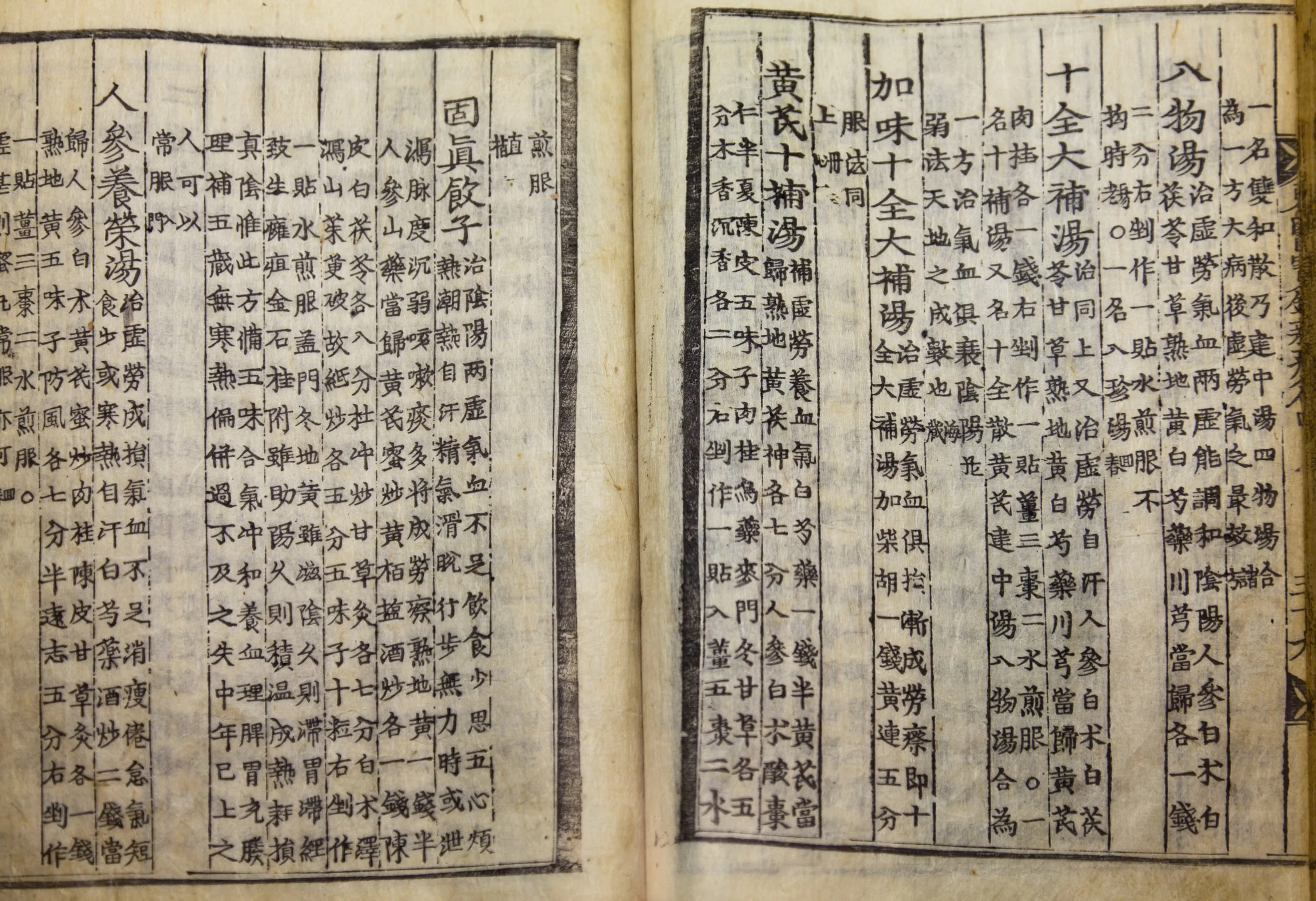
Saam Acupuncture is one of the original therapeutic modalities of traditional Korean medicine. It was developed during the Joseon dynasty — estimated between 1644 and 1742 — by a Korean Buddhist monk whose name has been lost to history. He is known simply as Saam, which means "three암" in Korean, referring to his hermitage.
What makes Saam's origin significant is the context in which it was developed. A Buddhist monastic environment is not simply a place of religious practice — it is a place of deep inquiry into the nature of mind, body, and spirit. Saam developed his acupuncture system within a framework that understood health and disease as inseparable from the inner life of the person. The body was not viewed as a machine with broken parts. It was understood as an integrated whole whose physical symptoms were expressions of deeper patterns.
This philosophical foundation is part of what distinguishes Saam from many other acupuncture systems — and it is why Saam remains remarkably relevant today, particularly for the complex, multi-layered conditions that patients bring to our clinic in Koreatown, Los Angeles.
How Is Saam Different From Regular Acupuncture?
If you have received acupuncture before — in a TCM clinic, a chiropractic office, or a physical therapy setting — you likely experienced needles placed at or near the site of your complaint. Neck pain: needles in the neck. Back pain: needles in the back. Headache: needles in the head and shoulders.
Saam Acupuncture works differently in almost every respect.
Fewer needles. A typical Saam treatment uses between 4 and 8 needles — significantly fewer than most other acupuncture styles, which may use 10 to 20 or more. Less is more in Saam because the selection is precise. Each needle is chosen for a specific reason based on the patient's individual pattern.
Needles on the hands and feet. In Saam Acupuncture, needles are almost always placed on the hands and feet — away from the area of complaint. A patient with chronic low back pain may receive needles only on their hands. A patient with anxiety may receive needles only on their feet. This is counterintuitive to most patients but it is one of Saam's defining characteristics — and one of the reasons it tends to produce such immediate, noticeable effects.
Treats the root, not the branch. In classical East Asian medicine, symptoms are understood as the "branch" — the visible expression of a deeper imbalance. The "root" is the underlying pattern driving those symptoms. Most conventional acupuncture treats the branch — the site of pain, the area of complaint. Saam treats the root — the constitutional pattern beneath the symptoms. This is why Saam often resolves not just the presenting complaint but other symptoms the patient mentioned almost in passing.
Individualized diagnosis. Two patients who both present with the same complaint — say, chronic insomnia — may have completely different Saam treatments. One patient's insomnia may be rooted in heart blood deficiency. Another's may be rooted in kidney yin deficiency. Treating both with the same insomnia protocol would miss the root in both cases. In Saam, the diagnosis determines the treatment — not the symptom.
The Five Shu Points — The Foundation of Saam
To understand how Saam works, it helps to understand the concept of the Five Shu points. In classical acupuncture theory, each of the twelve primary meridians has five special points located between the fingertips or toes and the elbows or knees. These points are named Well, Spring, Stream, River, and Sea — and each corresponds to one of the five elements: wood, fire, earth, metal, and water.
Saam Acupuncture works exclusively through these Five Shu points. By selecting specific combinations of these points — tonifying some, sedating others — the practitioner shifts the energetic relationship between organ systems and restores balance. The logic is elegant and precise: rather than chasing symptoms across the body with local needles, Saam uses a small number of carefully chosen distal points to recalibrate the underlying system.
This is why Saam treatments can seem minimal to patients who are used to being covered in needles — and yet produce results that feel profound.
What Does Saam Treat?
Saam Acupuncture is a complete medical system capable of treating a wide range of conditions. At Raah Acupuncture in Koreatown, Los Angeles, we use Saam as our primary approach for:
Pain and musculoskeletal conditions Back pain, neck pain, shoulder injuries, sciatica, knee pain, whiplash, and post-accident injuries. Saam is particularly effective for pain conditions because it addresses the constitutional pattern driving the pain rather than just blocking the pain signal.
Stress, anxiety, and sleep disorders Generalized anxiety, panic attacks, insomnia, and nervous system dysregulation. Saam's ability to regulate the autonomic nervous system — shifting the body from fight-or-flight into genuine rest — makes it highly effective for these conditions.
Digestive conditions IBS, bloating, acid reflux, constipation, and functional digestive complaints. In Saam, digestive symptoms are understood through the spleen and stomach organ networks, and treatment addresses the underlying pattern rather than just the symptom.
Women's health and fertility Menstrual irregularities, endometriosis, PCOS, fertility support, perimenopause, and hormonal imbalance. Saam's constitutional approach is particularly well-suited to hormonal conditions, which involve complex interplay between multiple organ systems.
Personal injury and workers' compensation Saam is highly effective for the musculoskeletal injuries common in personal injury and workers' compensation cases — whiplash, soft tissue injuries, nerve pain, and post-trauma anxiety. At Raah Acupuncture, we accept personal injury medical liens and MedRisk workers' compensation authorization.
What Happens in a Saam Treatment?
If you come to Raah Acupuncture for a Saam treatment, here is what to expect:
A thorough consultation first. Before any needles are placed, we spend meaningful time understanding your situation. This includes not just your main complaint but your sleep quality, digestion, energy levels, emotional patterns, menstrual cycle (if applicable), and physical tension. In Saam, all of this information is diagnostic — it tells us which organ system pattern is at the root of your condition.
A small number of precisely selected points. Based on your pattern, we select 4 to 8 points — usually on your hands and feet. We explain what we are doing and why.
Rest and release. Once the needles are in place you rest comfortably for 20 to 30 minutes. Most patients notice a significant shift during this period — a slowing of mental activity, a release of physical tension, a sense of calm that can be quite pronounced. Many patients fall asleep on the table.
A shift you can feel. Most Saam patients notice something different after their first treatment — a quality of relaxation or relief that feels distinct from what they've experienced before. For some this is subtle and builds over successive treatments. For others it is immediate and striking.
How Many Treatments Will I Need?
This depends on your condition, how long you have had it, and how your body responds.
For acute conditions — a recent injury, a short-term stress response, or a new onset of symptoms — many patients see meaningful improvement within 3 to 6 sessions. For chronic conditions that have been present for months or years, a longer course of care is typical. In our experience at Raah Acupuncture, most patients with chronic conditions begin to feel stable improvement within 8 to 12 sessions, followed by maintenance treatments to sustain the results.
We give you an honest assessment at your first visit and adjust the plan as we go. Our goal is always to get you to a point where you need us less — not more.
Saam at Raah Acupuncture in Koreatown
At Raah Acupuncture, Saam is our primary specialty. It is the system we have studied most deeply and the one we find produces the most consistent, lasting results for our patients. We also practice Master Tung's Acupuncture, the Balance Method, Traditional Chinese Medicine, and ear acupuncture — drawing from whichever approach best fits your individual presentation.
We are located at 3407 West 6th Street, Suite 702 in Koreatown, Los Angeles — accessible from the 101, 110, and 10 freeways. We serve patients from Koreatown, Mid-Wilshire, Westlake, Silver Lake, Hollywood, Hancock Park, Downtown LA, East LA, and throughout greater Los Angeles.
We accept most major health insurance plans including Cigna, Blue Cross, Blue Shield, Kaiser Permanente, UnitedHealthCare, Health Net, and ASH Network. We also accept personal injury medical liens and workers' compensation authorization including MedRisk.
Frequently Asked Questions About Saam Acupuncture
Is Saam Acupuncture painful? No. Like all acupuncture, Saam uses very fine needles — much finer than injection needles. Most patients feel little to nothing during insertion. Some points produce a mild sensation of warmth or heaviness, which is a normal sign that the point is active. The experience is generally deeply relaxing.
Is Saam Acupuncture the same as Korean acupuncture? Saam is one of several classical Korean acupuncture systems. It is distinct from other Korean methods and has a unique theoretical foundation rooted in the Five Shu point theory of the Nanjing classic. Other Korean acupuncture systems include Taegeuk acupuncture and Koryo hand acupuncture, which are entirely different approaches.
I've tried acupuncture before and it didn't help. Would Saam be different? Possibly. If your previous treatment focused on local points near the site of pain without addressing the underlying constitutional pattern, Saam may produce a different result. We are happy to discuss your history and give you an honest assessment of whether we think Saam can help.
How is Saam different from dry needling? Dry needling uses acupuncture needles to release muscle trigger points — a technique focused on local muscle tissue. It is not acupuncture and is performed by practitioners with as little as a weekend of training. Saam Acupuncture is a complete classical medical system requiring years of graduate-level training. The needle is the same. The practitioner, the diagnosis, and the intent are completely different.
Do you only use Saam at Raah Acupuncture? No. Saam is our primary specialty but we also practice Master Tung's Acupuncture, the Balance Method, Traditional Chinese Medicine, and ear acupuncture. We select the most appropriate approach based on what your condition calls for.
Ready to Experience Saam Acupuncture?
If you are curious about Saam Acupuncture or want to find out whether it is right for your condition, we invite you to schedule a consultation at Raah Acupuncture in Koreatown, Los Angeles.
Call us at 323-422-4964, email contact@raahacupuncture.com, or visit raahacupuncture.com/contact to book your first appointment.
3407 West 6th Street, Suite 702 · Los Angeles, CA 90020 · Koreatown
Raah Acupuncture Inc. is a licensed acupuncture practice in Koreatown, Los Angeles, specializing in Saam Acupuncture, personal injury, and workers' compensation cases. All treatments are performed by licensed acupuncturists (L.Ac.).