
When most people think of acupuncture, they picture needles placed along the back, the neck, or the legs. Ear acupuncture — known in classical East Asian medicine as auricular acupuncture, or 이침 (ee-chim) in Korean — works differently. A few tiny points on the surface of your ear can produce profound effects throughout your entire body. No needles anywhere else required.
This might sound surprising. But once you understand the anatomy of the ear and its direct connection to your brain and nervous system, it makes complete sense.
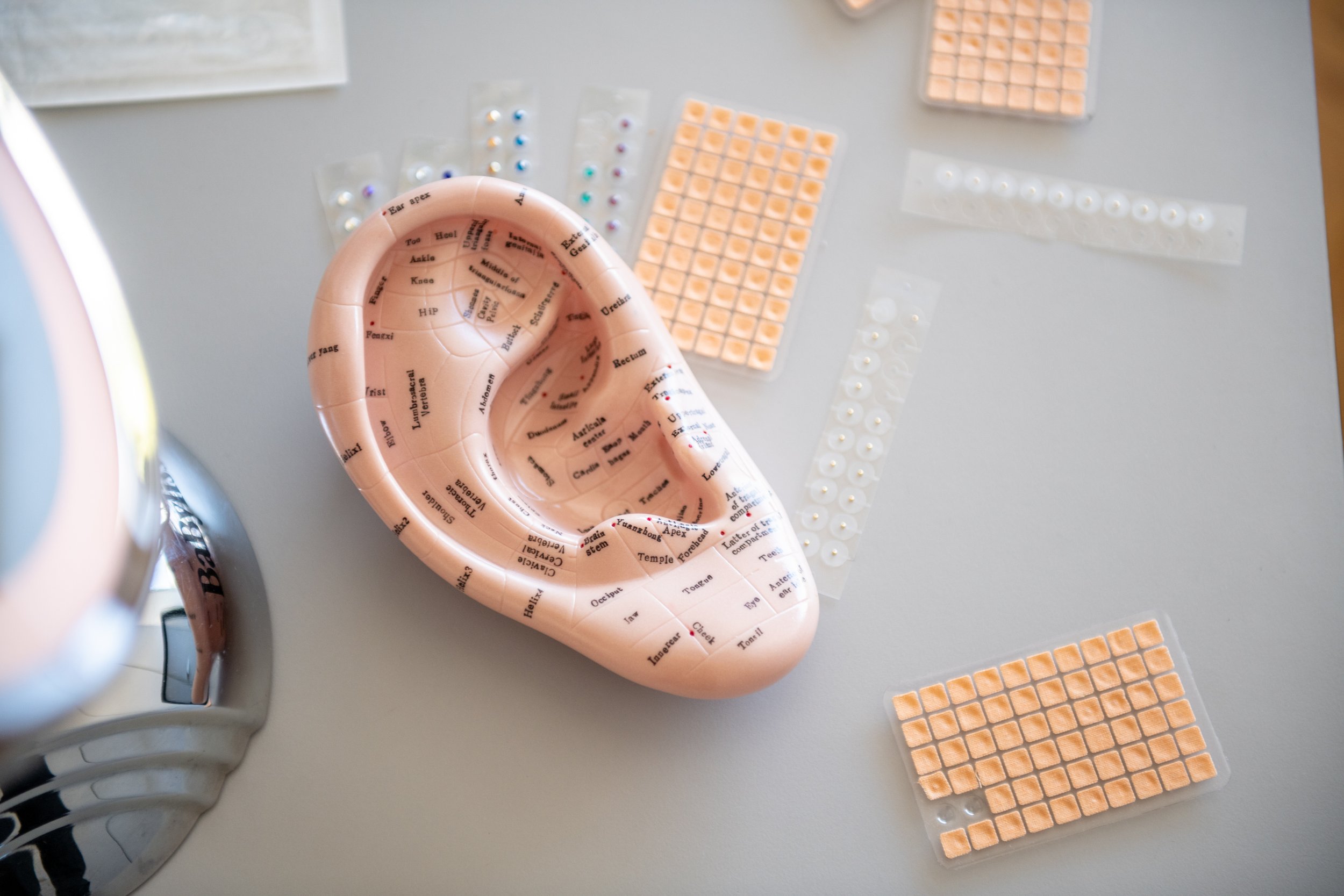
Your Ear Is a Map of Your Entire Body
The foundational idea behind ear acupuncture is that the ear is a microsystem — a miniature reflection of the whole human body, scaled down approximately 1 to 25. Every organ, joint, and body region has a corresponding point on the ear. Stimulating that point influences the organ or area it represents.
This concept was documented in classical Chinese medicine as far back as 2,500 years ago in the Yellow Emperor's Classic (Huangdi Neijing). But the modern system of ear acupuncture as we know it was largely developed by a French neurologist, Dr. Paul Nogier, who began researching the ear's reflexive properties in 1957 after learning that certain ear points had been used to treat pain in African patients. His research led to the identification of active reflex points on the ear, which were later presented at an international WHO conference in Lyon, France in 1990. The result was a standardized map of 91 ear acupuncture points — now recognized worldwide.
If you look at the ear and turn it upside down, it resembles a curled fetus. The earlobe corresponds to the head and face. The antihelix (the curved ridge inside the outer rim) corresponds to the spine. The inner concha (the bowl-shaped cavity closest to the ear canal) corresponds to the internal organs of the chest and abdomen. The outer portions correspond to the limbs and extremities. This is not a metaphor — it is the structural logic underlying the entire system.
Why the Ear Works: The Vagus Nerve
The reason ear acupuncture can influence the whole body is not mystical — it is neurological. And the key is the vagus nerve.
The vagus nerve is the 10th of 12 cranial nerves and the longest, most widely distributed nerve in the body. It connects the brain to the throat, lungs, heart, stomach, intestines, and many other organs. It is responsible for regulating heart rate, blood pressure, breathing, digestion, immune function, and the body's stress response. And it makes up approximately 75% of the entire parasympathetic nervous system — the system responsible for rest, recovery, and healing.
Here is what makes the ear uniquely special: the ear is the only place in the human body where a branch of the vagus nerve reaches the surface of the skin. This branch — called the Auricular Branch of the Vagus Nerve (ABVN) — runs through the inner bowl of the ear (the cymba conchae). This means the ear provides direct external access to the vagus nerve itself.
When ear acupuncture points are stimulated — whether by needles, seeds, or pressure — the signal travels through the ABVN directly to the brainstem, bypassing the spinal cord entirely. Body acupuncture (needles placed on the arms, legs, or back) sends its signals through the peripheral nerves → spinal cord → brain. Ear acupuncture takes a direct route: ear → vagus nerve branch → brainstem → autonomic nervous system and brain.
This direct pathway is why ear acupuncture can produce rapid, systemic effects — often within minutes of needle placement. It is why a single point on the ear can calm anxiety, reduce pain, lower blood pressure, and improve digestion simultaneously.
What Happens When the Vagus Nerve Is Stimulated
Activating the vagus nerve through auricular acupuncture produces a range of clinically significant effects:
Pain relief. The vagus nerve activates the brain's own pain control mechanisms, reducing the intensity of chronic pain signals including migraine, fibromyalgia, and musculoskeletal pain.
Cardiovascular regulation. Vagus nerve stimulation improves heart rate variability (HRV), stabilizes blood pressure, and reduces the heart's overload — a measurable indicator of cardiovascular health.
Digestive improvement. The vagus nerve regulates peristalsis (gut movement) and digestive secretions, making ear acupuncture highly effective for functional digestive disorders including IBS, bloating, and acid reflux.
Emotional calming. Stimulating vagal pathways reduces anxiety, depression, and insomnia by shifting the body from sympathetic (fight-or-flight) to parasympathetic (rest-and-digest) dominance.
Anti-inflammatory effects. The vagus nerve activates what researchers call the cholinergic anti-inflammatory pathway — a biological mechanism that suppresses pro-inflammatory cytokines throughout the body. This is why ear acupuncture shows promise for autoimmune conditions and systemic inflammation.
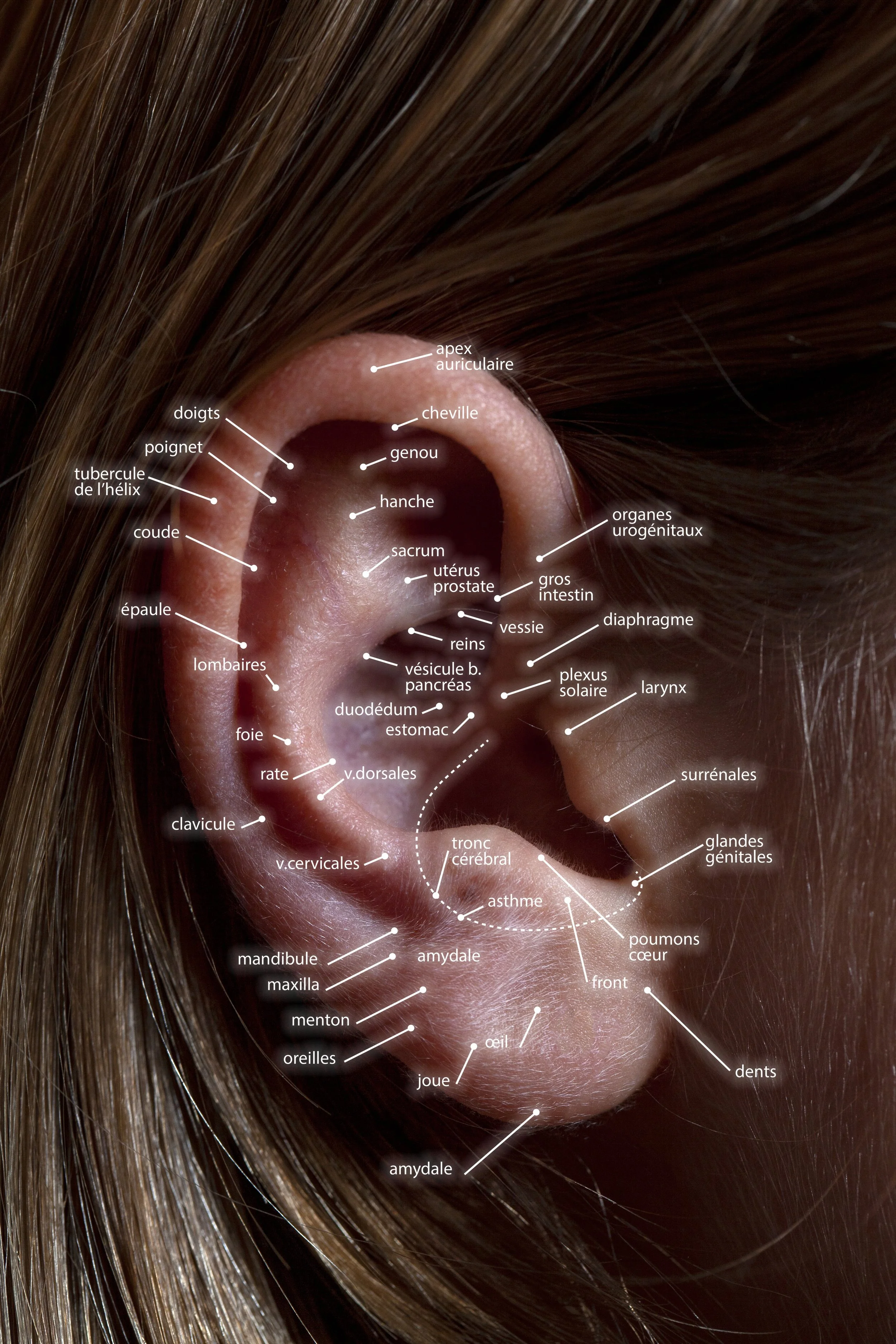
Key Points You Should Know
Ear acupuncture uses a system of clearly mapped points. Here are some of the most clinically important ones:
Shen Men (神門) — The Gate of the Spirit One of the most widely used and powerful points in the entire ear. Located in the upper triangular fossa (the depression in the upper third of the ear), Shen Men calms the mind, reduces anxiety and stress, relieves pain, improves sleep, and amplifies the effects of every other ear point used alongside it. It is the starting point for many ear acupuncture protocols.
Point Zero (耳中) — The Master Homeostasis Point Located in the center of the ear, in the groove where the antihelix meets the ear canal opening. Point Zero is also called the vagus nerve point and corresponds to the body's geometric center of balance. It supports overall homeostasis — maintaining the balance of energy, hormones, and brain activity. It acts as a reset button, helping the body return to its natural equilibrium.
Sympathetic Point (交感) Located at the junction of the lower antihelix crus and the inner antihelix. This point regulates the balance between the sympathetic and parasympathetic nervous systems — making it one of the highest-impact points for pain, digestive cramping, autonomic dysfunction, and internal organ regulation. It is used extensively in pain management protocols.
Kidney Point (신) Strengthens foundational energy, addresses fear, supports willpower, and nourishes the root constitution. In the NADA protocol, kidney is used specifically to rebuild the core energy depleted by addiction and chronic stress.
Liver Point (간) Supports detoxification and resolves anger, frustration, and emotional stagnation. Clinically important for hormonal imbalance, eye conditions, and digestive tension driven by stress.
Lung Point (폐) Strengthens the immune system and accelerates detoxification. Emotionally relates to grief and letting go. Used in addiction recovery, respiratory conditions, and skin disorders.
Battlefield Acupuncture: When the Military Started Using Ear Points
One of the most compelling validations of ear acupuncture's effectiveness comes from an unexpected source — the United States military.
In 2001, Dr. Richard Niemtzow, a retired U.S. Air Force colonel and physician, developed a protocol called Battlefield Acupuncture (BFA) — a five-point auricular procedure specifically designed for rapid pain management in military and emergency settings. It uses five specific ear points: Cingulate Gyrus, Thalamus, Omega 2, Point Zero, and Shen Men.
BFA was developed as a simple, safe, fast-acting, non-drug alternative to opioid medications for managing chronic pain. By 2018, the U.S. Department of Defense had invested $5.4 million in a training program that certified over 2,800 Battlefield Acupuncture practitioners across military and Veterans Affairs facilities.
MRI and CT research has confirmed that BFA needling suppresses activity in the brain regions associated with pain perception — measurable neurological evidence of its mechanism.
The five BFA points work as follows:
1. Cingulate Gyrus — Addresses the emotional dimension of pain: the fear, distress, and suffering that accompany physical pain, not just the sensation itself. Also used for PTSD-related pain.
2. Thalamus Point — The thalamus is the brain's sensory relay station. This point intercepts pain signals before they reach conscious perception — making it one of the most powerful analgesic points in the system.
3. Omega 2 — Targets musculoskeletal pain, rheumatoid arthritis, and inflammatory conditions of the limbs and trunk. Particularly effective for lumbar, shoulder, and thoracic pain.
4. Point Zero — Resets the body's homeostatic balance and amplifies the effects of the other points. Acts as the anchor of the protocol.
5. Shen Men — Calms the nervous system, reduces anxiety and agitation, and lowers the emotional reactivity that amplifies pain perception.
Points are placed in order on one ear first. If pain relief is not adequate, the sequence is repeated on the other ear. The immediate effects are assessed by having the patient walk immediately after needling — pain scores frequently drop within minutes.
The NADA Protocol: Ear Acupuncture for Recovery
Another evidence-based application of ear acupuncture is the NADA protocol (National Acupuncture Detoxification Association), developed in 1974 by Dr. Michael Smith at Lincoln Hospital in New York. Originally created to support addiction recovery, it gained wider recognition after its use following the September 11 attacks and Hurricane Katrina for trauma support.
The NADA protocol uses five points: Sympathetic, Shen Men, Kidney, Liver, and Lung — placed bilaterally. Patients sit quietly for 30 to 45 minutes while the needles are retained. The effects include:
Reduced cravings for alcohol, drugs, and nicotine
Minimized withdrawal symptoms
Improved sleep, increased calmness, reduced agitation
Relief from stress and emotional trauma
Greater openness to counseling and self-reflection
The NADA protocol is used today in addiction treatment programs, mental health facilities, disaster relief settings, and correctional facilities worldwide.
Reading the Ear: What Your Ear Might Be Telling You
One of the most fascinating aspects of ear acupuncture is that the ear is also used as a diagnostic tool. Before placing any needles, a trained practitioner observes the ear carefully for signs of health imbalance.
What a practitioner looks for:
Color changes (변색) — If the skin over a particular reflex zone has changed color or become blotchy, it may indicate dysfunction in the corresponding organ. For example, color changes over the kidney reflex zone may suggest kidney function issues. Changes over the pancreatic zone may be associated with blood sugar regulation problems.
Shape changes (변형) — Abnormal shapes or indentations in the ear. A hollow or sunken area in the neck-head boundary zone may be associated with neck pain. A vertically folded stomach zone may suggest digestive issues including acid reflux.
Vascular changes (혈관확장) — Prominence of capillaries or small blood vessels in a reflex zone.
Papules (구진) — Bumps, pimples, or raised areas on the ear surface corresponding to an organ zone.
Scaling or flaking (각질) — Dry, flaking skin over a reflex zone may indicate excess heat in the corresponding organ.
Wrinkles (주름) — A diagonal crease in the earlobe has been associated in research with cardiovascular risk factors including hypertension.
This diagnostic observation is performed before treatment begins, alongside patient history, palpation, and questioning — giving the practitioner a fuller picture of what is happening beneath the surface.
How Ear Acupuncture Is Used at Raah Acupuncture
At Raah Acupuncture in Koreatown, Los Angeles, ear acupuncture is one of the tools we use alongside our primary specialty of Saam Acupuncture, Master Tung's Acupuncture, the Balance Method, and Traditional Chinese Medicine.
Ear acupuncture is particularly useful as a complement to body acupuncture because it works through a different neurological pathway. Body acupuncture sends signals through the spinal cord to the brain. Ear acupuncture goes directly to the brainstem via the vagus nerve. Used together, they create a synergistic effect — body acupuncture addresses local patterns and specific channel imbalances, while ear acupuncture resets the autonomic nervous system and elevates the body's overall vagal tone (its capacity for parasympathetic regulation).
We use ear acupuncture for anxiety, insomnia, chronic pain, stress-related conditions, addiction support, and as an adjunct in personal injury and workers' compensation cases where post-trauma nervous system dysregulation is part of the clinical picture.
In some cases, small seeds or tiny magnets are placed on ear points between visits — allowing patients to gently stimulate the points at home during moments of elevated anxiety, pain, or craving.
Is Ear Acupuncture Safe?
Yes. Ear acupuncture is widely recognized as a safe treatment with minimal side effects when performed by a trained and licensed practitioner. Possible minor reactions include mild discomfort at needle insertion, slight dizziness, or temporary local tenderness — all of which resolve quickly.
A few cautions to be aware of:
If dizziness or nausea occurs during treatment, needles are removed immediately
Patients with open wounds, frostbite, or active skin infections on the ear should not receive ear needling in that area
Pregnant patients require modified protocols — certain ear points are avoided, particularly those in the reproductive zone
Patients with fever or active respiratory infections should postpone treatment
Frequently Asked Questions
Is ear acupuncture the same as reflexology? No. Reflexology applies pressure to the feet or hands using a different theoretical framework. Ear acupuncture is a complete classical medical system with its own anatomical map, diagnostic system, and neurological basis. The mechanism — vagus nerve stimulation and brainstem signaling — is distinct from reflexology.
How quickly does ear acupuncture work? Often very quickly. One of the clinical advantages of ear acupuncture is its speed of onset — particularly for pain and anxiety, where patients often notice a shift within minutes of needle placement. This is why it is used in emergency and battlefield settings.
Can ear acupuncture be used alongside body acupuncture? Yes — and this combination is generally more effective than either alone. Body acupuncture addresses local and systemic patterns through the channels. Ear acupuncture resets the nervous system through the vagus nerve. Together they work from two different directions toward the same goal.
How many ear acupuncture sessions will I need? This depends on your condition. For acute presentations, a few sessions may produce lasting results. For chronic conditions, ear acupuncture is often incorporated into an ongoing treatment plan and used at each visit as part of a comprehensive approach.
Do the ear seeds work between visits? Yes. Ear seeds — small seeds from the Vaccaria plant, or small metal pellets — are placed on specific ear points with a small adhesive. Patients stimulate them with gentle pressure several times a day. Research supports their effectiveness for pain, anxiety, insomnia, and addiction support between acupuncture visits.
Ready to Experience Ear Acupuncture?
If you are dealing with chronic pain, anxiety, stress, sleep disruption, digestive issues, or addiction support, ear acupuncture may be a powerful complement to your existing care.
At Raah Acupuncture in Koreatown, Los Angeles, we incorporate ear acupuncture as part of a complete, individualized treatment approach. We accept most major health insurance plans, personal injury medical liens, and workers' compensation authorization including MedRisk.
Call us at 323-422-4964, email contact@raahacupuncture.com, or visit raahacupuncture.com/contact to schedule your first appointment.
3407 West 6th Street, Suite 702 · Los Angeles, CA 90020 · Koreatown
Raah Acupuncture Inc. is a licensed acupuncture practice in Koreatown, Los Angeles. All treatments are performed by licensed acupuncturists (L.Ac.). This post is for educational purposes only and does not constitute medical advice.