
In our previous article, we discussed how calcium plays an essential role in muscle contraction, nerve function, and bone health. While calcium often gets the spotlight, it's only one piece of the puzzle.
Think of building a strong house—you need more than just bricks. The body also relies on magnesium and vitamin K to help muscles function properly and ensure calcium is used where it belongs.
If you're experiencing muscle cramps, tightness, frequent spasms, or simply want to support healthy aging, focusing on all three nutrients—not just calcium—can make a significant difference.
Magnesium: The Mineral That Helps Muscles Relax
If calcium is responsible for telling a muscle to contract, magnesium helps the muscle relax afterward.
Without enough magnesium, muscles may have difficulty fully relaxing, contributing to:
Nighttime leg cramps
Muscle twitching
Tight shoulders and neck
Eyelid twitching
Foot cramps
Restless legs
General muscle stiffness
Magnesium also supports hundreds of biochemical reactions throughout the body, including energy production, healthy nerve signaling, blood sugar regulation, and heart function.
Although severe magnesium deficiency is uncommon, many people consume less than the recommended daily intake due to highly processed diets.
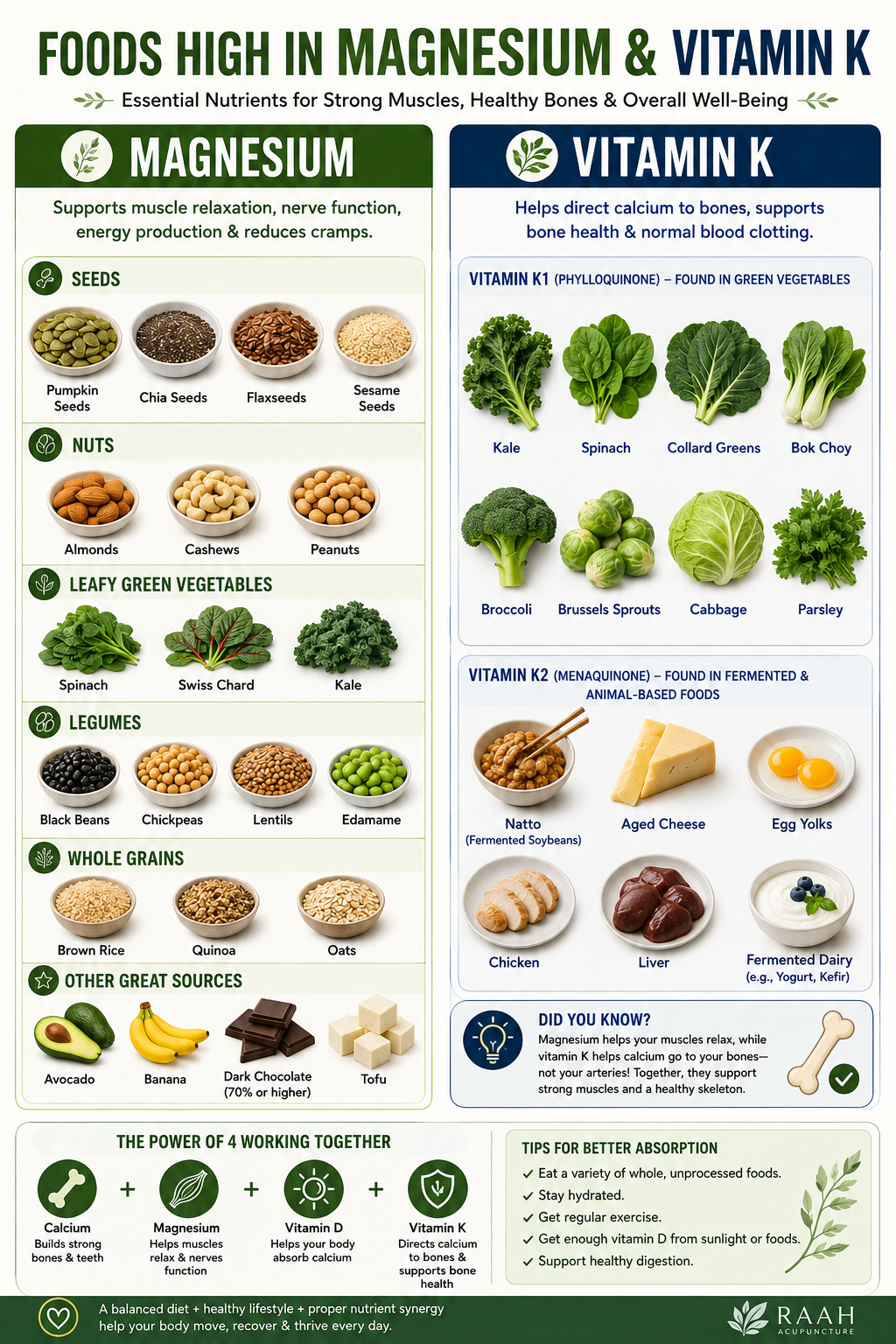
Magnesium-Rich Foods
Instead of relying immediately on supplements, consider increasing magnesium through whole foods whenever possible.
Seeds
Pumpkin seeds
Chia seeds
Flaxseeds
Sesame seeds
Nuts
Almonds
Cashews
Peanuts
Leafy Green Vegetables
Spinach
Swiss chard
Kale
Legumes
Black beans
Chickpeas
Lentils
Edamame
Whole Grains
Brown rice
Quinoa
Oats
Other Great Sources
Avocados
Bananas
Dark chocolate (70% or higher cocoa)
Tofu
Eating a variety of these foods regularly provides magnesium along with fiber, antioxidants, and other essential nutrients.
Vitamin K: Directing Calcium to the Right Place
Many people know vitamin D helps the body absorb calcium.
Far fewer people realize that vitamin K helps activate proteins that guide calcium into bones and teeth, where it belongs.
Without adequate vitamin K, calcium metabolism may not function as efficiently.
Vitamin K also plays an important role in normal blood clotting and overall bone health.
Vitamin K-Rich Foods
There are two major forms of vitamin K found in foods.
Vitamin K1 (Phylloquinone)
Primarily found in green vegetables:
Kale
Spinach
Collard greens
Bok choy
Broccoli
Brussels sprouts
Cabbage
Parsley
Vitamin K2 (Menaquinone)
Found mostly in fermented and animal-based foods:
Natto (fermented soybeans)
Aged cheeses
Egg yolks
Chicken
Liver
Fermented dairy products
Among all foods, natto is one of the richest natural sources of vitamin K2.
How These Nutrients Work Together
Rather than acting independently, calcium, magnesium, vitamin D, and vitamin K work as a team.
Calcium supports muscle contraction and bone structure.
Magnesium helps muscles relax and supports nerve function.
Vitamin D improves calcium absorption from the intestines.
Vitamin K helps direct calcium into bones and supports healthy bone metabolism.
When one nutrient is lacking, the entire system may not function as efficiently.
This is one reason why simply taking large amounts of calcium is not always the best approach.
A Traditional Chinese Medicine Perspective
Traditional Chinese Medicine has emphasized the importance of nutrition and proper digestion for thousands of years.
Rather than focusing on isolated nutrients, TCM seeks to strengthen the body's ability to absorb and utilize nourishment.
Patients with chronic muscle tightness, fatigue, or weakness often present with patterns involving deficiencies of the Liver, Spleen, or Kidney systems.
Treatment may include:
Acupuncture
Personalized dietary recommendations
Herbal medicine based on individual pattern differentiation
Lifestyle modifications to improve digestion and recovery
Rather than simply replacing nutrients, the goal is to improve the body's overall balance so it can better nourish muscles, tendons, and bones.
Should You Take Supplements?
While supplements can be beneficial for some individuals, food should generally be the first source of nutrients whenever possible.
Whole foods provide vitamins, minerals, fiber, antioxidants, and plant compounds that work together in ways supplements cannot fully replicate.
However, individuals with osteoporosis, digestive disorders, restrictive diets, or medically confirmed deficiencies may benefit from supplementation under the guidance of their healthcare provider.
Important: If you take the blood thinner warfarin (Coumadin®), do not dramatically increase or decrease your vitamin K intake without first consulting your prescribing physician, as sudden changes can affect how the medication works.
Nourish Your Body Naturally
Healthy muscles and strong bones don't depend on calcium alone.
A balanced diet rich in calcium, magnesium, vitamin D, and vitamin K, combined with regular movement, quality sleep, and healthy digestion, creates the foundation for long-term musculoskeletal health.
At Raah Acupuncture, we combine evidence-informed nutrition guidance with Traditional Chinese Medicine, acupuncture, and individualized herbal therapy to support the body's natural healing process.
If you're struggling with chronic muscle cramps, tension, spasms, or recurring musculoskeletal discomfort, we'd be happy to help identify potential contributing factors and create a personalized treatment plan.
When your body is properly nourished, it has a better opportunity to move well, recover well, and stay strong for years to come.