
Have you ever experienced muscle twitches that seem to come out of nowhere? Do your calves cramp at night, your eyelid won't stop twitching, or your shoulders and jaw always feel tight no matter how much you stretch?
Many people blame stress, dehydration, or overuse—and while those are common causes, one important factor is often overlooked: calcium.
Calcium is widely known for building strong bones, but its role extends far beyond the skeleton. Every heartbeat, muscle contraction, and nerve signal in your body depends on adequate calcium. When calcium levels or calcium metabolism are less than optimal, the body may begin to show subtle signs long before bone problems develop.
At Raah Acupuncture, we frequently see patients whose chronic muscle tension, spasms, and cramping improve when we combine acupuncture with dietary guidance and individualized Traditional Chinese Medicine (TCM) herbal therapy.
Why Calcium Matters for Your Muscles
When your brain tells a muscle to contract, calcium acts as the messenger that allows the muscle fibers to activate. Once the movement is complete, magnesium helps the muscle relax again.
If this delicate balance is disrupted, you may experience:
Frequent muscle cramps
Muscle spasms
Eye twitching
Tight jaw muscles
Neck and shoulder tension
Leg cramps during sleep
Muscle fatigue
Weakness during exercise
Tremors or shaking
Tingling around the mouth, hands, or feet
These symptoms do not automatically mean you have a calcium deficiency, but they can be one possible clue among many. Other conditions—including magnesium deficiency, nerve disorders, medication side effects, thyroid disorders, dehydration, and electrolyte imbalances—can produce similar symptoms. If symptoms are persistent or severe, proper medical evaluation is important.
Who Is More Likely to Have Low Calcium Intake?
Certain people are more likely to consume inadequate amounts of calcium, including:
Individuals who avoid dairy
Vegans without proper calcium planning
Postmenopausal women
Older adults
People with digestive disorders that reduce nutrient absorption
Individuals with low vitamin D levels
People who consume large amounts of soda or highly processed foods
Even when dietary calcium intake is adequate, poor vitamin D status may reduce calcium absorption.
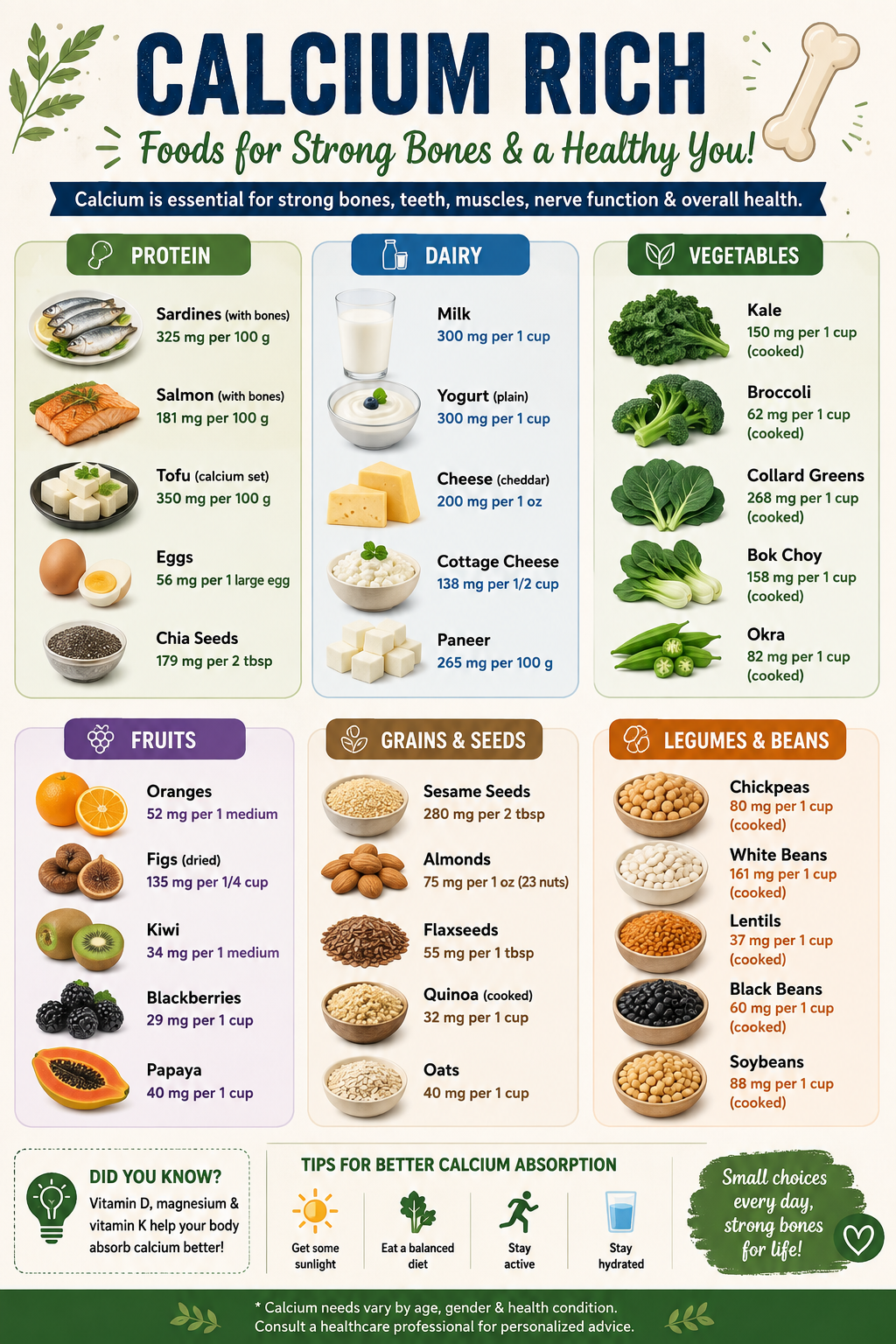
Calcium-Rich Foods to Support Healthy Muscle Function
The best way to support healthy calcium levels is through a balanced diet.
Dairy
Milk
Yogurt
Cheese
Cottage cheese
Paneer
Protein Sources
Sardines (with bones)
Canned salmon (with bones)
Calcium-set tofu
Chia seeds
Vegetables
Collard greens
Bok choy
Kale
Broccoli
Okra
Legumes
White beans
Chickpeas
Soybeans
Black beans
Seeds & Nuts
Sesame seeds
Almonds
Flaxseed
Fruits
Dried figs
Oranges
Papaya
Kiwi
Pairing calcium-rich foods with adequate vitamin D, magnesium, vitamin K, regular exercise, and healthy digestion allows the body to make better use of the calcium you consume.
A Traditional Chinese Medicine Perspective
Traditional Chinese Medicine does not diagnose "calcium deficiency" in the same way modern medicine does. Instead, practitioners look for patterns of imbalance that may contribute to muscle tightness, spasms, cramps, or chronic tension.
Depending on the individual's presentation, these patterns may involve:
Liver Blood Deficiency
Liver Yin Deficiency
Liver Wind
Blood Deficiency
Yin Deficiency with Empty Heat
Disharmony between the Heart and Kidneys
Deficiency affecting the tendons and muscles
Rather than treating isolated symptoms, TCM aims to restore overall balance.
Mu Li (Oyster Shell): A Traditional Herb for Muscle Tension
One herb frequently used in Traditional Chinese Medicine is Mu Li (牡蛎, Oyster Shell).
Traditionally, Mu Li is said to:
Anchor excessive Yang
Calm the spirit (Shen)
Soften hardness
Help relieve certain types of muscle tension and spasms associated with specific TCM patterns
Support recovery in patients with chronic deficiency presentations
Modern analysis also shows that oyster shell naturally contains calcium and other minerals, although TCM does not use Mu Li simply as a calcium supplement. Its traditional functions are based on centuries of herbal practice and pattern differentiation.
Gui Zhi Jia Mu Li Tang: A Classical Herbal Formula
One classical formula that includes Mu Li is Gui Zhi Jia Mu Li Tang (桂枝加牡蛎汤).
Traditionally, this formula is used when a practitioner identifies a specific pattern characterized by symptoms such as:
Muscle tightness
Spontaneous sweating
Fatigue
Restlessness
Poor sleep
Nervous system sensitivity
Deficiency with instability
It is important to understand that herbal formulas are not one-size-fits-all. In TCM, the same symptom—such as muscle cramping—may require completely different formulas depending on the individual's underlying pattern.
For this reason, herbal medicine should always be prescribed by a qualified practitioner after a thorough evaluation.
Acupuncture and Muscle Stability
Acupuncture may help support healthy muscle function by:
Reducing excessive muscle tension
Improving local circulation
Promoting relaxation
Supporting normal nervous system regulation
Helping relieve chronic pain and muscle tightness
When combined with proper nutrition, lifestyle changes, and individualized herbal medicine, many patients find a comprehensive approach provides the best results.
When Should You Seek Medical Evaluation?
You should speak with your healthcare provider if muscle spasms are:
Frequent or worsening
Associated with numbness or weakness
Accompanied by severe pain
Occurring after starting a new medication
Associated with abnormal blood work
Persistent despite hydration and proper nutrition
Blood testing may be appropriate to evaluate calcium, vitamin D, magnesium, kidney function, thyroid function, and other possible causes.
The Bottom Line
Healthy muscles require much more than stretching alone. Adequate calcium, balanced nutrition, proper vitamin D, magnesium, and healthy nervous system function all play important roles.
From the Traditional Chinese Medicine perspective, chronic muscle tension and spasms often reflect deeper patterns of imbalance rather than a single nutrient deficiency. Through individualized acupuncture treatment, dietary guidance, and carefully selected herbal formulas—including classical formulas such as Gui Zhi Jia Mu Li Tang when appropriate—we aim to support the body's natural ability to restore balance.
If you're experiencing persistent muscle cramps, twitching, or chronic muscle tightness, an individualized evaluation can help determine whether nutritional factors, TCM pattern imbalances, or other underlying issues may be contributing to your symptoms.
At Raah Acupuncture, we believe that strong muscles begin with a well-nourished and well-balanced body.