
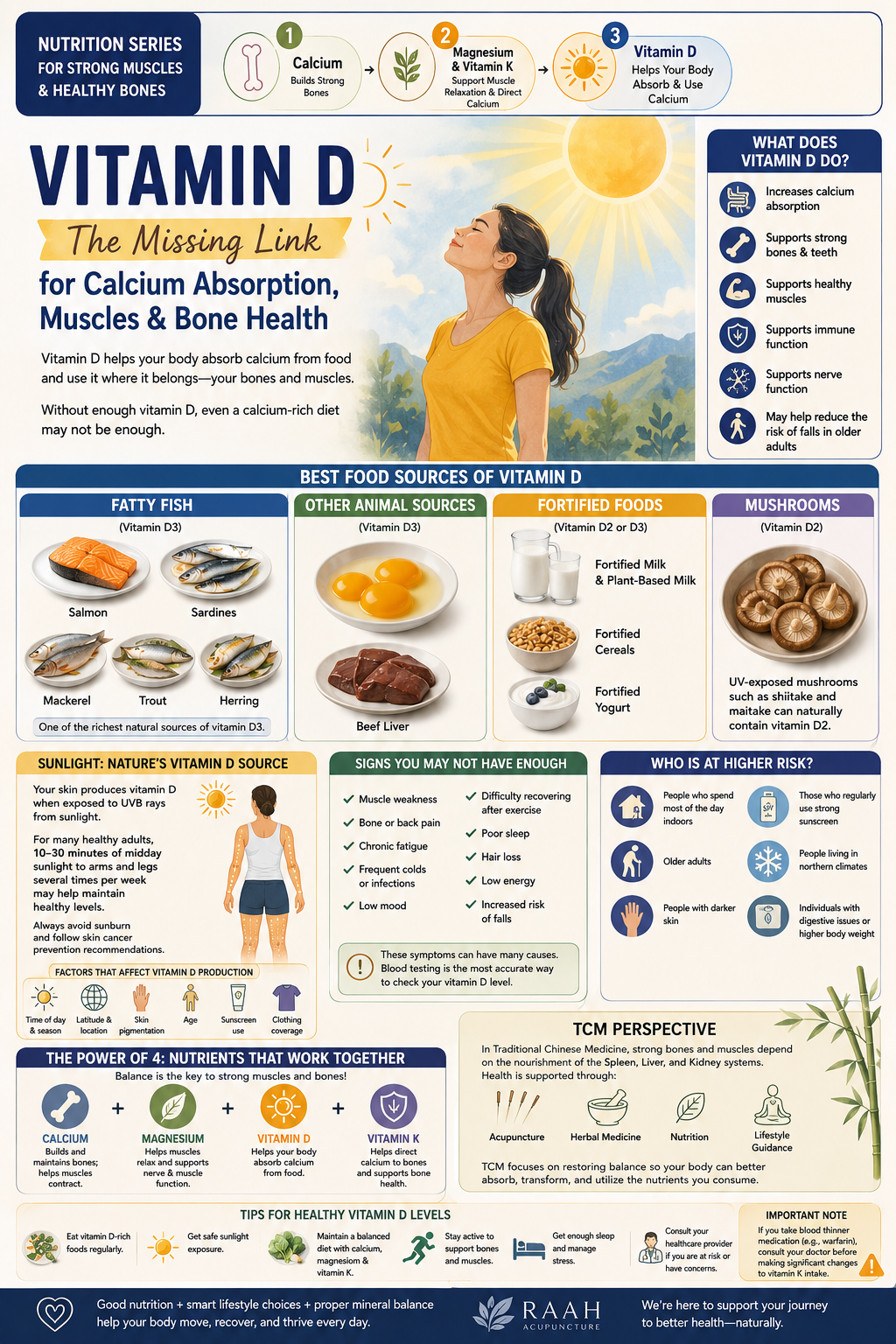
Many people make an effort to eat more calcium-rich foods for stronger bones and healthier muscles. But there's one important question:
Can your body actually absorb and use that calcium?
The answer often depends on vitamin D.
Without enough vitamin D, your intestines absorb far less calcium from the foods you eat. Even if your diet contains plenty of calcium, your body may struggle to put it to good use.
Think of calcium as building materials for a house. Vitamin D is the construction crew that helps bring those materials inside. Without the crew, the bricks simply sit outside.
What Does Vitamin D Do?
Vitamin D is a fat-soluble vitamin that plays several essential roles throughout the body.
It helps:
Increase calcium absorption from the intestines
Support healthy bones and teeth
Maintain normal muscle function
Support the immune system
Promote healthy nerve function
Help reduce the risk of falls in older adults by supporting muscle strength and balance
Low vitamin D levels have also been associated with fatigue, muscle weakness, decreased exercise performance, and poor bone health.
Common Signs of Low Vitamin D
Vitamin D deficiency doesn't always cause obvious symptoms, but some people may experience:
Muscle weakness
Difficulty recovering after exercise
Chronic muscle aches
Frequent falls
Bone pain
Fatigue
Low energy
Mood changes
Poor immune resilience
These symptoms can have many possible causes, so proper evaluation and blood testing are often recommended.
Who Is at Higher Risk?
Some people are more likely to have low vitamin D levels, including:
People who spend most of the day indoors
Office workers
Older adults
Individuals with darker skin
People who regularly use strong sunscreen
Those living in northern climates
Individuals with digestive disorders affecting fat absorption
People with obesity
Vitamin D deficiency is surprisingly common, even in sunny regions.
Best Food Sources of Vitamin D
Only a small number of foods naturally contain significant amounts of vitamin D.
Fatty Fish
Salmon
Sardines
Mackerel
Trout
Herring
Other Animal Sources
Egg yolks
Beef liver
Fortified Foods
Fortified milk
Fortified plant-based milk
Fortified yogurt
Fortified breakfast cereals
Mushrooms
Some mushrooms exposed to ultraviolet (UV) light naturally produce vitamin D2, making them one of the few plant-based sources.
Sunlight: Nature's Vitamin D Source
Your skin can produce vitamin D when exposed to ultraviolet B (UVB) rays from sunlight.
Several factors influence how much vitamin D your body makes:
Time of day
Season
Latitude
Skin pigmentation
Age
Sunscreen use
Clothing coverage
For many healthy adults, 10–30 minutes of midday sun exposure to the arms and legs several times per week may help maintain vitamin D levels, but individual needs vary greatly depending on skin tone, location, and season. Always avoid sunburn, and follow skin cancer prevention recommendations.
Calcium, Magnesium, Vitamin K, and Vitamin D: A Team Effort
Healthy muscles and bones require multiple nutrients working together—not just one.
Calcium provides the structural building blocks for bones and supports muscle contraction.
Magnesium helps muscles relax and supports healthy nerve function.
Vitamin D helps your body absorb calcium from food.
Vitamin K helps activate proteins that guide calcium into bones.
Focusing on only one nutrient while neglecting the others may limit the benefits.
A Traditional Chinese Medicine Perspective
Traditional Chinese Medicine does not diagnose vitamin D deficiency directly, but practitioners often evaluate the body's overall vitality, digestion, and constitutional strength.
From a TCM perspective, healthy muscles and bones depend on the proper nourishment of the Spleen, Liver, and Kidney systems.
Treatment may include:
Acupuncture
Personalized nutrition recommendations
Herbal medicine based on individual pattern differentiation
Lifestyle guidance to support long-term health
Rather than treating laboratory numbers alone, TCM seeks to improve the body's ability to absorb, transform, and utilize nourishment effectively.
Should You Take a Vitamin D Supplement?
Some individuals may require supplementation, particularly if blood testing confirms low vitamin D levels or if they have limited sun exposure or certain medical conditions.
Because vitamin D is fat-soluble, excessive supplementation can be harmful. It's best to discuss appropriate dosing with your healthcare provider and have your levels monitored when indicated.
The Bottom Line
Vitamin D is one of the most important nutrients for helping your body use calcium effectively.
A healthy diet, sensible sunlight exposure, regular movement, and individualized care all contribute to stronger muscles, healthier bones, and better overall wellness.
At Raah Acupuncture, we believe nutrition and Traditional Chinese Medicine work hand in hand. Through acupuncture, personalized herbal medicine, and dietary guidance, we help support your body's natural ability to heal, recover, and stay strong for years to come.