
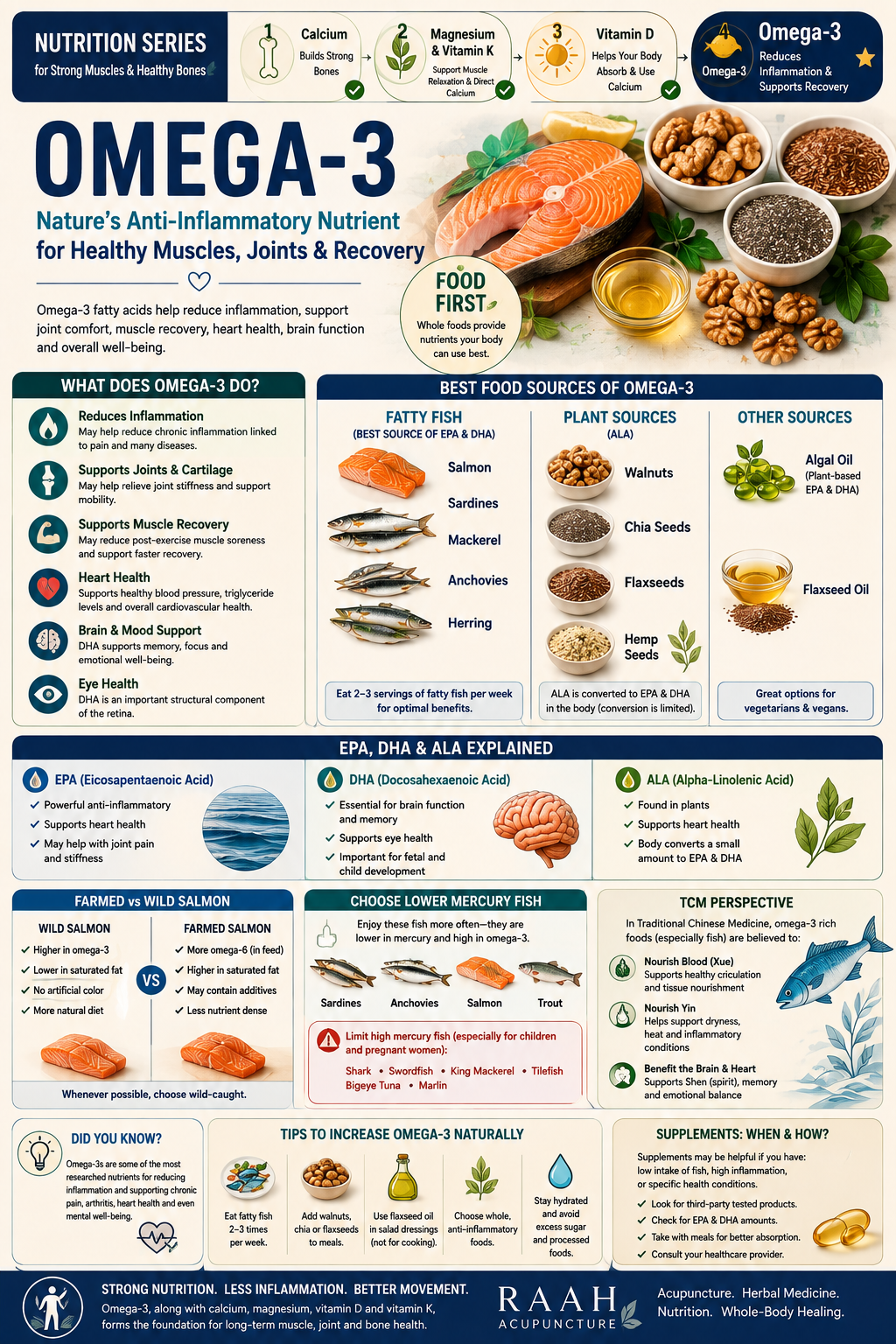
Throughout this nutrition series, we've explored how calcium builds strong bones, magnesium helps muscles relax, vitamin K directs calcium where it belongs, and vitamin D helps your body absorb it.
Now it's time to discuss another nutrient that plays a major role in musculoskeletal health—but in a very different way.
Omega-3 fatty acids don't build bones directly. Instead, they help support the body's natural inflammatory response, making them an important nutrient for healthy muscles, joints, tendons, and recovery.
If you struggle with chronic neck pain, shoulder tension, tendon injuries, arthritis, or sore muscles after exercise, omega-3-rich foods may be an important part of a healthy lifestyle.
What Is Omega-3?
Omega-3 fatty acids are healthy polyunsaturated fats that the body cannot produce in sufficient amounts on its own.
There are three main types:
EPA (Eicosapentaenoic Acid)
Primarily found in fatty fish, EPA is known for supporting a healthy inflammatory response and cardiovascular health.
DHA (Docosahexaenoic Acid)
Also found mainly in marine sources, DHA is an important structural component of the brain and eyes and supports nervous system function.
ALA (Alpha-Linolenic Acid)
ALA is found in plant foods such as flaxseeds, chia seeds, and walnuts. While the body can convert a small amount of ALA into EPA and DHA, this conversion is relatively limited.
For this reason, fatty fish remain one of the richest dietary sources of biologically active omega-3 fats.
Why Is Inflammation Important?
Inflammation is your body's normal response to injury or infection.
In the short term, it helps tissues heal.
However, when inflammation becomes persistent, it may contribute to ongoing discomfort and reduced mobility.
Maintaining a balanced diet that includes omega-3-rich foods may help support a healthy inflammatory response as part of an overall healthy lifestyle.
Many people seeking acupuncture for chronic musculoskeletal conditions are also interested in nutritional strategies that support recovery.
Potential Benefits of Omega-3
Research suggests omega-3 fatty acids may help support:
Healthy joints
Normal muscle recovery after exercise
Heart health
Brain function
Eye health
Healthy triglyceride levels
Overall wellness
While omega-3 is not a cure for chronic pain, incorporating omega-3-rich foods into a balanced diet may be one helpful component of a comprehensive wellness plan.
Best Food Sources of Omega-3
Fatty Fish (Highest in EPA & DHA)
Salmon
Sardines
Mackerel
Anchovies
Herring
Trout
Aim to eat fatty fish 2–3 times per week if appropriate for your dietary preferences and health needs.
Plant Sources (ALA)
Walnuts
Chia seeds
Flaxseeds
Hemp seeds
These foods provide valuable nutrients and fiber in addition to omega-3 fats.
Other Sources
Algae oil (plant-based EPA & DHA)
Flaxseed oil (ALA)
These options may be useful for individuals who do not eat fish.
Wild vs. Farmed Salmon
Both wild and farmed salmon provide beneficial omega-3 fatty acids.
Wild salmon is generally leaner and often contains less saturated fat, while farmed salmon may contain more total fat, including omega-3s, depending on farming practices and feed.
Rather than avoiding one entirely, choose high-quality sources and include a variety of omega-3-rich foods in your diet.
Choosing Fish Lower in Mercury
When selecting seafood regularly, it's helpful to choose fish that are naturally high in omega-3 while being relatively low in mercury.
Excellent options include:
Sardines
Anchovies
Salmon
Trout
Herring
Fish that are typically higher in mercury—such as shark, swordfish, king mackerel, marlin, and tilefish—should be eaten less frequently, especially by children and pregnant individuals.
A Traditional Chinese Medicine Perspective
Traditional Chinese Medicine does not describe omega-3 as a nutrient, but many omega-3-rich foods fit well within the principles of food therapy.
Fatty fish are traditionally considered nourishing foods that may help support the Blood and Yin, particularly in individuals with deficiency patterns.
From a TCM perspective, chronic musculoskeletal discomfort is often associated with patterns involving Qi stagnation, Blood stasis, Wind, Dampness, or Heat, depending on the individual.
Rather than treating inflammation alone, TCM seeks to identify the underlying pattern contributing to pain and imbalance.
Treatment may include:
Acupuncture
Individualized herbal medicine
Food therapy
Lifestyle recommendations
The goal is to support the body's natural healing process while improving circulation, mobility, and overall balance.
Food First, Supplements Second
Whenever possible, obtaining nutrients through whole foods should be the foundation of a healthy diet.
Whole foods provide not only omega-3 fats, but also protein, vitamins, minerals, and antioxidants that work together to support health.
Omega-3 supplements may be appropriate for some individuals, but it's best to discuss supplementation with your healthcare provider—especially if you take blood-thinning medications or have a bleeding disorder.
The Bottom Line
Omega-3 fatty acids are an important part of a balanced diet and may help support healthy muscles, joints, heart, brain, and overall wellness.
Combined with regular movement, adequate sleep, and the nutrients we've covered throughout this series—calcium, magnesium, vitamin D, and vitamin K—omega-3 helps build a strong foundation for long-term musculoskeletal health.
At Raah Acupuncture, we believe healing is most effective when multiple aspects of health work together. Through acupuncture, personalized herbal medicine, nutrition guidance, and Traditional Chinese Medicine, we help support your body's natural ability to recover and thrive.